What Is Crying Call in Poker?
A crying call is a reluctant call you expect to lose but make for the price. Learn what a crying call is, when it is correct, and when it is a costly leak.
On this page · 6 sections
A crying call is a call you make expecting to lose. You are fairly sure the bet in front of you is good, you groan, and you call anyway — because the pot is laying you a price big enough to justify the slim chance that you are ahead. The name says it all: you are practically crying as you push the chips in.
It sounds like a losing play, and made carelessly it is. But the crying call is often mathematically correct. Poker is not about winning every pot; it is about calling whenever the price beats your odds of being good, even when “being good” is a long shot.
Why You Call When You Expect to Lose
The trick is that “usually beaten” and “profitable to call” are not contradictions. A call is correct whenever your chance of winning exceeds the equity the pot demands. If a bet lays you 4-to-1, you only need to win 20 percent of the time. You can be beaten 75 percent of the time and still have a profitable, if painful, call.
The crying call lives in that gap between fear and math. Your gut says “I’m beat.” The pot says “but not often enough to fold.” When the pot is right, you call — and cry.
The Math Behind It
Suppose the pot is $300 and your opponent bets $100 on the river. You must call $100 to win $400, so your required equity is 100 ÷ 400, or 25 percent. If you believe you beat this player’s range even a quarter of the time, the call shows a profit over the long run.
A hand well-suited to this is a bluff catcher — it beats bluffs and loses to value. When the price is generous, even a modest chance that your opponent is bluffing tips a marginal spot into a call. Note how small bets create crying-call spots: a quarter-pot bet only needs you to be good 20 percent of the time, so folding your medium-strength hands to tiny bets is usually a leak.
A Worked Example
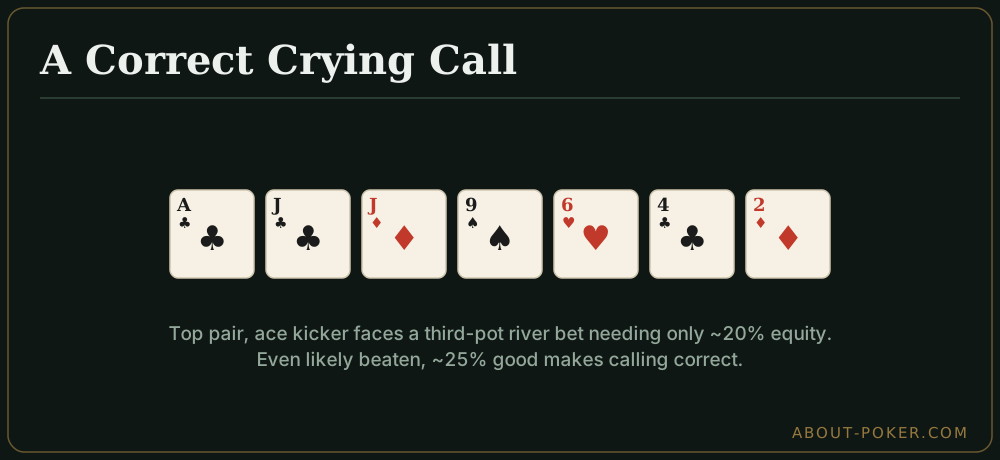
You hold Ac-Jc on a river of Jd-9s-6h-4c-2d. You have top pair with an ace kicker. You checked the river and your generally tight opponent bets a third of the pot — say $50 into $150. Now you must call $50 to win $200, needing just 20 percent equity.
Your read says he probably has a better jack, two pair, or a set; you are likely beaten. But at 20 percent, you only need to be good one time in five. Even a tight player has some busted draws and thinner value like a worse jack in this line. Estimating you are good around 25 percent of the time, you make the crying call. You will lose it often, but the price makes it correct.
Crying Call vs. Hero Fold vs. Value Bet
The crying call and the hero fold are mirror images of the same dread. A crying call pays off; a hero fold releases the hand. The decider is the exact price against your read: better than 4-to-1 with a live bluff-catcher leans call; a big bet you are almost never good against leans fold. Meanwhile, the person on the other side is often making a thin value bet — betting a hand they expect to be called by worse. Your crying call is exactly what makes their thin value bet profitable.
When a Crying Call Becomes a Leak
The crying call turns into a money-loser when the price is bad and the read is fear-based. Calling a pot-sized river bet — where you need 33 percent — with a hand you are good maybe 10 percent of the time is not a heroic call; it is spew. Against players who never bluff, almost every crying call is negative EV, because the “small chance you’re ahead” simply is not there.
Being pot committed also changes the math: once the price is short enough, a fold is no longer even close, so it stops being a crying-call decision at all.
Quick Checklist
- What equity does the price require? Smaller bets mean easier calls.
- Does this opponent bluff enough to give you real chances?
- Is your hand a true bluff catcher, or does it lose to bluffs too?
- Are you calling because the math says so, or just because you hate folding?
If the price beats your honest estimate of winning, make the crying call and move on. If it does not, dry your eyes and fold.
Frequently asked
What is a crying call in poker?
A crying call is a reluctant call you make expecting to lose, but you call anyway because the pot odds justify the small chance you are ahead. The name captures the feeling of paying off a bet you are fairly sure beats you.
When is a crying call correct?
A crying call is correct when the price the pot offers is better than your chance of winning. If you need 20 percent equity to call and you think you win 25 percent of the time, calling is right even though you expect to lose most of the time.
What is the difference between a crying call and a hero fold?
They are opposite reactions to the same fear. A crying call pays off a bet you think beats you for the sliver of chance you are good; a hero fold releases the hand instead. The correct choice depends on the exact price and your read on the bettor.