What Is Under The Gun Plus One in Poker?
Under the gun plus one (UTG+1) is the seat just left of the first player to act. Learn what it means, how it plays, and the right opening range for it.
On this page · 7 sections
Under the gun plus one, almost always written UTG+1, is the seat immediately to the left of the first player to act preflop. It is the second player to make a decision after the cards are dealt, which makes it one of the earliest and toughest positions at the table. Because so many opponents still get to act behind you, UTG+1 demands a tight, disciplined opening range and a clear plan for the hand.
Where UTG+1 Sits
Preflop action begins with the player directly to the left of the big blind, known as under the gun. UTG+1 is the very next seat. At a full nine-handed table, that means seven players still act after you preflop, and on later streets you will be out of position against most of them.
The positions then continue around the table: after the early seats come the middle positions, including the lojack, followed by the hijack, the cutoff, and finally the button. The further from the button you sit, the tighter you must play, and UTG+1 is near the very back of that line.
Why Early Position Is Hard
The core problem with UTG+1 is information and position. When you enter a pot from this seat, you have no idea what the seven players behind you will do. Any one of them can wake up with a premium hand and 3-bet you, forcing you to either fold your investment or continue out of position with a marginal holding.
On the flop, turn, and river, you will usually act before your opponents, meaning they get to see what you do before deciding. Acting first with imperfect information is a structural disadvantage, so you compensate by only entering pots with hands strong enough to withstand that pressure.
The Right UTG+1 Opening Range
A solid default at a nine-handed table is to open roughly the top 12 to 15 percent of hands. That includes:
- All pocket pairs from about 66 and up (some players open all pairs).
- Big broadway hands: AK, AQ, AJ, KQ, and their suited versions.
- Strong suited aces like AJ suited and AT suited.
- A handful of suited connectors such as JT suited and T9 suited for balance.
You should fold almost every offsuit broadway below KQ, weak suited aces, and all the trashy speculative hands you might play from late position. The rule of thumb: if you are unsure whether a hand is good enough from UTG+1, it probably is not.
A Worked Example
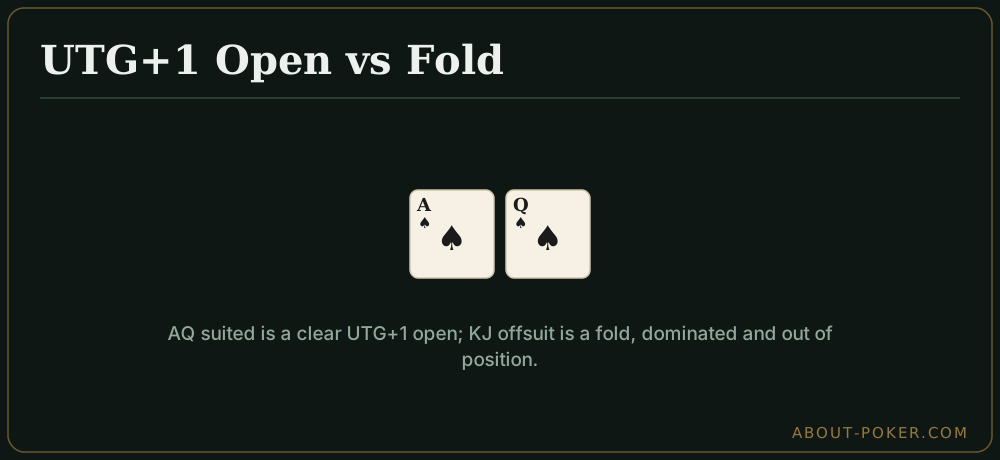
You are UTG+1 at a nine-handed 1/2 game with 100 big blind stacks and you look down at AQ suited. This is a clear open; raise to about 2.5 to 3 big blinds. The hand makes strong top pairs, has flush potential, and holds up well even if a later position 3-bets, since AQ suited plays fine as a 4-bet-or-call decision against most opponents.
Now imagine you hold KJ offsuit in the same seat. Despite looking pretty, this is a fold from UTG+1. It is dominated by the very hands that will play back at you (AK, AQ, AJ, KQ) and it flops weak top pairs that bleed money out of position. Folding it costs you nothing and saves you from tough spots. The contrast between AQ suited and KJ offsuit is the essence of early-position discipline.
How Table Size Changes UTG+1
Position is relative to the button, not to a fixed seat name. At a six-handed table, the seat called UTG+1 has only a few players behind it and functions much more like middle position, so you can widen your range considerably. At a nine-handed table, UTG+1 is genuinely early and should stay tight. Always count how many players act after you rather than relying on the label alone.
Common Mistakes
The classic UTG+1 leak is opening too wide because the hand “looks nice.” Suited kings, offsuit broadways, and small suited connectors all get players in trouble from early position. Another mistake is limping instead of raising or folding; limping early invites the whole table in and leaves you playing a multiway pot out of position with a weak range. Raise your strong hands, fold the rest, and avoid the limp.
Quick Checklist
Before entering a pot from UTG+1, ask:
- How many players act behind me? (More players means tighter.)
- Is my hand in the top 12 to 15 percent?
- Can this hand handle a 3-bet from a later seat?
- Am I raising, or am I about to make a losing limp?
Play UTG+1 tight and aggressive, and one of poker’s hardest positions becomes a steady, low-variance part of your game.
Frequently asked
What does under the gun plus one mean?
Under the gun plus one, written UTG+1, is the seat immediately to the left of the under-the-gun player. It is the second player to act preflop and is considered an early position with a tight opening range.
How tight should I play from UTG+1?
Very tight. At a full nine-handed table you should open roughly the top 12 to 15 percent of hands from UTG+1, adding a few more playable hands than under the gun but still folding most offsuit and speculative holdings because so many players act behind you.
Is UTG+1 the same seat at every table?
No. The exact number of seats between UTG+1 and the button depends on how many players are at the table. At a nine-handed table UTG+1 is very early; at a six-handed table the same relative seat is much closer to the button and plays more like middle position.