What Is Underbluff in Poker?
To underbluff in poker means to bet with too few bluffs relative to value, making you too easy to fold against. Learn how to spot and fix underbluffing.
On this page · 6 sections
To underbluff in poker means to bet with too few bluffs relative to your value hands, leaving your betting range too strong and too predictable. When you underbluff, a thinking opponent notices that your big bets almost always mean a real hand — so they simply fold their marginal holdings and refuse to pay you off. The mirror-image mistake is to overbluff. Underbluffing is by far the more common of the two at low and mid stakes, because most players are naturally cautious and only bluff when they feel “sure,” which is almost never often enough.
Why Bluff Ratios Matter
Every balanced betting range mixes value hands with bluffs so that your opponent cannot exploit you by always folding or always calling. The correct mix is the bluff-to-value ratio, and it is tied to your bet size. On the river the rule of thumb is:
- Half-pot bet: about 1 bluff for every 3 value hands (25% bluffs).
- Pot-sized bet: about 1 bluff for every 2 value hands (33% bluffs).
- 2x-pot overbet: close to 1 bluff for every 1.5 value hands (roughly 40% bluffs).
If your actual ratio falls well below these numbers — say you fire a pot-sized river bet with 10 value hands and only 1 bluff — you are underbluffing, and your opponent’s correct response is to fold everything that cannot beat value.
A Worked Example
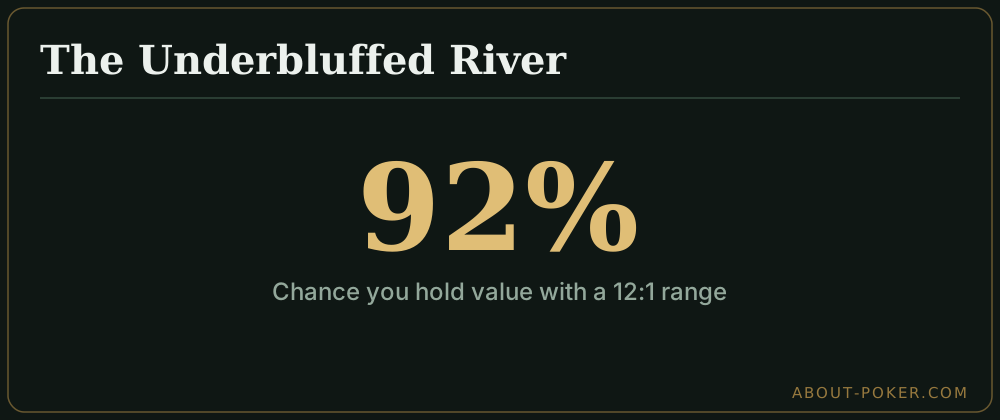
The pot is 100 on the river and you bet 100. Game theory says your opponent should call often enough that your bluffs break even, which requires you to have roughly one bluff for every two value hands. Imagine your river betting range is 12 value combos and only 1 bluff combo — a ratio of 12-to-1 instead of 2-to-1.
Now your opponent runs the numbers (or just senses it): when you bet big, you have value about 92% of the time. Their bluff-catchers only need to be good 33% of the time to call profitably, but yours win only 8% of the time, so every bluff-catcher becomes a fold. The consequence is twofold. First, your genuine value bets stop getting paid — nobody calls a range they know is nutted. Second, you gave up all the pots your missing bluffs could have stolen. You have made your strong hands weaker by having too few weak ones.
How to Spot Underbluffing in Your Game
The clearest sign is that your river bets get folds far more often than they get calls, especially your big bets. Other tells: you check almost every busted draw instead of turning some into bluffs; you only bet when you are “positive” you are ahead; and your win rate at showdown is very high while your non-showdown winnings are poor. If you almost never get caught bluffing, that is not a badge of honor — it usually means you are not bluffing enough.
The Fix: Find Your Bluff Candidates
The cure for underbluffing is to systematically add bluffs, not to bluff randomly. Good bluff candidates share two traits: they have little or no showdown value (so checking wins nothing), and they hold blockers to the hands that would call you. On a river that completes a flush, a busted straight draw that holds one card of the flush suit makes a far better bluff than a pair with showdown value. By converting your best give-up hands into bluffs, you reach the correct ratio without sacrificing hands that could win at showdown.
When Underbluffing Is Correct
As always, theory bends to the opponent. Against a calling station who never folds, bluffs simply burn money, so cutting them and betting a value-heavy, underbluffed range is exactly right. Underbluffing is only a leak against opponents capable of folding — good, thinking players who will fold their bluff-catchers when your range is transparent. Against fit-or-fold regulars, add bluffs; against sticky recreational callers, strip them out and print value.
Quick Checklist
- Know the target bluff-to-value ratio for your bet size.
- Turn your worst-showdown hands into bluffs, keeping blockers in mind.
- If you rarely get called on big bets, you are probably underbluffing.
- Add bluffs against players who fold; remove them against players who call.
- Balance is the goal versus good players — pure exploitation versus bad ones.
Fix underbluffing and your value bets start getting paid again, because your opponents can no longer assume a big bet always means the nuts.
Frequently asked
What does underbluff mean in poker?
To underbluff means to bet with too few bluffs compared to your value hands, so your betting range is too strong. When you underbluff, thinking opponents can profitably fold their bluff-catchers because your bets almost always mean value.
Why is underbluffing a leak?
Underbluffing is a leak because it makes your big bets easy to read and easy to fold to. You stop getting paid off, and you fail to win pots you could have taken away with a well-timed bluff, leaving expected value on the table.
How many bluffs should you have?
The right bluff-to-value ratio depends on bet size. On the river a pot-sized bet wants roughly one bluff for every two value hands, and larger bets allow more bluffs. Betting far fewer bluffs than this means you are underbluffing.
Is underbluffing ever correct?
Yes, against players who call too much. If an opponent never folds, bluffs lose money, so cutting them and betting a value-heavy range is the correct exploit. Underbluffing is only a mistake against opponents capable of folding.