What Is Underbet in Poker?
An underbet is a small bet, well under half the pot, used to get thin value or deny equity cheaply. Learn when to underbet and see a worked example.
On this page · 7 sections
An underbet is a small bet — usually well under half the pot, sometimes as little as a quarter or even a fifth. Where an overbet sits at the large end of the sizing spectrum, the underbet sits at the small end. It is a quiet, efficient tool for squeezing thin value, denying equity cheaply, and betting a whole range of medium-strength hands without bloating the pot. Beginners often overlook it, but strong players use it constantly.
Where the term comes from
The name is a mirror of “overbet.” If a pot-sized bet is the reference point, an underbet is anything comfortably below the usual half-to-full-pot range. The label signals that the small size is a deliberate choice, not timidity. In fact, modern solver work shows that small bets are often the most profitable sizing on the right boards.
Why the underbet works
The core idea is thin value. Many hands your opponent holds are too weak to call a big bet but happy to call a cheap one. A small bet collects value from exactly those hands — second pair, weak top pair, ace-high — that would fold to a large bet or simply check back if you checked. You are pricing in the hands you beat.
An underbet also plays well with a merged range. When your whole range is medium-strength on a board that favors you, you cannot bet big — you would only fold out worse and get called by better. A small bet lets you bet many hands at once, gathering thin value across the board while keeping the pot small and manageable.
Worked example: underbetting for thin value
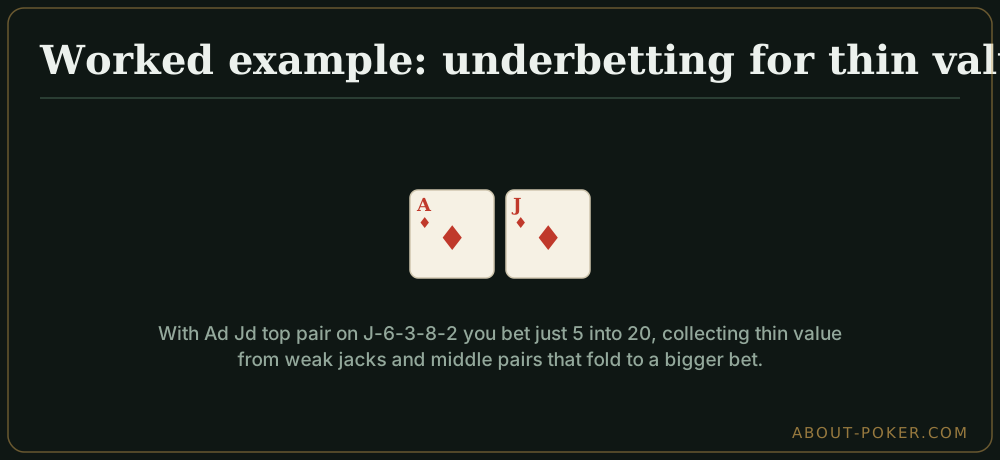
You raise preflop with A♦ J♦ and the big blind calls. The board runs out:
J♠ 6♥ 3♣ 8♦ 2♠
You have top pair, good kicker. The pot is 20 and you are in position. A big bet here is awkward: your opponent will fold everything worse and only call or raise with better hands like a set or two pair. So instead you bet 5 into 20 — a quarter-pot underbet.
Now the math changes. Weak jacks, middle pairs like 9-9 or 7-7, and stubborn ace-high hands all call this small price. You collect a bet from hands that would have checked back or folded to a bigger bet. Over many hands, those thin calls add up — that is real value you would have left on the table by checking or overbetting. The small size fits the strength of your hand: good, but not good enough to build a big pot.
When to underbet
Reach for a small bet when:
- Your whole range is medium-strength on a board that favors you but where you rarely have the nuts.
- You want thin value from hands too weak to call a big bet.
- You want to deny a cheap card to a draw without risking much.
- You are probing — a small bet to gather information or set a low price out of position.
The pattern to remember: underbets go with range advantage but not nut advantage, while overbets go with nut advantage. Matching your sizing to which edge you hold is a hallmark of a strong player.
Common mistakes
- Underbetting the nuts on a wet board. With a monster on a coordinated board, a small bet lets draws call cheaply and outdraw you. Bet bigger to charge them.
- Only underbetting weak hands. If small always means weak, opponents raise your underbets relentlessly. Mix strong hands into the small size too.
- Underbetting into many players. Small bets lose their squeeze when several opponents can call; someone usually connects.
- Confusing an underbet with weakness. A small bet is a strategic choice, not a sign you have nothing. Treat it as a real bet with a plan behind it.
How position changes it
In position, underbets are ideal because you keep the pot small and act last on the next street, controlling how the hand plays out. Out of position, a small bet can double as a way to set a low price and avoid facing a big bet from your opponent. Either way, the underbet keeps you in control of pot size, which is exactly what you want with a hand that is good but not great.
Quick checklist before you underbet
- Is my range medium-strength on a board that favors me?
- Will worse hands call a small bet that would fold to a big one?
- Is the board dry enough that a cheap card will not hurt me?
- Am I mixing some strong hands into this small size to stay balanced?
If those line up, the small bet is often the most profitable one available. The underbet is proof that in poker, betting less can win more. Keep sharpening your sizing in the poker terms glossary.
Frequently asked
What is an underbet in poker?
An underbet is a small bet, usually well under half the pot — sometimes as little as a quarter or a fifth. It is used to get thin value from weak hands, to deny equity to draws cheaply, or to bet a whole range when your hands are all fairly strong but none is a monster.
When should you underbet?
Underbet when your entire range is medium-strength on a board that favors you, when you want thin value from hands that would fold to a big bet, or when you want to make a cheap probing bet. It works best when you have a range advantage but not a nut advantage.
Why bet small instead of checking?
A small bet often gets called by weaker hands that would check back if you checked, so it earns thin value. It can also deny a free card to a drawing hand for a low price and let you set the price of the pot rather than facing a big bet out of position.
What is the difference between an underbet and an overbet?
An underbet is much smaller than the pot and is used with a merged, medium-strength range for thin value. An overbet is larger than the pot and is used with a polarized range of strong hands and bluffs. They sit at opposite ends of the sizing spectrum and solve opposite problems.