How to Play Against a Maniac
A maniac bets everything, so stop fighting fire with fire. Learn to tighten up, trap, call down wide, and let a reckless player stack himself into you.
On this page · 7 sections
A maniac is the player who raises, re-raises, and fires barrel after barrel with almost any two cards. He seems allergic to checking or folding, and the table often feels chaotic when he is in the pot. Yet a true maniac is one of the most profitable opponents in the game — provided you stop trying to match his aggression and instead let it work against him. The whole plan reduces to a single idea: quit fighting fire with fire and let the maniac stack himself into your strong hands.
Spotting a real maniac
Do not confuse a maniac with a disciplined loose-aggressive reg. A LAG applies pressure deliberately and stays roughly balanced; a maniac has no coherent plan and no fold button. The tell is consistency of nonsense — he 3-bets junk, barrels missed draws into obvious strength, and stacks off with bottom pair. If the aggression never stops and rarely makes sense, you have found your maniac. Compare this profile with the calmer aggressor in playing against maniacs, where the same instincts apply with more nuance.
Tighten your range, then widen your calls
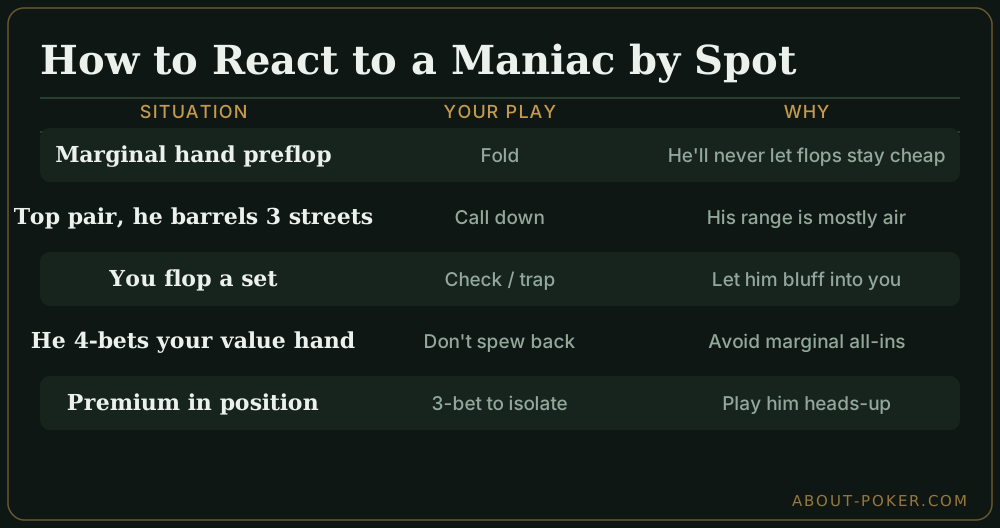
The first adjustment is counterintuitive: play fewer hands, but go further with the ones you do play. Fold your marginal offsuit hands and speculative junk that only wants to see cheap flops, because a maniac will never let a flop stay cheap. Once you are in with a real hand, though, drastically loosen your calling standards. A maniac’s betting range is so wide that top pair with a decent kicker, or even second pair, is often a clear call down. Your equity against “any two cards fired three streets” is enormous, so let him keep betting.
Trap instead of fast-playing
When you flop a monster against a normal opponent you often bet to build the pot. Against a maniac, do the opposite — check and let him bet for you. If you flop top set on a Q-8-3 board and the maniac has been barreling all session, checking is far more profitable than betting, because he will happily stab at the pot with air and pay off your slowplay. Fast-playing only chases him out when he has nothing.
A worked example
You hold A-Q offsuit on the button. The maniac opens to 4 big blinds from the cutoff, which he does with roughly 60% of hands. You just call to keep his junk in and disguise your strength. Flop comes Q-7-2 rainbow. He fires 8 into a 9-BB pot. You call. Turn is a 4; he fires again, now 20 into 25. You call. River is a 9; he shoves 60 into 65. You call — and your top pair top kicker beats his A-5, K-J, and busted overcards far more often than it loses. Against a sane player you might fold the river; against a maniac who barrels air relentlessly, top pair is a mandatory call. This is the same value-first mindset covered in how to play against a calling station, just inverted toward catching bluffs instead of extracting them.
Get position and isolate
Position is your single biggest weapon. Try to sit directly to the maniac’s left so you act after him every street. From there you can 3-bet to isolate him heads-up with your strong hands, denying the rest of the table a chance to wake up behind you. When you have position and a premium hand, a big 3-bet often gets called light and lets you play a large pot with the range advantage. If you can choose your seat, this is worth doing deliberately — see table selection and seat selection for the mechanics of grabbing the right chair.
Common mistakes to avoid
The number one leak is tilting into a raising war. When a maniac 4-bets your value hand, the urge to “show him” is strong, but firing back with a marginal holding just turns a good spot into a coin flip. A second mistake is bluffing him — he does not fold, so your bluffs are pure losses. Third, do not slow-play so passively that you miss value on safe rivers; if the board changes and he might slow down, a value bet is fine. Finally, avoid playing every pot out of frustration. Discipline preflop is what makes the call-down strategy profitable.
Checklist
- Fold marginal and speculative hands preflop; play tight and strong.
- Call down wider than normal — his range is full of air.
- Trap monsters by checking and letting him barrel.
- Do not bluff; he will not fold.
- Sit to his left and 3-bet to isolate heads-up.
- Never enter a raising war with a marginal hand.
Handled correctly, a maniac stops being a nuisance and becomes a steady contributor to your win rate. Stay patient, stay tight, and let his own recklessness pay you off.
Frequently asked
How do you beat a maniac in poker?
Let the maniac do your betting for you. Tighten up preflop so you enter pots with stronger hands, then call down wider than usual and trap instead of fast-playing. Their reckless barreling turns your good hands into big pots you win by simply showing down the best cards.
Should you bluff a maniac?
Almost never. A maniac rarely folds because he either has a hand or intends to bet himself, so a bluff just donates chips. Save your money and win by value, letting him bluff into your made hands.
Where should you sit relative to a maniac?
Directly to his left, so you act after him on every street. Position lets you see his aggression before you commit, isolate him heads-up, and control the size of pots. Sitting to his right is the worst seat at the table.