How to Play Against a Loose Table
A loose table calls too much, so stop bluffing and start value betting. Learn to tighten up, bet big with strong hands, and print at a loose-passive game.
On this page · 7 sections
A loose table is one where many players enter pots, chase draws, and call bets they should fold. It is the most profitable game in poker and, paradoxically, the one where inexperienced players often lose. The reason is simple: they keep trying to bluff people who never fold. Beating a loose table is not about clever moves. It is about tightening up, letting the loose players make mistakes into you, and then charging them the maximum with strong hands. Stop trying to be tricky and start getting paid.
Two flavors of loose: passive and aggressive
Before you adjust, identify which kind of loose table you are at. A loose-passive table calls too much but rarely raises — these are the calling stations who see flops with anything and pay off your value bets. A loose-aggressive table also plays too many hands but attacks with bets and raises, creating big, chaotic pots. The passive version is the pure printing press; the aggressive version demands more patience and trapping. Most low-stakes games skew loose-passive, which is why the core plan mirrors what works playing against calling stations.
Tighten up and let them come to you
Against a loose table you should play fewer hands, not more. When four players see every flop, dominated hands like K7 offsuit and Q9 offsuit become traps — you flop a pair and lose to a better kicker or a made hand. Instead, favor holdings that make strong, clearly-best hands: big pairs, ace-king, and suited connectors and suited aces that flop the nut draws. In multiway pots, top pair with a weak kicker is fragile, while sets, flushes, and straights get paid enormous amounts. Selectivity preflop sets up the value you will collect later.
Value bet, and value bet big
The single most important adjustment is to bet your strong hands larger and more often. Loose players call, so give them the biggest bet they will still pay. Where a normal opponent folds to a pot-sized river bet, a station calls it with second pair, so size up to extract the maximum. Thin value becomes routine — even a hand like top pair with a good kicker is often worth three streets of betting against someone who calls with any pair. Learning to squeeze extra chips from marginal-but-best hands is the essence of value betting thin in cash.
Stop bluffing the stations
Bluffing a loose-passive table is lighting money on fire. If a player calls with any pair and any draw, your missed bluff simply pays off his curiosity. Cut bluffs almost entirely against the callers, save your continuation bets for boards where you have real equity, and give up when you miss rather than firing a second barrel into a call. Reserve your aggression for the rare fold-capable loose player. The discipline to check and fold your air, rather than convince yourself he might fold this time, is what separates winners at these games.
A worked example
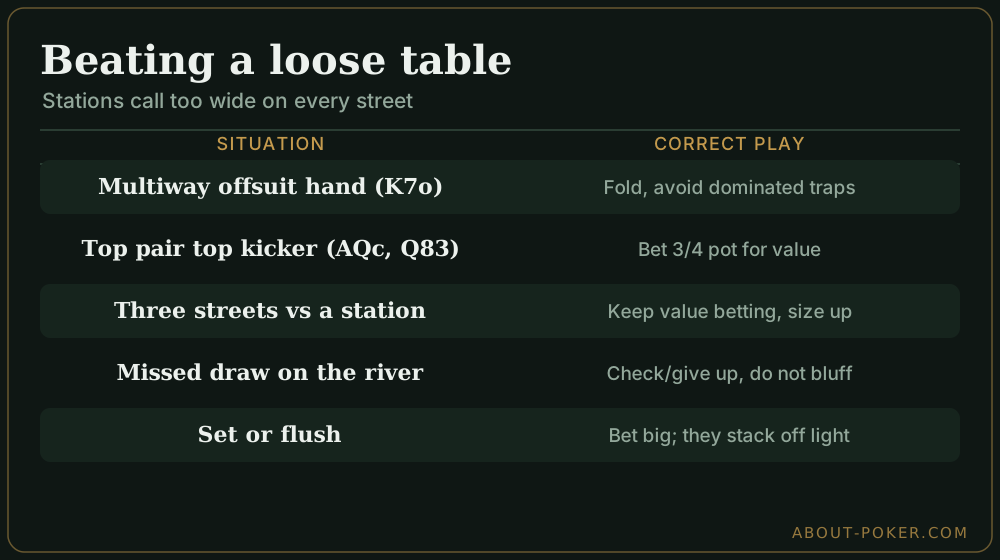
You hold A♣ Q♣ in the cutoff and open at a loose-passive table. Three players call — the button, the small blind, and the big blind — and you see a four-way flop of Q♦ 8♠ 3♥. You have top pair, top kicker on a dry board. Against tight opponents you might bet small; against this table you bet three-quarters of the pot, because two of them will call with any queen, any eight, or a gutshot. The turn is the 5♣, and you fire again, large. One caller remains. The river is the 2♦, and you bet a third time for value — a station calls with Q7 or 88, and you take a big pot without ever bluffing. You simply had the best hand and charged for it.
Adjust by position and stack depth
Position still matters, but at a loose table the value of implied odds soars. Deep stacks make suited connectors and small pairs gold, because when you hit a set or a flush, a loose player will stack off far too light. In multiway pots, be more cautious with one-pair hands and more eager with nut-type hands and draws. From late position you can see how many loose players have entered before you decide how much to bet for value. The looser and deeper the game, the more you lean on hands that can win a whole stack, a theme central to exploiting recreational players.
Checklist for a loose table
Tighten your starting range and avoid dominated offsuit hands in multiway pots. Prioritize big pairs, big suited cards, and nut-drawing hands. Value bet relentlessly and size up, because loose players pay off. Cut bluffs to almost nothing against calling stations. Respect the pots that get large when a passive player suddenly commits. Above all, be patient — the loose table hands you money over time, and your only job is to be there with the best hand and a big bet when it does.
Frequently asked
How do you beat a loose poker table?
Tighten your starting hands and value bet relentlessly, because loose players call far too often. Cut out bluffs against the stations and size your bets larger when you have a strong hand. You win by getting paid, not by pushing them off pots.
Should you bluff a loose table?
Rarely against loose-passive callers, because they simply will not fold. Bluffing works only against the loose-aggressive players who can lay a hand down. Against a table that loves to call, patience and big value bets earn far more than any bluff.
What hands should you play at a loose table?
Favor hands that flop strong, well-defined value, such as big pairs, big suited cards, and suited connectors that make nutty draws. Downgrade weak top-pair hands with bad kickers, since multiway loose pots punish dominated holdings.