Odds of Making a Flush With Two Suited Cards
Hold two suited cards and you make a flush by the river about 6.4% of the time — roughly 1 in 15. The full breakdown of flop, turn, and river math.
On this page · 7 sections
“But they’re suited” is the most over-quoted phrase at a low-stakes table. Being suited is a genuine edge, but it is a small one, and the flush you’re dreaming about arrives far less often than the excitement suggests. Here is exactly how often two suited cards turn into a flush.
The headline number
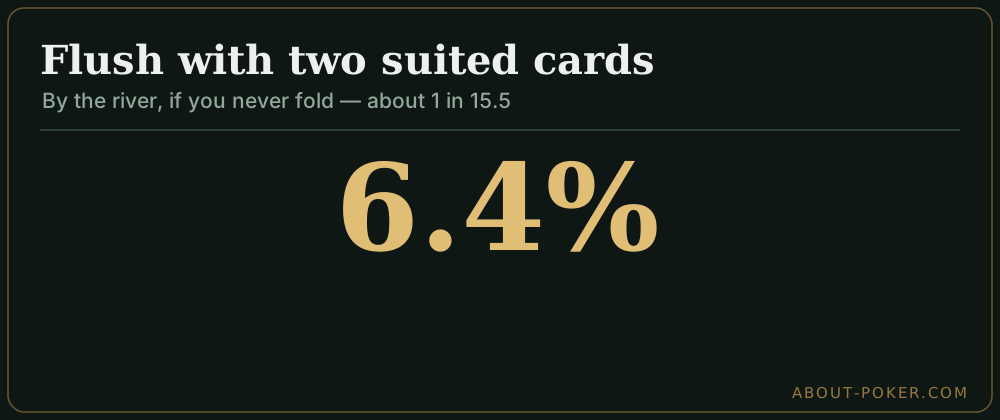
If you hold two cards of the same suit and stay in the hand all the way to the river, you complete a flush about 6.4% of the time, or roughly 1 in 15.5. That figure assumes you never fold — in reality you’ll often muck before the river, so the practical rate is lower.
Crucially, that 6.4% is spread across three streets. The overwhelming majority of it comes from flopping a draw and getting there, not from the board hitting your suit hard on the flop.
Breaking it down by street
Start with 13 cards of your suit; you hold 2, so 11 remain among the 50 unseen cards. From there:
- Flopping the made flush (all three flop cards your suit): about 0.84%, or 1 in 118. This is the jackpot outcome and it’s genuinely rare — see odds of flopping a flush.
- Flopping a flush draw (exactly two of your suit on the flop): about 10.9%, giving you 9 outs going forward.
- Completing a flopped flush draw by the river: about 35% (roughly 4-to-1 against), the number every player memorizes for the flush draw.
Multiply the flop-a-draw rate by the completion rate, add the flopped flushes and the rarer backdoor runs, and you land back at that ~6.4% overall figure.
A worked example
You hold the A♥5♥ and see a flop of K♥9♥2♣. You’ve flopped the nut flush draw: two hearts down, 9 hearts left, 2 cards to come. Your chance to complete by the river is about 35%, or roughly 4-to-1 against.
If you only get to see the turn — you’re facing a bet and may face another — your one-card equity is about 19%, or 9 ÷ 47. That gap between 35% (two cards) and 19% (one card) is exactly why flush draws want to see rivers cheaply and why position matters so much for realizing that equity, a topic covered in how often do you hit your draw.
Flop, turn, and river odds at a glance
Once you have a flopped flush draw, the completion odds tighten street by street. Starting from 9 outs after the flop:
- Flop to river (two cards to come): about 35%, roughly 1.9-to-1 against.
- Flop to turn only (one card): about 19%, or 9 ÷ 47.
- Turn to river (one card): about 20%, or 9 ÷ 46.
Notice how much equity lives in the second card. If you can only guarantee seeing the turn — because you’ll face another bet on it — your realistic equity is closer to 19% than 35%. That is why cheap, in-position calls with flush draws are so much stronger than calling a big bet out of position where you may get blown off the hand.
Why suited is worth less than it feels
The all-in equity boost from being suited is only about 2 to 4 percentage points versus the identical offsuit holding. AKs versus AKo, for instance, is worth roughly 3% more equity. That edge is real and free, so you always prefer the suited version — but it should not be the reason you play a hand you’d otherwise fold.
The trap at the table is playing something like J‑4 suited from early position because “it’s suited.” You still make the flush only 6.4% of the time, and when you don’t, you’re stuck with a weak, easily-dominated pair. Suitedness improves marginal hands; it does not rescue bad ones.
Common mistakes
Chasing a flush without checking the price is the classic leak. A flopped flush draw needs about 2-to-1 pot odds to call for one card, or better implied odds to justify going to the river against a big bet. Calling large bets with a bare draw and no fold equity bleeds chips.
The second mistake is overvaluing non-nut flushes. When you make a flush with a low suited card, someone can hold a higher one. The A♥ in your hand isn’t just a strong card — it’s a blocker that guarantees no one has the nut flush, which is why suited aces are so much more valuable than suited baby cards.
Quick checklist
- Two suited cards make a flush about 6.4% of the time by the river (1 in 15.5).
- Flopping the flush outright is rare: 0.84%, or 1 in 118.
- You flop a flush draw about 11% of the time; it completes ~35% by the river.
- Being suited adds only 2 to 4 points of equity — a bonus, not a reason to play trash.
- Favor suited aces for the nut-flush potential and the blocker they provide.
Frequently asked
What are the odds of making a flush with two suited cards?
About 6.4% by the river, or roughly 1 in 15.5, if you go all the way to the river every time. Most of that value comes from flopping a flush draw and completing it, not from flopping the flush outright.
How often do suited cards flop a flush?
Only about 0.84%, or 1 in 118. Flopping the full flush needs all three of your suit on the flop, which is rare. The far more common good outcome is flopping a four-card flush draw, which happens about 11% of the time.
Is being suited a big advantage?
It is real but modest — being suited adds only about 2 to 4 percentage points of equity over the same offsuit hand. The suited version wins more because of the extra flush outs, but the gain is smaller than most players assume, so don't overvalue weak suited hands.