Defending Against a Triple Barrel
Learn how to defend against a triple barrel without over-folding: how to count your continues, use blockers, and bluff catch the river correctly.
On this page · 7 sections
Facing a bet on the flop, the turn, and the river from the same aggressor is one of the most uncomfortable spots in no-limit hold’em. The pot is large, your hand is usually only medium strength, and folding feels like getting bluffed while calling feels like paying off the nuts. Defending against a triple barrel well is mostly about discipline: knowing which hands to keep, how many to keep, and which specific cards make one bluff catcher better than another.
What a triple barrel actually represents
A player who fires three streets is telling a polarized story. Their range is usually either strong value (top pair top kicker or better, sets, straights, flushes) or a busted draw that gave up on showing down and chose to bluff instead. Very few thinking players triple barrel with medium-strength hands, because those hands prefer to check and realize equity cheaply. That means your job is not to beat their whole range. It is to beat the bluffs often enough that folding every time would let them print money.
Because the range is polarized, your medium hands all have roughly the same value against it. A weak top pair and a strong second pair beat the same bluffs and lose to the same value. So the tiebreaker is not raw hand strength, it is blockers.
Minimum defense and how much to keep
The theory anchor is minimum defense frequency, or MDF. Against a bet you should continue often enough that a pure bluff cannot profit by betting any two cards. The formula is MDF = pot ÷ (pot + bet). Against a half-pot river bet you must defend 100 ÷ (100 + 50) = about 67% of the range you arrived at the river with. Against a pot-sized bet you only need to defend 50%.
The key word is “the range you arrived with.” Defense compounds across streets, so you do not have to defend 67% of your flop range on every street. You defend against each bet relative to what is left. In practice, if you call the flop with a wide range and the turn with a tighter one, you only need to continue with a portion of that tighter range on the river. Do not measure your river calls against your original flop holdings or you will convince yourself to over-fold. For the underlying theory, see bluff catching the river.
A worked example
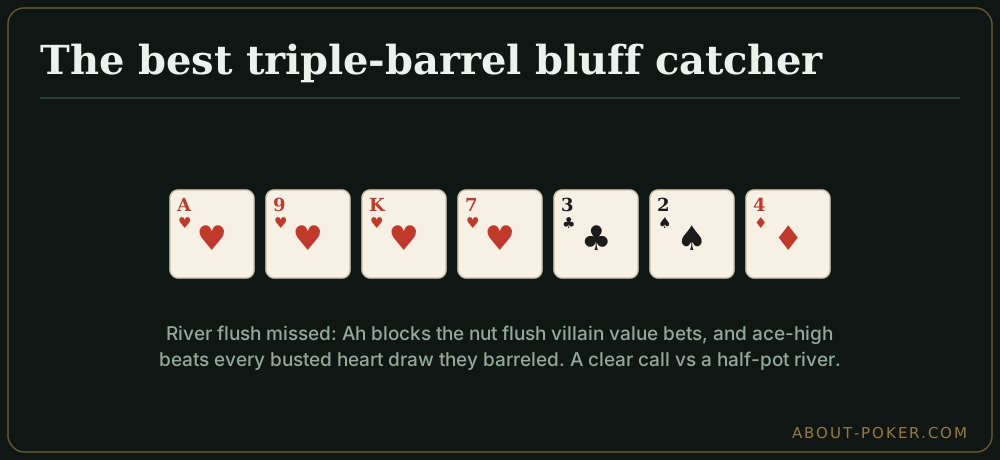
You defend the big blind with Ah 9h against a button open. The flop comes Kh 7h 3c and you check-call a c-bet with your flush draw and two overcards. The turn is the 2s, a total blank, and your opponent bets again; you call, still holding a flush draw plus ace high. The river is the 4d. Your flush missed. Villain bets half pot.
Here your specific cards matter. You hold the Ah, which blocks the nut flush your opponent would be value betting, and your ace high beats every busted heart draw they were barreling with. You also do not block their bluffs. That makes Ah 9h a clear call against a half-pot river bet: you beat missed draws, you remove their strongest value, and MDF says you cannot fold this wide. Contrast that with a hand like Qh Jh, which blocks some of the busted flush draws villain would be bluffing with. That hand is a slightly worse bluff catcher even though it is the same “ace high or worse” tier.
Using blockers to pick your continues
When you have several candidate calls, keep the ones that block value and unblock bluffs. Holding an ace when the nut flush is possible, or holding a card that removes the top of the villain’s straight, tilts the spot toward a call. Holding cards that remove their busted draws pushes toward a fold, because it means they are more likely to have gotten there. This is the everyday application of using blockers to read hands, and it is what separates disciplined defenders from players who call with the “prettiest” hand rather than the most effective one.
Common mistakes when facing three barrels
- Folding relative to your flop range. As covered above, you only owe defense against the current bet, not the whole hand. Players who forget this fold far too much by the river.
- Calling with the wrong bluff catcher. Picking a hand that blocks the bluffs you beat is a subtle but expensive leak.
- Never raising. Against opponents who barrel too aggressively, occasionally raising your genuine value hands punishes their frequency. If you only ever flat, they can value bet you thinly forever.
- Ignoring the opponent. MDF is a defensive floor against a balanced bettor. Against a player who almost never bluffs three streets, you should fold well below MDF; against a maniac, you defend even wider.
Adjusting by opponent and board
Against a tight, honest regular, treat a completed triple barrel as mostly value and lean toward folding your worst bluff catchers. Against a loose-aggressive player who fires whenever a draw misses, widen your calls and prioritize hands that beat busted draws. Board texture matters too: on boards where many draws missed, more of villain’s range is air, so call wider; on boards where the obvious draw got there, tighten up. If you want to build the offensive side of this spot, study triple barreling the river so you understand exactly what a good aggressor is doing to you.
A quick defending checklist
- Ask what the triple barrel polarizes to on this exact runout.
- Compute MDF against the river size and measure it against your turn range, not your flop range.
- Among your bluff catchers, keep the ones that block value and unblock bluffs.
- Adjust for the specific opponent: fold below MDF vs. nits, call above it vs. maniacs.
- Reserve raises for real value and a few blocker bluffs against over-barrelers.
Frequently asked
How often should I call a triple barrel?
There is no single number, but if the aggressor bets a normal size on all three streets you generally need to defend roughly the top of your bluff-catching range so you are not folding more than minimum defense frequency demands. Against a half-pot river you should keep about 67% of your continuing range from the turn.
What hands make the best triple-barrel calls?
The best calls are hands that beat the opponent's missed draws and bluffs while blocking their value combos. Ace-high with the ace of the flush suit, or a pair that unblocks busted draws, catches more bluffs than a hand that removes the very combos you beat.
Should I ever raise the river when facing a triple barrel?
Rarely as a bluff catcher, but yes with your strongest hands and a few blocker-heavy bluffs against players who barrel too wide. Most of your defense will be flat calls; raising turns a bluff catcher into a value hand only when you clearly beat their betting range.