Narrowing Ranges on the River
The river is where the read pays off. Learn how the final card and the river bet split a range into value and bluffs, with a worked bluff-catch example.
On this page · 6 sections
The river is where all the hand-reading work cashes out. There are no more cards to come, no more draws to worry about, and no more streets to gather information. Your opponent’s range is at its narrowest, and your decision is pure: call, fold, or bet for value. Narrowing on the river means taking the tight range you carried from the turn, splitting it by the final card and the final action, and deciding which side of that split you are on.
The river is the narrowest point
By the river you should be working with a small, defined set of hands — the product of your flop and turn reads. If you built the read street by street from narrowing ranges on the turn, the river is a short final subtraction, not a fresh puzzle. The pot is at its biggest and the mistakes are at their most expensive, which is exactly why precision here matters more than anywhere else. For the strategic side of river play beyond reading, see how to play the river.
Read the river card, then the bet
Two things finish the read: what the final card did, and how your opponent bets it.
- The river card either completes obvious draws, bricks them, or pairs the board. A card that completes the flush and straight draws you tracked adds value combos to your opponent’s range; a brick leaves those draws busted and available as bluffs.
- The river bet on most textures is polarized — it splits into hands strong enough to bet for value and hands too weak to win at showdown that bet as bluffs. Medium hands usually check, because they cannot get called by worse or fold out better.
Your job is to weigh the value combos against the bluff combos in the specific line taken. If the busted draws outnumber the value hands and your hand beats the bluffs, you call; if value dominates, you fold or need a strong bluff-catcher.
Blockers sharpen the final count
On the river, the cards in your own hand quietly change the math by removing combinations from your opponent’s range. This is where blockers do real work. Holding a card that blocks their most likely value hands makes your bluff-catch better, because there are fewer value combos left. Holding cards that block their likely bluffs makes a call worse, because you are removing the exact hands you wanted them to be bluffing with. Counting combos and applying removal is the difference between a coin-flip guess and a confident decision.
A worked bluff-catch example
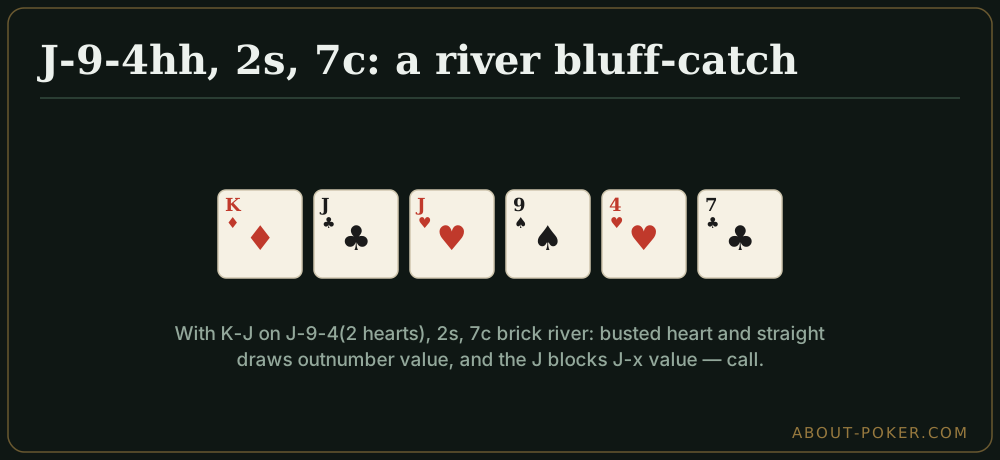
You call a raise in the big blind. The flop is J-9-4 with two hearts; you have K-J offsuit for top pair, good kicker. You check-call the flop. The turn is the 2 of spades, a blank; you check-call again. From your turn narrowing, your opponent’s betting range is roughly sets, two pair, strong jacks, and the missed heart flush draws and straight draws.
The river is the 7 of clubs — a brick that completes nothing. Your opponent bets two-thirds pot. Now split the range. The value hands are the sets, two pair, and the odd better jack. The bluffs are the busted heart draws (A-hearts, Q-hearts, T-hearts combos) and the busted straight draws. Count roughly: the missed draws are numerous, and many of them will fire the river as a last chance to win. Your K-J beats every bluff and loses to every value hand. Because the busted-draw bluff combos are plentiful relative to the value combos on this brick river, and because you hold a jack that blocks some of their J-x value, this is a clear call. Flip the river to a heart and the count inverts — the flushes get there, the bluffs shrink, and the same K-J becomes a fold.
Common mistakes
The most common river leak is not accounting for the card — calling a bluff-catch the same way whether the draw got there or bricked. The second is ignoring blockers and removal, which can swing a close spot either way. The third is calling with the wrong part of your own range: a medium hand that beats no value and loses to no bluff gains nothing by looking up a polarized bet.
A river-narrowing checklist
- Start from the turn-narrowed range.
- Classify the river card: does it complete draws, brick, or pair the board?
- Treat a river bet as polarized — separate value combos from bluff combos.
- Apply blockers and removal from your own hand to the count.
- Call when the beaten bluffs outnumber the value hands you lose to; otherwise fold.
Get the river read right and the biggest pots of the session start going your way — because the money is won and lost on this street.
Frequently asked
How do you narrow a range on the river?
Take the turn-narrowed range and split it by the river card and the final action. A river bet is usually polarized into value hands and busted draws, so you decide whether the value combos or the bluff combos dominate that specific line.
Why is the river read the most important?
There are no more cards to come, so the range is at its narrowest and the decision is pure — call, fold, or bet for value. Getting the river read right directly turns into chips, because every marginal bluff-catch and thin value bet is decided here.
How do blockers help on the river?
Cards in your hand remove combinations from your opponent's range. Holding a card that blocks their most likely value hands makes a bluff-catch better, while holding cards that block their bluffs makes a call worse. Blockers refine the final count.