Overbet Sizing
Overbet sizing done right: when to bet more than the pot, why polarization and nut advantage matter, correct bluff ratios, and a worked example.
On this page · 5 sections
An overbet is any bet larger than the size of the pot. Used well, it is one of the most profitable and intimidating tools in no-limit hold’em — it extracts the maximum from your best hands and forces folds that no normal-sized bet could. Used carelessly, it isolates you against only stronger hands and lights money on fire. This guide explains exactly when overbet sizing wins and how big to make it.
The two conditions every overbet needs
An overbet requires two things at once: a polarized range and a nut advantage.
Polarized means your betting range is made of strong value hands and bluffs, with very few medium-strength hands. Overbets are terrible with merged ranges because a merged range has too many hands that hate getting raised and gain nothing from folding out worse. When you overbet, you want hands that either want maximum value or want maximum fold equity — nothing in between. Our polarized range guide covers how to build one.
Nut advantage means your range contains the strongest possible hands far more often than your opponent’s does. If your opponent can comfortably hold the nuts too, an overbet just gets you raised or called by better. The classic setup is a capped opponent — someone whose range tops out at, say, top pair because they would have raised anything stronger earlier — facing a range that credibly includes sets, straights, and flushes.
How big should an overbet be
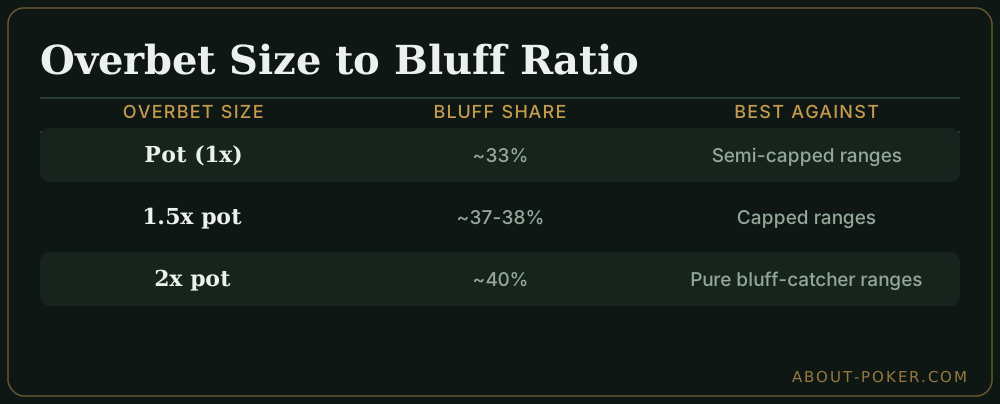
Common overbet sizes run from 1.25x pot up to 2x pot, and occasionally larger on the river. The right size scales with how capped your opponent is and how much nut advantage you hold. The more your opponent’s range is bluff-catchers with no nutted hands, the larger you can go, because they simply have nothing that wants to call a huge bet for value.
A key benefit of going bigger is that you get to bluff more. Bet size and bluff frequency are linked through the pot odds you lay. A pot-sized bet supports roughly one-third bluffs; a 1.5x pot bet supports closer to 37-38%; a 2x pot bet supports about 40%. Larger bets give the defender worse odds, so they must fold more, so you can profitably run more bluffs. Prefer bluffs that block your opponent’s calling range for extra fold equity.
A worked example
You raise A♦K♦ from the button and the big blind calls. The flop is K♠7♦2♣, you c-bet, and get called. The turn is the 3♦, giving you the nut flush draw plus top pair top kicker, and you bet again. The river is the 4♦, completing your nut flush. The pot is 200.
Your range here is beautifully suited to an overbet. You hold the absolute nuts — the ace-high flush — plus other strong flushes and sets, and your bluffs are missed straight and flush draws. The big blind’s range is capped: with the strongest hands they would often have raised earlier, so on the river they mostly hold one-pair hands and busted draws that cannot beat a bluff but also cannot call a huge bet for value. An overbet of 300 (1.5x pot) or even 400 (2x pot) maximizes value from the kings and two pairs that talk themselves into a call, and forces the rest to fold. A normal 100-150 bet would leave money on the table against the calls and fold out too little pressure on the folds.
Where overbets go wrong
The most common failure is overbetting a merged range — betting huge with top pair on a dry board, where you only fold out worse and get called by better. The second is overbetting into an uncapped opponent who can hold the nuts, turning your big bet into a magnet for raises. The third is not having enough bluffs: if you only overbet the nuts, thinking opponents will pay, good players simply fold everything and you win nothing. From the defending side, our facing a river overbet guide shows how strong players hunt for exactly these mistakes.
Overbet sizing checklist
Before you fire an overbet, confirm:
- Is my range polarized — clear value and clear bluffs, few medium hands?
- Do I hold a real nut advantage on this exact board?
- Is my opponent’s range capped, so they cannot easily have the nuts?
- Do I have enough bluffs for this size (about 37-40% at 1.5x-2x pot)?
- Do my bluffs block my opponent’s continuing range?
When all five are true, size up with confidence. When even one is false, a normal bet — or a check — will usually beat a reckless overbet. For the river-specific version of this play, see overbetting the river.
Frequently asked
When should you overbet in poker?
Overbet when your range is polarized — strong hands and bluffs, not medium hands — and you hold a clear nut advantage on a board where your opponent's range is capped. Overbets fail when your range is merged or your opponent still holds the nuts.
How many bluffs can I include in an overbet?
More than with smaller bets. A pot-sized bet supports about 33% bluffs; a 1.5x pot bet supports roughly 37-38%; a 2x pot overbet supports about 40%. Bigger sizes give worse pot odds, so the defender must fold more and you can bluff more.
Why do overbets work?
They apply maximum pressure to capped ranges. When your opponent cannot have the nuts and you can, a huge bet forces them to fold hands that would have beaten a bluff, while your value hands get paid the maximum by the calls that do come.