How to Play Nine-Two Suited (92s)
Nine-two suited is one of the weakest suited hands in poker. Learn why 92s is a near-universal fold and how to handle the rare big-blind defend.
On this page · 6 sections
Nine-two suited (92s) is one of the weakest suited hands in poker. The nine and the two cannot combine into any straight, so the flush is the only strong hand 92s can make, and even that is a long shot. This is a fold from every position, full stop. It earns a short guide only because it can appear at the very bottom of a wide big-blind defense, but the honest summary is that you should be throwing 92s away in essentially every spot it reaches you.
A universal fold when opening
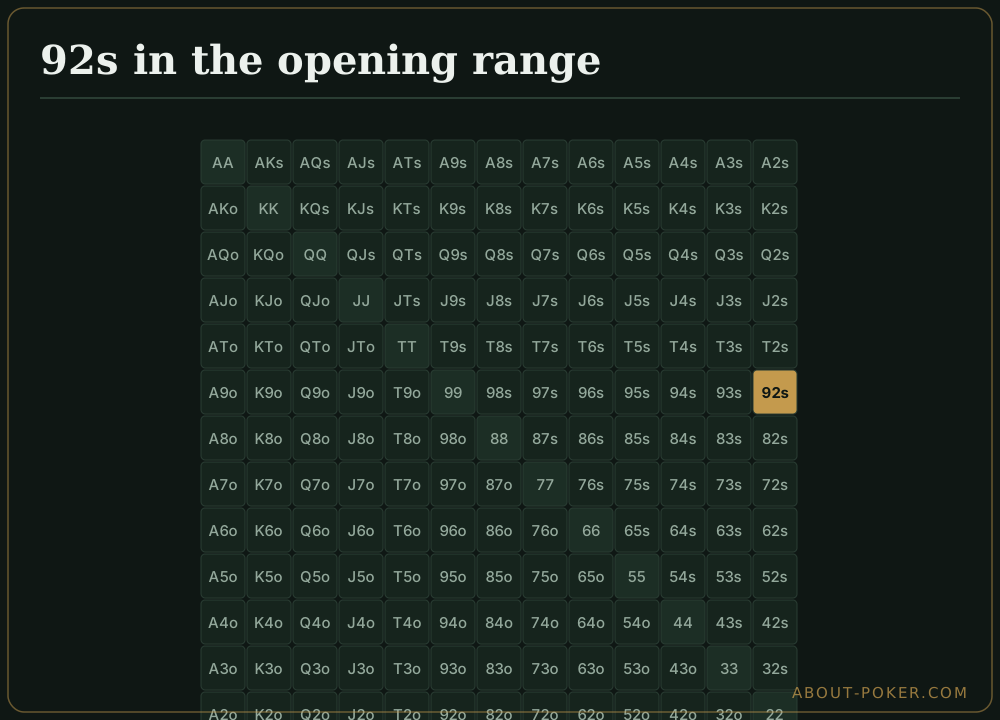
92s is a fold from every opening seat, including the button. It has no connectivity, no straight potential, and only occasional flush draws, so it flops garbage far more often than anything playable. No credible preflop opening ranges include 92s as a raise-first-in; treating it as an open is a clear leak. Even against extremely passive blinds, a 92s button steal is hard to justify, because the hand realizes so little equity when it gets called and sees a flop.
The suited nine-x hands fall off a cliff at the bottom, and 92s is the last rung. Nine-three suited is already a fold-almost-everywhere trash hand, and 92s is weaker still — no straights whatsoever, and the same flush-only profile. There is simply no seat where opening it is standard.
The rare big-blind defend
The lone recurring spot for 92s is the big blind against a single raise at an excellent price, ideally when the pot is already multiway and you are getting a bargain to see a flop. You close the action, so there is no risk of a squeeze behind you, and the hand can flop a flush draw. This is the very bottom of a wide big-blind defense — a call, never a 3-bet, and the first hand you fold to any meaningful sizing or a strong opener. Against a large raise, folding 92s preflop is automatic.
A worked example
You hold 9♦2♦ in the big blind. The button opens to 2.5bb and you call for a good price. The flop comes K♦-7♦-4♣.
You have a flush draw — nine diamonds complete it — worth roughly 35% equity by the river with two cards to come. This is the single texture that makes the defend worthwhile. You can check-call one reasonable bet drawing to the flush, keeping the pot small because you have no backup equity — no straight draw, no overcards worth chasing. If the diamond misses on both the turn and river, you fold. A bare pair of nines or twos on this board is essentially never good, and 92s gives you nothing else to fall back on.
When the rare defend is actually worth it
Because 92s makes zero straights, its whole case rests on the flush plus the occasional cheap trips or two pair, so the defend only earns its keep under a narrow set of conditions. First, the price must be genuinely generous — a 2x min-raise where you’re closing the action and getting better than 3.5-to-1. Bump the open to 3x and the call is gone; a hand this thin can’t survive a worse price. Second, the flop must be one it can use: a two-flush board that hands you a flush draw, or a paired nine or deuce that quietly makes trips or two pair. Everything else is a check-fold.
The opponent matters too. Against a tight raiser whose range dominates you and folds rarely, 92s realizes almost none of its equity and should be mucked preflop. Against a loose limper or in a multiway limped pot, the picture improves: a completed flush gets paid by worse, and the extra players sweeten the pot you’re trying to win with your one real out. Multiway is actually the friendliest home for a flush-only hand, because more callers means more value the times your flush comes in — provided you got in cheaply.
A quick decision checklist for 92s
- Opening from any seat, button included? Fold. No standard range raises 92s first in.
- Cold-calling a raise from outside the blinds? Fold. Out of position with the weakest suited hand is a pure loss.
- Big blind, small raise, closing the action, great price? A bottom-of-range call is defensible and still optional.
- Facing a 3-bet or a large open? Fold instantly — no price, and total domination.
- Flopped a flush draw or a cheap flopped trips/two pair? Continue, keeping the pot small unless you complete.
- Flopped a bare pair or air? Check and fold; a lone pair of nines or deuces is essentially never good here.
For the very next hand up the same ladder, see how nine-three suited — barely better, and still trash — compares, and confirm the fold on your preflop opening ranges chart.
Postflop discipline
92s is a flush-or-fold hand and nothing more. Play it only for the flush draw, and abandon it the moment the flop is dry, high, or disconnected from your suit. Its pairs are the weakest holdings in the deck and lose to nearly every hand that continues, so they are never value bets. As with the other bottom-of-the-barrel suited hands, the real discipline is preflop: fold 92s in nearly every situation, and on the rare occasion you defend it, keep the pot tiny, chase only the flush, and let it go the moment the draw bricks.
Frequently asked
Is nine-two suited ever playable?
Almost never. 92s makes no straights at all and relies entirely on the flush, making it one of the weakest suited hands in the deck. It is a fold from every opening position and appears only, rarely, as a cheap big-blind defend at an excellent price.
Should you open 92s?
No. No standard opening range includes 92s as a raise-first-in from any seat, the button included. If you want to open it, you are playing far too loose for a serious game.
What is the only way 92s makes money?
The flush, and occasionally flopped trips or two pair played cheaply from the big blind. Because the seven-rank gap removes every straight, the suitedness is the hand's only meaningful asset, and it is a razor-thin edge.