How to Play Nine-Three Suited (93s)
Nine-three suited is a five-gap trash suited hand. Learn why 93s is a fold nearly everywhere and how to handle it in the rare big-blind defend.
On this page · 6 sections
Nine-three suited (93s) is a five-gap suited hand — the kind of holding that is suited in name only. With five ranks between the nine and the three, the hand makes no realistic straights, so the flush is essentially its sole source of strong equity. That places 93s firmly in the fold pile from every position. It is worth a short guide because it can appear in the widest big-blind defenses, but the practical advice is blunt: fold it almost every time you see it.
A fold from everywhere you open
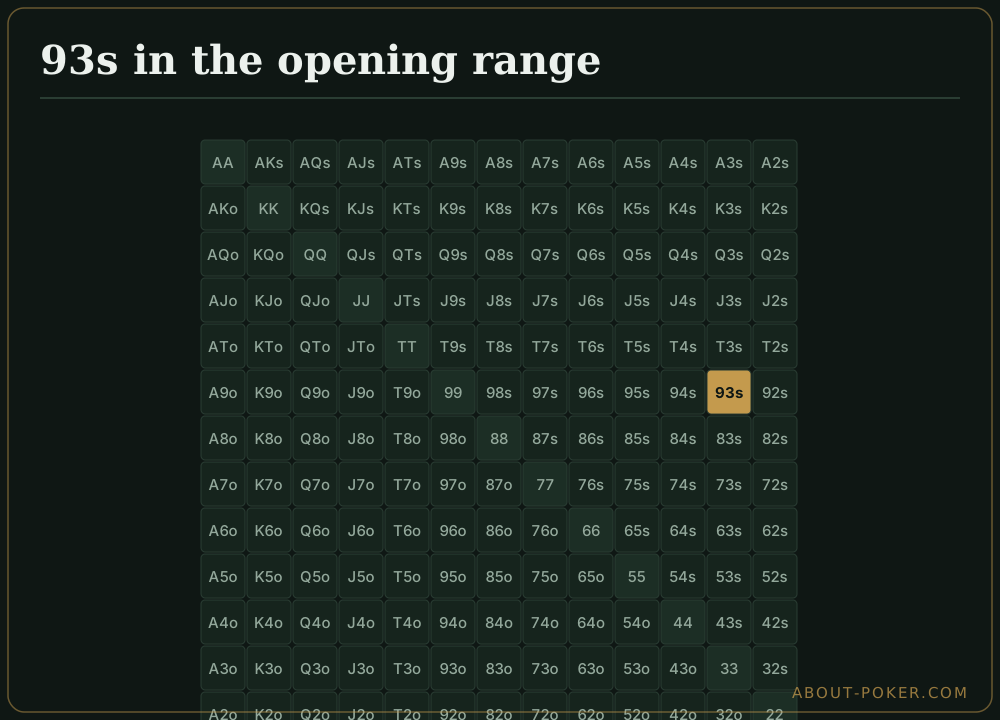
93s is a fold from all opening seats, the button included. It gains nothing from position that would justify a raise-first-in, because when called it flops weak pairs, no straight draws, and only the occasional flush draw. No sound preflop opening ranges list 93s as an open; if yours does, it is a leak. Even the loosest, most passive lineups rarely make a button steal with 93s profitable, because the hand plays so poorly once it sees a flop and gets action.
The pattern down the suited nine-x ladder is clear. Nine-four suited is already a near-trash hand you fold almost everywhere, and 93s is another gap weaker still, with the same flush-only profile and even less connectivity. Treat it accordingly.
The rare big-blind defend
The only recurring spot for 93s is the big blind against a single raise at a very good price. You close the action and get pot odds, and the hand can flop a flush draw to realize a little equity. This is the absolute bottom of a wide big-blind defense — a call, never a 3-bet, and one of the very first hands to fold against any large sizing or a strong, aggressive opener. Facing a big raise, folding 93s preflop is standard and correct.
A worked example
You hold 9♠3♠ in the big blind. The cutoff opens to 2.5bb and, in a multiway pot, you call for a good price. The flop comes J♠-6♠-2♦.
You have a flush draw — nine spades complete it — worth about 35% equity by the river with two cards to come. This is the one flop texture that justifies the defend. You can check-call a single reasonable bet drawing to the flush, keeping the pot small since you have no other equity to lean on. If the spade does not arrive by the river, you fold: a bare pair of nines or threes on this board is essentially never the best hand, and there is no straight potential to save you.
Postflop discipline
93s is a flush-or-fold hand with nothing else attached. Play it only for the flush draw, and let it go the instant the flop is dry, high, or disconnected from your suit. Its pairs are the weakest in the deck and are dominated by nearly every hand that continues, so they are never value bets. The real discipline with 93s is exercised preflop: fold it in the overwhelming majority of situations, and on the rare occasions you defend it in the big blind, keep the pot tiny, chase only the flush, and surrender cheaply when it misses.
How price and opponent decide the defend
Because 93s has no straight potential, the entire defend hinges on price and how wide the raiser is. The threshold is strict: you want a small raise (2bb to 2.3x), a late-position opener with a genuinely wide range, and a heads-up pot where you close the action. In that ideal case you are getting a large discount and can peel to hit the roughly one-in-three flush draw. Change any single variable and the call collapses. A 3x or larger raise worsens your price and tightens the opener’s range, so fold. A raise from early or middle position brings a range full of high cards and pairs that dominate your weak flushes and pairs, so fold. And any time a second player is already in the pot — a cold-caller or a squeeze spot — 93s is a fold, because the field is now stronger and you may not even be closing the action. There is no 3-bet with 93s ever; it has no value to protect and makes a hopeless bluff with no blockers to the hands that continue.
Even the made flush with 93s is not automatic money. On a board where the flush completes, you hold a nine-high or three-high flush that loses to any bigger flush, so on a fourth-card-of-a-suit runout or against heavy aggression you should be willing to fold the low flush rather than stack off. The hand’s ceiling is genuinely capped.
Common mistakes with 93s
The first and biggest mistake is opening it. There is no seat, button included, where raising 93s first-in shows a profit against competent players; if it is in your opening range, that is a leak to remove immediately. The second mistake is defending it too wide — calling against big raises or out of the small blind where you do not close the action and have no positional cover. The third is over-playing the weak pairs it flops: a pair of nines with a three kicker, or a pair of threes, is dominated by essentially the entire continuing range, so betting them for “value” or calling multiple streets with them simply donates chips. The fourth is chasing a backdoor flush or a bare gutshot to nowhere; 93s makes so few straights that a gutshot is almost never worth peeling on its own. Treat 93s as a fold by default, a rare cheap defend at best, and a flush-draw-only hand once you are in. For the next hand up the ladder, see how nine-four suited is handled with one fewer gap and marginally more connectivity.
Frequently asked
Is nine-three suited playable?
Almost never. 93s is a five-gap suited hand that makes essentially no straights, so it relies entirely on the flush. It is a fold from every opening position and only appears, rarely, as a cheap big-blind defend at a very good price.
Should you open 93s?
No. There is no standard opening range that includes 93s as a raise-first-in, including from the button. If you feel tempted to open it, you are opening far too wide for a competitive game.
How does 93s ever win a pot?
Mainly by making a flush, and occasionally by flopping trips or two pair that you can play cheaply from the big blind. Because the five-card gap eliminates straight potential, the flush is doing nearly all of the work, and it is a thin edge at best.