How to Play Nine-Six Suited (96s)
Nine-six suited is a marginal two-gap suited hand. Learn the few seats where 96s opens, when to defend it, and how to play its draws and pairs postflop.
On this page · 6 sections
Nine-six suited (96s) is a two-gap suited hand that sits at the edge of playability. It can still make a flush and the occasional straight, but the two-card gap between the nine and the six removes several straight combinations that give hands like 97s and 98s their value. The result is a hand you play in very few seats, almost always with position, and mostly for its suited-and-connected upside rather than its raw strength.
A late-position and blind hand
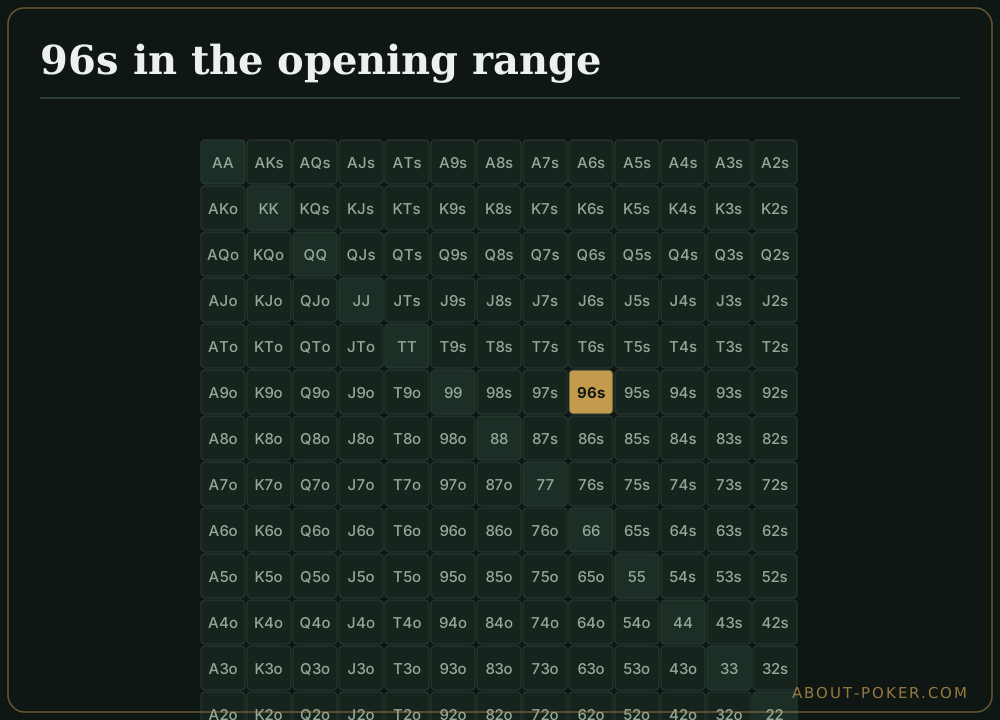
96s is a fold from early and middle position and, at best, a bottom-of-range open from the button and small blind. On the button, when the pot has folded to you, it functions as a steal: you have position on both blinds and enough postflop playability to continue when you connect. In tougher lineups or against blinds that defend and 3-bet aggressively, dropping it is perfectly correct. Your preflop opening ranges will show whether your game is loose enough to include it.
The extra gap is the whole story here. Where nine-seven suited makes more open-ended draws and connects with more boards, 96s makes fewer straights and more easily dominated pairs, so it drops below 97s in every opening range.
Defending the big blind
The seat where 96s appears most often is the big blind. When you are getting a good price against a single raise, 96s is a fine call because it realizes equity through its flush and straight potential and you close the action. This is standard as part of a wide, price-driven defense; see defending the blinds for how these speculative suited hands fit into the calling range. It is a defend, not a 3-bet — the hand is too weak to want to build a big pot out of position.
A worked example
You hold 9♦6♦ in the big blind. The button opens to 2.5bb and you call. The flop comes 7♣-5♠-2♦.
You have an open-ended straight draw — any eight or four makes a straight — plus a backdoor diamond flush draw. That is eight clean outs, roughly 31.5% equity by the river with two to come, and more counting the backdoor flush. Out of position you can check-call one bet or lead depending on the opponent, but the plan is clear: you are drawing to a disguised straight and you continue while the price is right. When the eight or four lands, your straight is well hidden and you can extract value.
Postflop discipline
96s wants connected, low-to-middling boards and hates high, dry ones. On 7-5-2 or 8-6-3 you have real equity; on A-Q-4 you have essentially nothing and should fold to any pressure. Because the hand makes weak, easily dominated pairs, treat top pair as a bluff-catcher, not a value hand, and do not get attached to a nine or a six that pairs. Play 96s for its draws, keep the pots small when you flop marginal made hands, and fold cleanly when the board misses you.
Reading the board: which flops keep you in
Because 96s is so texture-dependent, a quick mental sort of flop types saves you from most of its trouble. There are really three buckets. First, the flops that give you a real draw — anything that brings your open-ender (a seven-eight or seven-five layout that reaches your straight) or a flush draw with two of your suit. These are continue-and-apply-pressure flops. Second, the flops that pair you weakly — a bare nine or a bare six with no draw. These are one-modest-bet-then-give-up flops at most; you are almost never good enough to build a pot. Third, the flops that miss you entirely — high, dry, disconnected boards like A-K-4 or Q-J-8 rainbow. These are check-fold flops, full stop.
The single most common leak with a hand like 96s is treating bucket two as if it were bucket one. A pair of nines on 9-5-2 feels like something, but against a button caller it is routinely behind better nines and overpairs, and it has almost no way to improve. Betting it three streets turns a small loser into a big one. Discipline here means folding bucket-two hands to real aggression rather than paying off.
How the price dictates the defend
The big-blind defend with 96s lives entirely on the price you are getting. Facing a min-raise to 2bb, you are risking 1bb to win a pot that already holds around 3.5bb plus the raiser’s contribution, so the pot odds are excellent and 96s clears the bar to call. Facing a 3bb or larger open, the discount shrinks, your realization out of position gets worse, and 96s slides back into the fold pile. The hand’s poor equity realization — it will flop something worth continuing only a fraction of the time — means it needs the cheapest prices to show a profit. When the raise sizing is large, or when the opener is the kind who barrels relentlessly and denies you free cards, fold and wait for a better spot. For the stronger neighbor that clears these bars more easily, see nine-seven suited, and check where the line falls in your preflop opening ranges.
Frequently asked
Is nine-six suited a good hand?
It is marginal. 96s is a two-gap suited hand, weaker than 97s because the extra gap removes straight combinations. It has just enough flush and straight-draw potential to open from the button and small blind and to defend the big blind, but it is a fold from most other seats.
Should you open 96s from the button?
Often yes, at the bottom of a wide button range. When everyone folds to you on the button, 96s can be opened as a steal because you have position and fold equity. In tighter games or against aggressive blinds it is closer to a fold.
Should you 3-bet bluff 96s?
Rarely. 96s is usually too weak to be a priority 3-bet bluff; you have better suited candidates like 97s and the true connectors. Occasionally you can use it to balance a very wide blind 3-betting range, but it is not a default bluff.