How to Play Six-Three Suited (63s)
63s is a weak suited one-gapper that lives at the very bottom of your range. Learn the few spots where 63 suited is playable and how to handle it postflop.
On this page · 8 sections
Six-three suited (63s) is close to the floor of hands worth thinking about at all. It’s a suited one-gapper — the 6 and 3 aren’t adjacent, so it makes fewer straights than a true connector — and it has zero high-card value. Its entire case rests on suitedness and the rare flopped straight or flush. In practice, 63s is a hand you fold far more often than you play, and knowing why keeps you from talking yourself into bad opens.
Where 63s belongs preflop
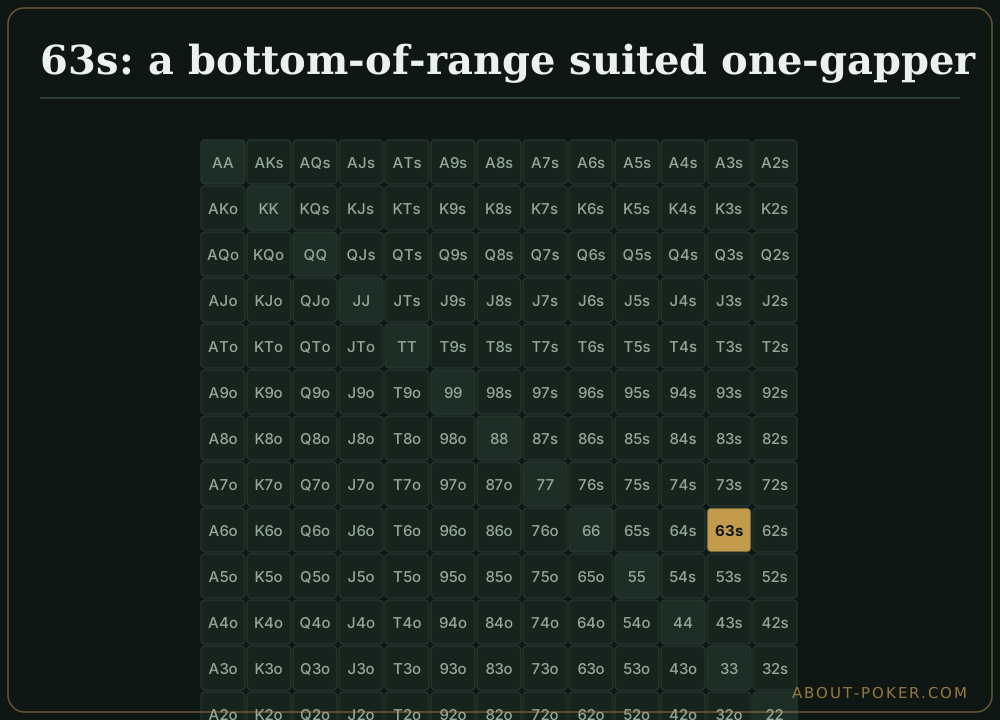
- Early and middle position: fold, without exception at a full table. This hand has no business opening into so many undefeated ranges.
- Cutoff: almost always a fold; only the loosest late-position charts include it.
- Button: a marginal steal against tight blinds — this is essentially its only opening spot.
- Small blind: an occasional steal-raise when the big blind folds too much; otherwise fold.
- Big blind: a cheap defend against small opens, and even here it’s near the bottom of the defending range. See the pot-odds logic in defending the blinds.
If you want to see where the line gets drawn between “just playable” and “fold,” study how it sits at the edge of a chart in preflop opening ranges.
Why the gap hurts
The difference between 63s and its neighbor 64 suited comes down to one card of connectivity. A true connector like 64s can make the low end and high end of straights around both cards; a one-gapper like 63s needs the gap filled and has fewer straight combinations overall. That’s a real reduction in the implied-odds equity that speculative hands live on. Suitedness keeps 63s barely alive — flush draws give it something to do postflop — but you should never confuse “suited” with “strong.”
A worked example
You defend 6♥3♥ in the big blind against a button open and check-raise… almost never. Instead, picture the flop that justifies the defend.
Flop: 7♥ 4♥ 2♣. This is 63s at its best: a flush draw (9 outs) plus a gutshot to the straight (a 5 makes it — 4 outs), roughly 12 clean outs and about 45% equity against a single overpair by the river. That’s enough to continue as a check-call or a semi-bluff check-raise on the right opponent. But notice how specific this flop is — you needed a heart-heavy, connected board just to reach a marginal continue. Most flops leave 63s with nothing, which is exactly why it’s a fold preflop most of the time.
Turn: 7♥ 4♥ 2♣ Kh completes your flush. Now you have the payoff hand and can bet for value. The lesson isn’t ”63s is good” — it’s that when a bottom-of-range hand does connect, it connects hard and disguised, which is the only reason to ever put it in play.
Postflop shorthand
- Flush or straight: rare but golden — bet for value, it’s well hidden.
- Strong draw: semi-bluff selectively; you rarely have the equity lead an adjacent connector would.
- One pair: almost always a check-fold; you’re usually dominated.
- Air: give up. 63s has no showdown value to protect.
How the spot changes the hand
63s is one of those hands whose value swings hard on the details of the situation, so the same two cards can be a fine call or an obvious muck depending on the surrounding conditions.
- Position. In position, 63s can peel flops, control the pot, and fire semi-bluffs when it picks up a draw. Out of position it loses most of that — you cannot control the size of the pot as well, and you get to see fewer free cards. That is why the only realistic opens are late-position steals and the only realistic call is a big-blind defend where you close the action.
- Stack depth. Speculative hands live on implied odds: the payoff when you flop a flush or straight and stack someone. At 40bb or shorter, that payoff shrinks and 63s slides from marginal to unplayable. At 150bb+ it gains a little because the stacks you can win are deeper, but it never becomes strong.
- Opponent type. Against a tight, straightforward player who folds when they miss, a late-position 63s steal picks up the blinds often enough to profit. Against a calling station who never folds, drop the steal — you cannot bluff them and your showdown value is near zero.
A second example: the multiway trap
You defend 6♠3♠ in the big blind and three players see a flop of 8♠ 5♦ 2♠. You have flopped a flush draw, which feels great — but this is exactly where 63s can bleed chips. In a four-way pot, your nine-out flush draw is worth far less than heads-up: multiple opponents mean someone is more likely to hold a bigger flush draw, and your fold equity is close to zero because you cannot get everyone to fold with one bet.
The disciplined line is to check and take a cheap card, then continue only if you complete or pick up more equity. Do not turn a modest draw into a big multiway bluff. The general rule holds: 63s wants small, controllable pots where it can either hit its disguised nut hand or get away cheaply, and multiway pots against sticky opponents are the opposite of that.
When to just fold
Fold 63s facing any 3-bet, in any multiway raised pot from out of position, and at shallow stacks where implied odds disappear. This is a deep-stack, in-position, or cheap-defend hand only — and even then it’s optional. There’s no shame in never opening it. If you are ever unsure, folding 63s is almost never a real mistake — the hand’s expected value hovers so close to zero that mucking it costs you very little and saves you from the trap of overplaying a bottom-of-range holding.
Where to go next
63s teaches range discipline: it’s the kind of hand that looks playable because it’s suited, but the math says otherwise. Compare it to the stronger 64 suited, drill the defends in defending the blinds, and anchor your whole preflop plan at the preflop strategy hub.
Frequently asked
Is 63 suited a good hand?
No — 63s is one of the weakest suited hands worth ever playing. It's a suited one-gapper with poor connectivity, so it makes straights less often than a true connector like 64s. Treat it as a fold from almost everywhere except a wide button steal or a cheap big-blind defend.
Should you open 63 suited?
Rarely. It's at most a marginal button or small-blind steal when the table is playing straightforwardly. From any earlier position it's a clear fold — the hand simply doesn't make enough to overcome the disadvantage of acting into ranges behind you.
How does 63s compare to 64s?
64s is noticeably better because its cards are adjacent, so it makes more straights and cleaner draws. 63s is a one-gapper, which cuts down its straight-making combinations. When you trim your range, 63s is one of the first suited hands to cut.