How to Play Six-Two Suited (62s)
62s is one of the weakest playable suited hands — a two-gapper with almost no value. Learn the rare spots where 62 suited is a fold vs a cheap defend.
On this page · 8 sections
Six-two suited (62s) sits at the very bottom of the hands anyone bothers to write about. It’s a suited two-gapper: the 6 and 2 are far enough apart that straights are hard to make, and 6-high offers no showdown value on its own. Realistically, 62s is a fold from every open position and belongs — if anywhere — in the widest, cheapest big-blind defends only. The useful skill here is recognizing why it’s a fold, so you don’t leak chips opening it out of boredom.
Where 62s belongs preflop
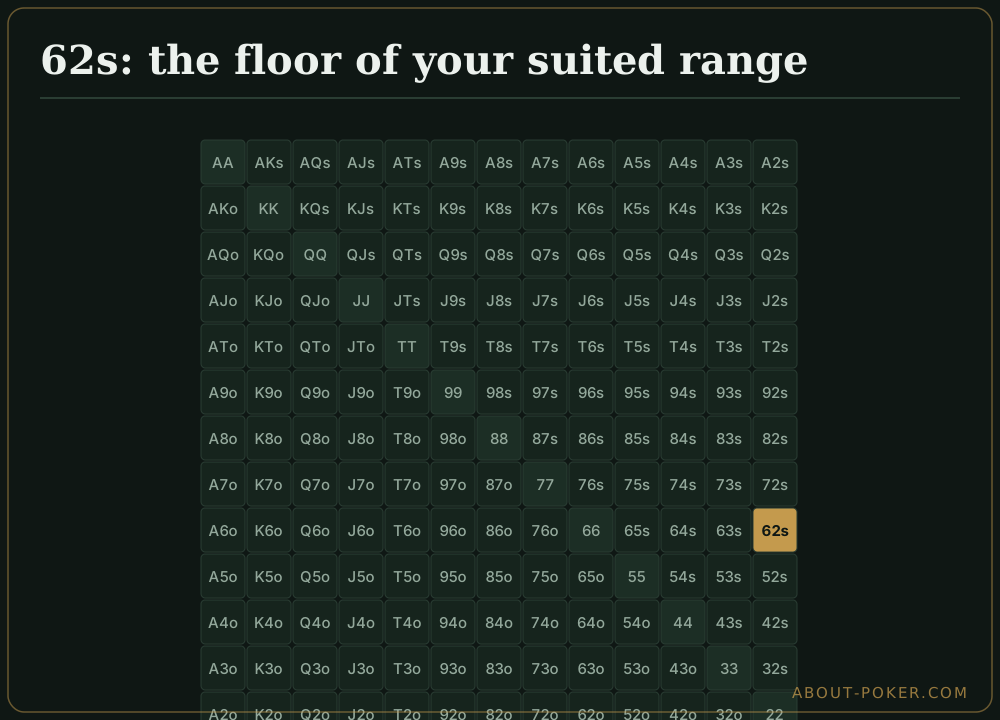
- Every open position (EP through button): fold. There is no full-ring or 6-max chart that opens 62s as a standard raise. The straight potential is too thin to justify entering the pot.
- Small blind: fold; even as a steal it’s below the threshold where the extra fold equity pays for the weak holding.
- Big blind: the only real home — a marginal defend against a small single raise when you’re getting a strong price and closing the action. Understand exactly why in defending the blinds.
The gap tax
Think of connectivity as a tax on straight-making. Compare the neighbors:
- 64 suited — adjacent connector, most straights, an actual late-position open.
- 63 suited — one-gapper, fewer straights, a marginal button steal at best.
- 62s — two-gapper, fewest straights, essentially a fold everywhere.
Each additional card of gap removes straight combinations, and 62s has paid that tax twice. Suitedness keeps it from being pure trash — flush draws give it something postflop — but “suited” is doing all the work here, and it isn’t enough to open with.
A worked example
Suppose you defend 6♦2♦ in the big blind for a discounted price and check the flop.
Flop: 5♦ 4♦ Kc. This is about as good as 62s gets: a flush draw (9 outs) plus a gutshot (a 3 completes the straight — 4 outs), roughly 12 clean outs and about 45% equity against a single top pair by the river. That’s enough to peel one card as a check-call, and to bluff-raise only against opponents who fold too much. Now notice the setup cost: you needed a diamond-heavy, connected flop just to reach “marginal continue.” On the vast majority of boards, 62s flops air — which is the entire reason it’s a fold before the flop.
Turn: 5♦ 4♦ Kc 9d brings your flush in. Suddenly you hold a disguised winner and bet for value. But the honest takeaway is that these run-outs are rare, and chasing them from anywhere but a nearly-free big-blind defend is a losing proposition.
Postflop shorthand
- Flush or straight: the payoff — bet for value, it’s well hidden.
- Combo draw: the only spot to get aggressive, and only against foldy opponents.
- Any pair: almost always check-fold; you’re dominated more often than not.
- Air: give up immediately; there’s nothing to protect.
When to just muck it
Fold 62s to any raise you’d have to call cold, in every multiway pot from out of position, at shallow stacks, and any time the big-blind price isn’t excellent. This is the hand that teaches discipline: if you can lay down 62s automatically, you’ve internalized that “suited” alone never makes a hand worth playing.
The “suited” trap
The single biggest leak with hands like 62s is overvaluing the word “suited.” Suitedness adds only about 2-3% equity to a hand preflop — real, but small. It flips a truly awful holding into a merely bad one; it does not turn trash into a raise. Beginners see two matching suits and imagine flushes, but you flop a flush draw with a specific two-card suited hand only about one time in nine, and you complete it only around one in three of those. Multiply that through and a made flush is rare, while the far more common outcome is flopping nothing and folding.
The deeper problem is domination even when you do hit. If a diamond flush arrives with 62s, you hold the 6-high flush — the weakest possible flush, one that loses stacks to any bigger diamond. So the rare “good” outcome still leaks money against a better flush. That is the difference between 62s and a hand like A5s, where suitedness gives you a nut flush draw worth playing. Low, gappy suited hands make the small flushes that cost you, not the big ones that pay you.
Stack depth and multiway reality
62s gets no better as stacks change. Deep-stacked, its implied odds sound tempting, but the hands it makes are too weak to win big pots and too rare to matter; you are far more likely to make a costly second-best hand than a stack-winning one. Short-stacked, there is no implied-odds payoff at all, so even the marginal big-blind defend disappears — fold and wait. Multiway, the picture is worst of all: with more players, your small flushes and thin straights are beaten far more often, and the price to see a flop is rarely good enough to justify a hand that flops air on most textures.
Where to go next
62s marks the floor of your suited range. Learn where the line sits by comparing it to 63 suited and the genuinely playable 64 suited, sharpen the one spot it’s live in defending the blinds, and build the full picture at the preflop strategy hub.
Frequently asked
Is 62 suited a good hand?
No. 62s is a suited two-gapper with essentially no high-card value and poor straight potential, making it one of the weakest hands you'd ever put into play. In almost every situation it's a fold; the only reasonable spot is a very cheap big-blind defend.
Should you ever open 62 suited?
Almost never. Standard solver charts fold 62s from every position, including the button. If it appears in any range at all, it's as an occasional big-blind defend against a small open getting a good price, never a raise-first hand.
Why is 62s worse than 64s or 63s?
Connectivity. 64s is an adjacent connector and 63s a one-gapper; 62s is a two-gapper, so it makes the fewest straights of the three. Every card of gap between your two ranks cuts straight combinations, and 62s has the widest gap that's still 'suited-connector-adjacent.'