Q7 Poker Nickname & Meaning
Q7 is nicknamed the Computer Hand. What queen-seven means, why computers supposedly flagged it as the break-even hand, and how to play it.
On this page · 8 sections
Q7 — queen-seven — is nicknamed the Computer Hand. It’s one of poker’s most misunderstood nicknames: the story says computers identified Q7 as the hand that wins exactly half the time against a random hand, making it the “average” starting hand. It’s a fun piece of folklore, but it doesn’t mean queen-seven is worth playing.
Where “the Computer Hand” comes from
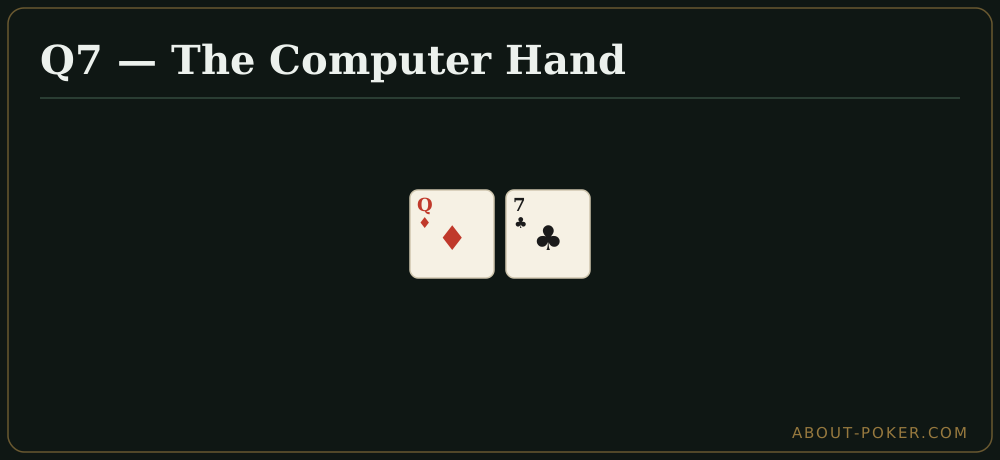
The nickname traces to early computer simulations of poker hands. Those studies reportedly found that queen-seven offsuit is roughly the median hand heads-up: against a completely random two cards, Q7o wins just over half the time, placing it near the exact middle of all starting hands. Whether the figure was ever that precise is debatable, but the tale stuck, and Q7 became “the Computer Hand.” Unlike a wordplay nickname such as Kojak for KJ, this one comes from math folklore.
What queen-seven is worth
The break-even claim hides how weak Q7 actually is in practice:
- A very low bar: “Beats a random hand over 50% of the time heads-up” includes being ahead of every trash hand in the deck. Against real ranges — the hands people actually raise and call with — Q7 fares much worse.
- Big gap: The queen and seven are five apart, giving Q7 little straight potential.
- Easily dominated: When the queen pairs, Q7 is out-kicked by AQ, KQ, QJ, QT and more; when the seven pairs, it’s a weak second pair.
- Suited helps a bit: Q7 suited adds flush potential over Q7 offsuit, which is the version the legend refers to.
Worked example: median doesn’t mean good
Take the nickname literally and imagine Q7 offsuit all in against a truly random hand. It’s roughly a coin flip — about 52% — which is the whole basis of the “Computer Hand” name.
Now run it against a realistic opponent range instead. Say a middle-position player raises and you face them with Q♦ 7♣; their range is loaded with hands like AK, AQ, KQ, and pocket pairs. Against a strong, non-random range like that, Q7o is a significant underdog — often in the low-to-mid 30s in equity. That gap between “coin flip vs. random” and “underdog vs. real ranges” is exactly why the Computer Hand nickname misleads beginners. Being average against anything is not the same as being good against the hands people play.
How to play queen-seven
Treat it as the marginal hand it is:
- Fold Q7o in most spots. Early and middle position, it’s a clear muck. It’s dominated too often to open profitably.
- Q7 suited is the playable version. As a loose late-position steal or blind defense, its flush potential gives it a reason to exist.
- Don’t overvalue top pair. A pair of queens with a seven kicker is frequently second-best; keep the pot small.
- Position matters. Any time you play Q7, do it in position so you can control the pot size and fold cheaply.
The Computer Hand versus stronger queens
Q7 sits well below the strong queen hands. Where a hand like KJ (Kojak) at least has two broadway cards, Q7 pairs a lone queen with a low, disconnected kicker. The “median hand” label is a great bar-trivia fact, but it’s a trap if you use it to justify playing queen-seven against real opponents. Fold it as a default, play the suited version selectively, and let the nickname stay a fun story rather than a strategy.
Why “median” is a misleading label
The heart of the Computer Hand myth is a statistical sleight of hand, and it is worth unpacking because the same mistake trips up beginners with other marginal holdings.
When people say Q7o “wins just over half the time,” they mean against a uniformly random pair of cards — literally any two cards in the deck, weighted equally. But no opponent ever plays a uniformly random hand. Real players fold the bottom of the deck and only put money in with hands they have chosen: pairs, big cards, suited connectors, dominating aces. The moment an opponent voluntarily raises or calls, their range shifts dramatically upward, and Q7o’s “50%+” evaporates.
Think of it as the difference between two questions. “Does Q7o beat a card drawn from a hat?” Yes, barely. “Does Q7o beat the hands a thinking player commits chips with?” No, usually not. Being the median of all 1,326 possible starting combinations is a trivia fact about the deck, not a statement about profitability at the table. The same trap catches hands like J8o or K5o — technically “above average” against nothing, but easy folds against real ranges.
The domination problem in detail
The specific reason Q7 struggles is domination — the situation where you make a pair but a better kicker or a better pair beats you, and you have no easy way to know it.
- When the queen pairs: you hold top pair with a seven kicker. On a queen-high board you will happily bet, but AQ, KQ, QJ, and QT all have you out-kicked. Against a raiser, a paired queen is exactly the kind of hand that looks strong and quietly loses a big pot.
- When the seven pairs: you have a weak middle or bottom pair with a queen kicker. That is rarely worth more than a bluff-catch, and it folds to sustained pressure.
- When you miss both: which is most flops, you have queen-high — no showdown value and no draw. There is nothing to do but give up.
Notice that Q7’s two “good” outcomes both lead to dominated, hard-to-play pairs, while its most common outcome is a clean fold. That combination — occasional traps, frequent whiffs — is the signature of a hand you should not be entering pots with as a default.
Keep going
Q7 is the Computer Hand — famous for being average against a random hand, which is a much lower bar than it sounds. Fold queen-seven offsuit in most spots, play queen-seven suited selectively, and browse the full poker glossary for more nicknames.
Frequently asked
What is the nickname for Q7 in poker?
Queen-seven is nicknamed the Computer Hand. The name comes from an old (and often overstated) claim that computer simulations identified Q7 offsuit as the median heads-up hand that beats a random hand just over half the time.
Why is Q7 called the Computer Hand?
Early poker computer studies reportedly found that queen-seven offsuit is roughly the break-even point against a random hand heads-up. The story stuck, and Q7 became 'the Computer Hand,' whether or not the exact math holds up.
Is Q7 a good poker hand?
Not really. Queen-seven is a gappy, easily dominated hand. The 'beats a random hand' claim is about heads-up against literally any two cards, which is a very low bar. In real games it's usually a fold.
Should you play Q7?
Mostly no. Q7 offsuit is a fold in most spots; Q7 suited is a marginal late-position or blind-battle hand. Being the 'median' hand does not make it profitable against real, non-random ranges.