What Is Action Card in Poker?
An action card in poker is a turn or river card that connects with ranges and creates more betting. Learn what an action card means and how to react to one.
On this page · 6 sections
An action card is a turn or river card that connects with the hands in play and generates more betting. It might complete a flush draw, fill a straight, put an overcard on the board, or bring a card that lets second-best hands feel confident enough to put in chips. When an action card lands, pots tend to grow because more players have a reason to bet, call, or raise.
The term is descriptive rather than technical. Commentators and players use “action card” to explain why a hand suddenly got big. If the turn is a card everyone was waiting on, and now the chips are flying, that card earned its name.
What an action card actually means
An action card increases the amount of betting on the street it arrives. It does this by interacting with the ranges still in the hand. When a card gives multiple players a strong-feeling holding, or completes obvious draws, the natural result is more aggression and more calling.
The opposite is a card that misses everyone. A card that changes nothing keeps the pot small because no one’s hand improved and no new draws got there. That kind of card is a brick or a blank, the quiet counterpart to an action card.
What makes a card an action card
A card earns the label when it does one or more of these things:
- Completes a draw, especially a flush or an open-ended straight.
- Pairs a card that connects with the callers’ range.
- Brings a high card that hits the preflop caller, like an ace or king on a low flop.
- Adds a new draw, giving players equity to continue with.
The more of these a single card does, the more action it creates. A card that both completes a flush and pairs the board can be enormously actionable, because it makes flushes, full houses, and stubborn overpairs all willing to put in money.
A worked example
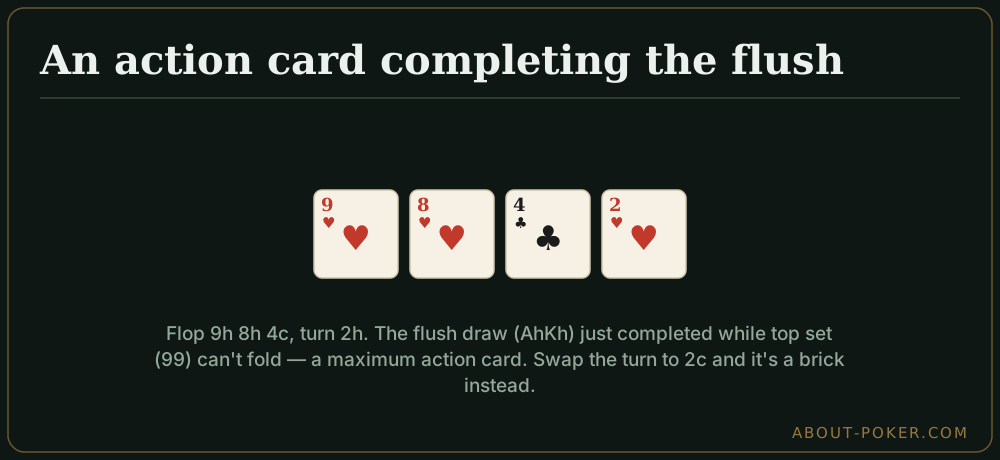
The flop is 9h 8h 4c and two players see the turn. One holds Ah Kh for the nut flush draw plus two overcards, the other holds 9c 9d for top set. The turn is the 2h. That is a huge action card. The flush just got there, and top set is not folding, so the money is very likely to go in on the turn or river.
Now rewind and make the turn the 2c instead. Nothing completed, no new draw arrived, and the flush draw missed. That is a brick. Betting slows down, the flush draw may give up, and the pot stays smaller. Same two hands, two very different turn cards: one screams action, the other whispers.
How to react to an action card
The right response depends on which side of the range you are on. If the action card helps your range more than your opponent’s, you should bet more often and larger, because your strong hands got stronger and you can charge draws that got there. If it helps their range more, you slow down and start protecting your stack.
Position matters here. In position you get to see whether an action card provokes a bet before you act, which is valuable information. Out of position you have to guess, so you should lean on a plan formed on the earlier street rather than reacting emotionally to the card. Thinking about the whole runout in advance keeps you from panicking when a big card lands.
Common mistakes with action cards
The most frequent error is paying off every action card as if it always beats you. A flush completing does not mean your opponent has a flush; it means it is now possible. You still have to weigh how often their specific line contains that hand. Folding a strong hand to every scary card lets observant opponents bluff you relentlessly.
The opposite mistake is ignoring an action card entirely and continuing to bet into a board that just smashed your opponent’s calling range. If the turn brings an overcard that hits every hand they called with, firing again with a marginal holding often just donates chips.
A quick checklist
When an action card lands, ask:
- Whose range does this card help more, mine or theirs?
- Did it complete an obvious draw, and does my opponent’s line contain that draw?
- Should I be growing the pot for value or controlling it to keep it small?
- Am I reacting to how scary the card looks, or to how often it actually beats me?
Answer those and you will handle action cards with a plan instead of a flinch. The card creates the drama, but your read on the ranges decides what to do about it.
Frequently asked
What is the opposite of an action card?
A brick or blank. Those are cards that miss most hands and rarely change the situation, so they generate little betting. An action card does the reverse: it completes draws or connects with ranges, so more chips go in on the following street.
Is an action card the same as a scare card?
They overlap but are not identical. A scare card threatens the current leader, like a flush completing. An action card is any card that increases betting, which often includes scare cards but also cards that simply give a second-best hand enough to pay off. Every scare card creates action, but not every action card is scary.
Why do players like to see an action card?
Because action cards get money into the pot. A player with a strong made hand wants cards that give opponents a reason to call or bet, such as a card that completes a draw for a worse hand. More action usually means more value for whoever is ahead.