What Is Block Bet in Poker?
A block bet is a small bet made out of position to set the price and stop a bigger bet from your opponent. Learn when to use it, sizing, and an example.
On this page · 7 sections
A block bet is a small bet made out of position — most often on the river — whose main job is to set a low price for the hand and stop your opponent from betting bigger. By putting out a small bet yourself, you “block” the larger bet they might have made if you had checked. It is a defensive tool that trades a little value for a lot of control, and it is one of the most useful moves a player out of position can learn.
Where the term comes from
The name describes the goal, not the cards. When you are out of position and check, you hand your opponent the choice of how much to bet — and a good player will often bet large, putting you to a tough decision for a big chunk of chips. A block bet takes that choice away. You set a small price first, and most opponents will simply call rather than raise. You have blocked the big bet before it happens.
Why the block bet works
Two effects make it valuable. First, it controls the pot. A marginal hand that wants to see a cheap showdown does far better paying a small bet you chose than a large bet your opponent chose. Second, it can get thin value. A weak-but-best hand often cannot bet large for value, but a small bet gets called by even weaker hands that would have checked back.
There is also a card-based reason the move works, which is why it overlaps with the blocker bet: when you hold a card that makes your opponent’s strongest hands less likely, a small bet is safer because they are less likely to hold the monster that raises you.
Worked example: blocking on the river
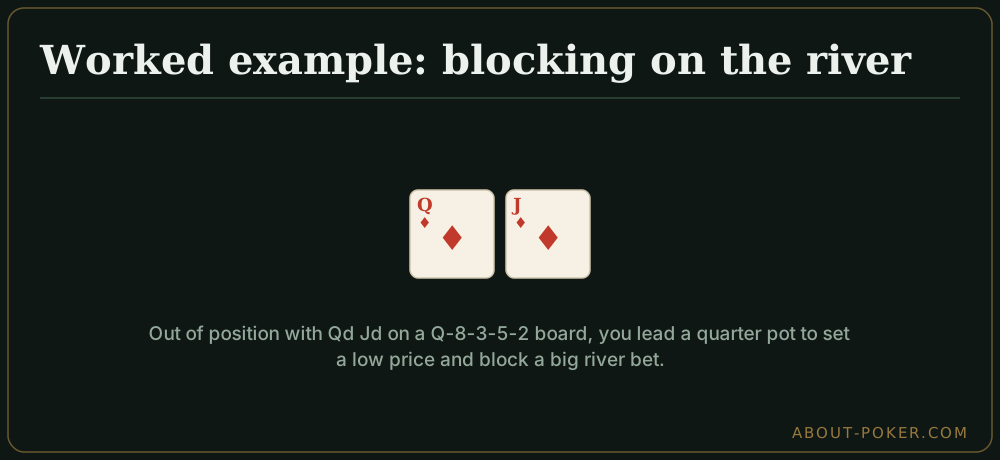
You are in the big blind with Q♦ J♦ and the board runs out:
Q♠ 8♥ 3♣ 5♦ 2♠
You have top pair with a decent kicker — a hand that is often best but not strong enough to want a big pot. If you check, an aggressive button might bet three-quarters of the pot, and you face an unpleasant call-or-fold for a lot of chips. Instead you lead out for a quarter of the pot.
Now the button’s options shrink. Most of the time they just call with a worse queen, a middle pair, or ace-high that beats nothing — you got thin value you could not have gotten by checking. And crucially, they rarely raise a small bet without a very strong hand, so you have blocked the big river bet you feared. You reached a cheap showdown on your own terms.
If you had checked, the same button might have fired a large overbet, and you would have been stuck guessing whether top pair was good. The block bet solved that problem for a quarter of the pot.
When to use a block bet
Block bets shine when:
- You are out of position with a marginal made hand that wants showdown but not a big pot.
- Your opponent bets aggressively when checked to. The block takes their big-bet option away.
- You have a thin value hand that cannot profitably bet large but can win small calls.
- You hold a blocker to the hands that would raise you, making the small bet safer.
How big should it be
Keep it small — usually a quarter to a third of the pot. The entire purpose is to keep the price low, so a large block bet is a contradiction. If your hand is strong enough to want a big pot, you should be betting big for value instead, not blocking.
Common mistakes
- Block betting too big. A half-pot-or-more bet stops being a block and starts building a pot you did not want.
- Blocking against players who raise light. If your opponent attacks small bets with bluff-raises, the block backfires — you either fold the best hand or call in a bloated pot.
- Blocking with hands that want value. Strong hands should bet for value, not block. Reserve the move for marginal holdings.
- Predictable blocking. If you only ever bet small with medium hands, sharp opponents read you and raise. Mix in some small bets with strong hands too.
Quick checklist before you block bet
- Am I out of position with a hand that wants a cheap showdown?
- Would checking invite a big bet I do not want to face?
- Is my opponent unlikely to raise a small bet as a bluff?
- Is my size small enough to keep the pot controlled?
If those line up, a small lead is often your best friend. The block bet turns a tough out-of-position decision into a cheap, controlled one. Keep building your reads in the poker terms glossary.
Frequently asked
What is a block bet in poker?
A block bet is a small bet made out of position, usually on the river, designed to set a low price for the hand and stop your opponent from making a larger bet. By betting small yourself, you 'block' them from betting big and charging you more, while still getting thin value or realizing your hand cheaply.
When should you use a block bet?
Use a block bet out of position when you have a marginal hand that wants to reach showdown cheaply, or a thin value hand that would face an awkward decision if checked to. It works best against opponents who bet aggressively when checked to and who rarely raise small bets.
How big is a block bet?
Block bets are small, typically a quarter to a third of the pot. The whole point is to keep the price low, so a large block bet defeats the purpose. The size should be enough to discourage a big bet from your opponent but small enough to lose little when you are behind.
What is the difference between a block bet and a blocker bet?
The terms are often used interchangeably, but strictly a blocker bet refers to betting small partly because you hold cards that block your opponent's strong hands. A block bet refers to the strategic goal of blocking a larger bet by setting the price. In practice both describe the same small out-of-position bet.