What Is Barrel Off in Poker?
To barrel off is to bet every street through the river, firing all your chips on a bluff or big value hand. Learn when barreling off wins and when it's a leak.
On this page · 6 sections
To barrel off means to keep betting on every street — flop, turn, and river — committing your chips all the way to showdown. Most often it describes firing a big bluff across all three streets, applying relentless pressure to fold out a better hand, though it also describes a value line where you bet every street to extract the maximum with a strong holding. Barreling off is one of the most powerful and most misused lines in poker: done well it wins big pots, done stubbornly it empties your stack.
What Barreling Off Looks Like
A “barrel” is a postflop bet, and each street adds one. A single flop bet is a c-bet; betting flop and turn is a double barrel; betting flop, turn, and river is a triple barrel — the full barrel off. When someone says they “barreled off,” they mean they fired all three streets and put a large chunk of their stack into the pot by the river.
The line comes in two flavors. As a bluff, you are representing a very strong hand and betting big enough to make your opponent fold everything but their best holdings. As value, you have that strong hand for real and you bet every street because your opponent will keep paying.
Why the Line Is So Powerful
Betting three streets tells a consistent, escalating story. Each barrel narrows what your opponent can credibly continue with, and by the river only their strongest hands survive. Against a thinking player who can fold, a well-constructed triple-barrel bluff is one of the most profitable plays in the game, because the pots you win are large and the folds come from hands that had you beat.
The power comes from pressure over time. One bet is easy to call; three big bets in a row, each on a card that could have improved you, is genuinely hard to face down.
A Worked Example
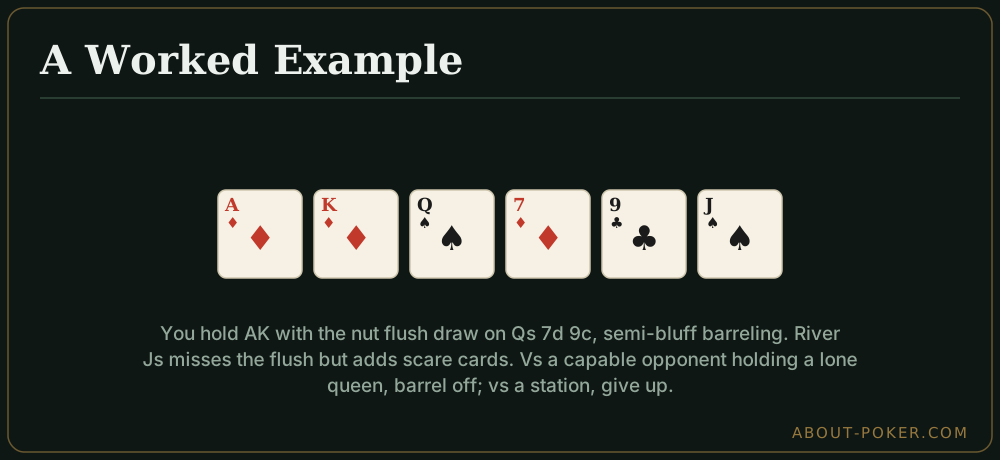
You raise with Ad-Kd, the big blind calls, and the flop is Qs-7d-4d — you have two overcards and the nut flush draw. You bet (barrel one). The turn is the 3d, completing your flush; you bet again for value now (barrel two). But say instead the turn had been the 9c and you still held only ace-king high with the flush draw: you fire anyway as a semi-bluff, representing the queen. The river is the Js, missing your flush.
Now you must decide. The runout gave you scare cards (the flush never came in visibly for villain, but you can represent a queen or a rivered straight), and a capable opponent holding a lone queen may well fold to a big third barrel. If the read supports it, you barrel off — one last large bet — turning your busted draw into a bluff that folds out a better hand. If instead your opponent is a station who calls with any pair, you give up and check the river, because barreling off into someone who will not fold just donates chips.
When to Barrel Off — and When Not To
Barrel off as a bluff when three things line up: the board and runout favor your range, scare cards let you credibly represent strength, and your opponent is capable of folding. Barrel off for value when you hold a strong hand and your opponent will pay across all three streets.
Do not barrel off into a calling station, into a board that missed your range and hit theirs, or simply because you started betting and feel committed. Stubborn barreling — firing the third bullet out of momentum rather than logic — is one of the fastest ways to lose a stack.
Common Mistakes
- Barreling stations. No fold equity turns a triple barrel into a triple donation.
- Autopilot third bullets. Firing because you fired before, not because the spot supports it.
- Ignoring the runout. If the river changes nothing about your story, the barrel stalls.
- No value hands in the line. Bluffing every barrel-off makes you easy to call down.
Quick Checklist
Before you barrel off, ask: does the board favor my range, does this runout give me a credible story, and can this opponent actually fold? If all three are yes, fire all three streets with conviction. If any is no, take a cheaper line or give up — a barrel off is a deliberate, well-earned play, never a stubborn one.
Frequently asked
What does barrel off mean in poker?
To barrel off means to keep betting on every street — flop, turn, and river — committing your chips all the way to the end of the hand. It usually describes firing a big bluff across all three streets, or getting maximum value with a strong hand by betting every time.
What is a triple barrel?
A triple barrel is betting all three postflop streets: flop, turn, and river. It is the most common form of barreling off. As a bluff it applies relentless pressure; as a value line it extracts the maximum from a strong hand.
When should you barrel off as a bluff?
Barrel off as a bluff when the board and runout favor your range, when scare cards let you credibly represent strong hands, and when your opponent is capable of folding. Against a calling station or a board that missed your range, barreling off just loses chips.
Is barreling off risky?
Yes. A triple-barrel bluff commits a large portion of your stack, so if the read is wrong or the opponent will not fold, you lose big. Barreling off should be a deliberate, well-chosen line, not an autopilot habit born of stubbornness.