What Is Cutoff in Poker?
The cutoff (CO) is the seat directly to the right of the button — the second-best position at the table. Here's where it sits and how to play it.
On this page · 6 sections
The cutoff (CO) is the seat directly to the right of the button. It is the second-latest position to act before the flop, and after the button it is the most profitable seat at the table.
Position is the single biggest edge in no-limit hold’em, and the cutoff hands you almost all of it. When the action reaches you, only three players remain: the button and the two blinds. That means you will usually get to act after everyone but the button on every street, and you can often steal the blinds outright. Learning to attack from the cutoff is one of the fastest ways for a new player to add money to their winrate.
Where the cutoff sits
Picture a nine-handed table. Going clockwise from the button, the seat immediately to its right is the cutoff. So the order of the last three positions is hijack, then cutoff, then button. The blinds sit to the button’s left.
The name is literal. When you raise from the cutoff, you are trying to “cut off” the button — grabbing the initiative and the pot before the button player gets a chance to do the same thing from an even better seat. If everyone folds to you, a cutoff raise often takes down the blinds uncontested.
Why the cutoff is so strong
Every decision in poker is easier with more information, and position gives you information. From the cutoff you act after all the early and middle positions have already declared. On the flop, turn, and river you will act after everyone except the button, so most of the time you close or nearly close the action and can size your bets with a clear picture.
The cutoff also has fold equity working for it. The blinds are forced to put money in with random hands, and they hate defending out of position. A raise from late position folds them out often enough that stealing becomes automatically profitable even with mediocre holdings.
How wide to open from the cutoff
In a standard full-ring game you can open roughly the top 25 to 30 percent of hands from the cutoff. That includes every pocket pair, all suited aces, most suited connectors down to about 65s, broadway hands like KJ and QT, and offsuit aces down to about A9o.
Compare that to under the gun, where a disciplined player opens closer to the top 12 to 15 percent. The extra reach in the cutoff comes entirely from position: hands that are unplayable when six players act behind you become clear opens when only three do.
A worked example
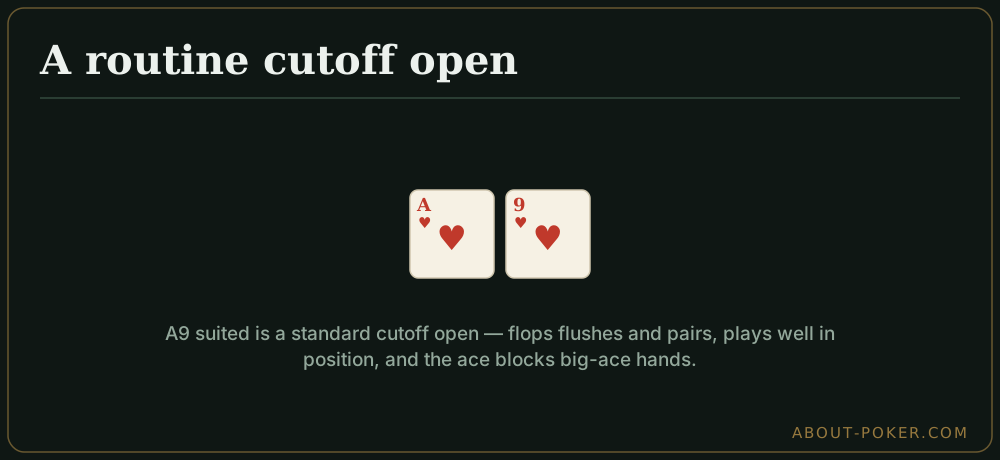
You are in the cutoff with Ah 9h. It folds to you. This is a routine open. A9 suited flops flush draws and top pairs, plays well postflop, and has strong blockers — holding the ace makes it less likely an opponent has a big ace.
You raise to 2.5 big blinds. The button folds, the small blind folds, and the big blind calls. The flop comes Kh 7h 2c. You have the nut flush draw plus two overcards. When the big blind checks, you make a continuation bet of about half the pot. You have position, initiative, and roughly 45% equity against most of their range. If a heart lands you have the best possible flush; if it doesn’t you can often bet again and fold them off. This is the cutoff working exactly as intended.
Common mistakes in the cutoff
- Playing too tight. New players open the cutoff like it’s early position. You are leaving free blinds on the table. Widen up.
- Ignoring the button. If the button is an aggressive player who 3-bets constantly, tighten your steals slightly. If they play straightforwardly, steal relentlessly.
- Auto-stealing into calling stations. If the blinds never fold, your bluff-steals lose value. Shift toward hands that make strong pairs rather than pure air.
- Flat-calling raises from the cutoff. When someone opens ahead of you, a 3-bet is usually better than a flat call, because flatting invites the button and blinds into the pot and surrenders your positional edge.
Quick cutoff checklist
Before you act from the cutoff, run through this: Has anyone raised ahead of me? If not, default to opening a wide, aggressive range. Who is on the button and in the blinds — do they fold or fight? Is my hand better used as a steal or a value raise? Answering those three questions each orbit will turn the cutoff into one of your most reliable sources of profit.
Frequently asked
Where is the cutoff at a poker table?
The cutoff sits directly to the right of the button and directly to the left of no one who acts after it except the button. It is the second-latest position preflop, so only the button and the blinds are left to act behind you.
Why is it called the cutoff?
The name comes from the play of 'cutting off' the button by raising from this seat to steal the initiative before the button can. A cutoff raise pressures the button and blinds into folding so you effectively take the best seat's job.
How wide should you open from the cutoff?
Much wider than early position — roughly the top 25 to 30 percent of hands in a typical full-ring game. Only the button plays a wider range, because only one player acts after you preflop.