What Is Hero Fold in Poker?
A hero fold is laying down a strong hand you suspect is beaten. Learn what a hero fold is, when it is correct, and why most players do it too often.
On this page · 6 sections
A hero fold is folding a strong hand — one you would normally call or even raise with — because you have read the spot as one where you are beaten. It earns the “hero” label because releasing a big hand takes real discipline. Anyone can fold seven-deuce; folding top pair or an overpair to a scary line is where the ego fights back.
The concept only matters against hands strong enough to call. Nobody calls a hero fold “heroic” for folding trash. A hero fold is about laying down a genuine bluff catcher when the price and the story tell you your good hand is no longer good.
What Makes a Fold “Heroic”
Every fold is just a fold — the chips stay in the middle and you move on. The word “hero” is really about how the hand feels. You hold a hand that wins most of the time, the board looks fine, and yet something in your opponent’s line screams that this specific bet is the top of their range.
A hero fold requires three ingredients: a hand strong enough that folding feels wrong, a read that overrides that instinct, and the discipline to act on the read instead of the fear of being bluffed.
The Math Behind It
A fold is correct whenever your chance of winning is lower than the pot odds require. Suppose the pot is $200 and your opponent shoves $150. You must call $150 to win $350, so your required equity is 150 ÷ 350, or about 30 percent. If you believe you win more than 30 percent of the time, you call. If you believe you win less than 30 percent, you fold — no matter how pretty your hand looks.
The hero fold happens when a hand that “should” be a call — say you have a pair that beats most bluffs — is up against a range that has hardened into value. You estimate you are only good 20 percent of the time, well below the 30 percent you need. Folding is simply the higher-EV play. Understanding pot commitment keeps you honest here: if the price forces a call, it is not a hero fold spot at all.
A Worked Example
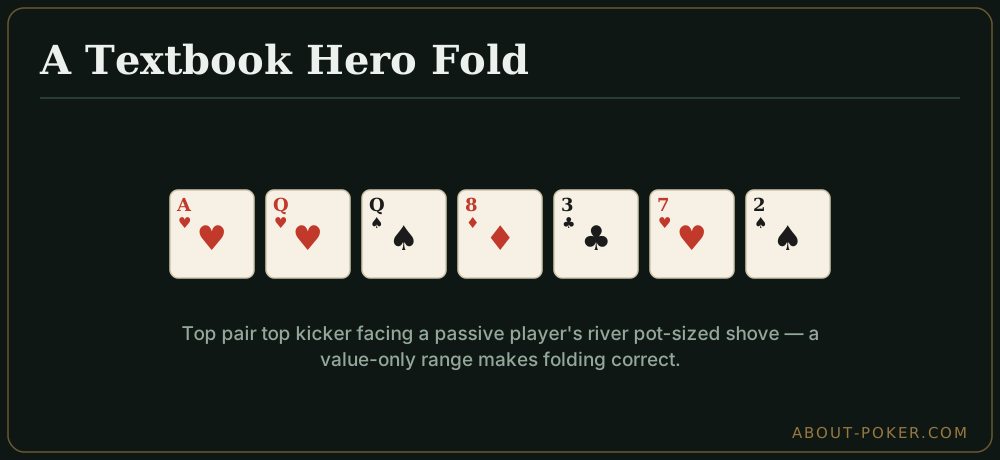
You hold Ah-Qh on a final board of Qs-8d-3c-7h-2s. You have top pair, top kicker. You bet the flop and turn; your opponent — a tight, straightforward player — just calls both streets. On the river he suddenly leads all-in for a pot-sized bet.
His river shove makes no sense as a bluff. A passive player who called down and then jams the river almost never has air; he has a set, two pair he slow-played, or a straight he backed into. Against that range, your top pair loses far more than it wins. You need roughly 33 percent equity to call a pot-sized bet, and you are good maybe 10 percent of the time. You fold top pair, top kicker face up — a textbook hero fold.
Why Most Players Hero Fold Too Often
Here is the uncomfortable truth: at low and mid stakes, most players should hero fold less. Recreational opponents do not have the bluffs your fear imagines. They rarely turn a made hand into a bluff or find a big river shove without the goods, which is exactly why folding to them is often correct. But against typical opponents who under-bluff, the bigger leak is folding good hands to lines that are actually value-heavy but not as strong as you feared.
The trap is that one dramatic hero fold that turns out right feels amazing and burns into memory, while the ten times you folded the best hand pass by silently. A single correct hero fold does not prove folding was your best default. Balance it against your opponent’s range, not against a highlight reel.
Hero Fold vs. Crying Call
These are the two ways to answer the same dread. A hero fold releases the hand; a crying call pays off anyway, expecting to lose but calling for the sliver of chance you are ahead. The difference is entirely the price and the read. When you need 33 percent and think you are good 20 percent, fold. When you need 20 percent and think you are good 25 percent, call — even while you groan.
A Quick Checklist Before You Hero Fold
- Does the bet size and line genuinely represent value, or just look scary?
- Does this specific opponent actually bluff in this spot?
- What equity does the price require, and do you honestly have less?
- Are there enough value combos in their range to justify folding a strong hand?
- Are you folding on a read — or on the fear of being shown a bluff?
If you can answer the first four with conviction, pull the trigger. If your only reason is fear, you are probably folding the best hand.
Frequently asked
What is a hero fold in poker?
A hero fold is folding a strong hand — often a hand that beats most of an opponent's range — because you have read the situation as one where you are almost certainly beaten. It is called heroic because it takes discipline to release a hand you would usually call with.
When is a hero fold correct?
A hero fold is correct when the pot odds you are getting are worse than the chance your hand is good. If you need to be right 25 percent of the time to call and you believe you win under 25 percent of the time, folding is the higher-EV play, even with a strong hand.
What is the difference between a hero fold and a crying call?
They are opposite responses to the same fear. A hero fold releases a hand you think is beaten; a crying call pays off anyway, expecting to lose but calling for the small chance you are ahead. Which is correct depends on the exact price and your read.