What Is Hit And Run in Poker?
A hit and run is when a player wins a big pot then leaves the game immediately. Learn the etiquette, whether it's allowed, and when quitting is smart.
On this page · 6 sections
The hit and run is one of poker’s most argued-about pieces of etiquette, and it divides even experienced players. A hit and run is when someone wins a big pot, often soon after sitting down, and then leaves the table almost immediately, cashing out their chips before opponents have any real chance to win the money back. It is perfectly legal in a cash game, yet it can raise eyebrows and tempers among the regulars.
What a Hit and Run Actually Is
Cash games have a simple rule: your chips are yours, and you can leave whenever you like. A hit and run takes advantage of that freedom in a way some find abrupt. Picture a player buying in, stacking someone in a huge pot within the first orbit, then racking up and heading for the cashier while the losing player is still stewing.
Nothing about that breaks the rules. The friction is purely social. The losing player feels they never got a shot at redemption, and the game as a whole loses a stack that could have kept the action lively. That is why “hit and run” is said with a slight sneer rather than as a neutral description.
Is It Actually Against the Rules?
In almost all cash games, no. You are entitled to your winnings and free to leave. A few card rooms impose a short minimum-play window or a small penalty for very quick departures, but these are the exception. Tournaments do not have this concept at all, since you cannot simply cash out mid-event.
So the entire debate lives in the realm of etiquette, not rules. Someone who hits and runs has done nothing wrong by the letter of the game. Whether they have done something rude by its spirit is a matter of table culture and personal judgment.
The Case For Quitting While Ahead
Here is the part many casual players get wrong: quitting when you are ahead is often a smart, disciplined decision. Bankroll management does not care about your opponent’s feelings. If you doubled up early and you are tired, tilted, or simply had a fixed time to play, leaving is entirely rational.
There is also the mental-game angle. Sitting for hours purely to give opponents a chance to win back their chips is a losing mindset. You should play when you are focused and quit when you are not, regardless of whether you are up or down. A short winning session is still a winning session, and no law of poker requires you to gamble your profit away out of politeness.
When a Hit and Run Is Genuinely Rude
The etiquette complaint has more weight in a friendly home game or a small regular group where the social contract is stronger. If you sit in a recreational game full of people looking to enjoy a few hours, felt someone quickly, and bolt, you may not be invited back. That relationship can matter more than one buy-in, especially if the game is soft and profitable.
The situation is different against a fish in a public casino you will never see again. There the social cost is near zero, and if you are running well, you can simply keep playing while the game is good. The judgment call is about the long-term value of the game and your relationships in it, not about a rigid rule.
A Worked Example
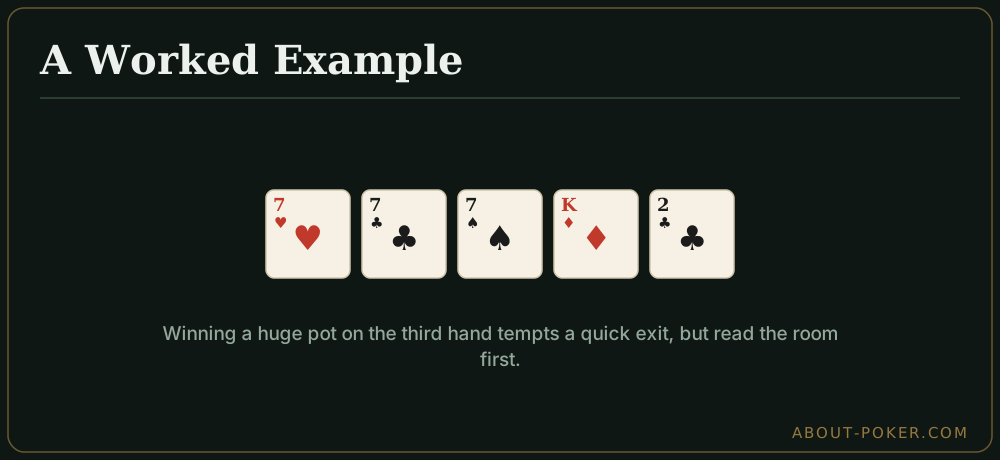
You sit down deep-stacked with 200 big blinds in a friendly Friday game. On the third hand you flop a set, stack an opponent for their whole buy-in, and now you are up two full stacks. You have been on a heater and are clearly running well; if you want to keep pressing your run good, staying is fine because the game is soft and you are focused.
But suppose you also have to be up at 5 a.m. and only sat down to kill an hour. Leaving now is a defensible hit and run. The polite compromise many players use is to play at least a full orbit or two after the big win, so it does not look like a pure smash-and-grab, then leave graciously. That small courtesy preserves the relationship and the game while still letting you lock up the profit.
The Bottom Line
A hit and run is legal, sometimes rude, and often just good discipline. Read the room: in a public casino against strangers, cash out whenever it suits your bankroll and mindset. In a tight-knit home game, weigh the social cost and consider sticking around an orbit or two before leaving. Above all, never keep playing badly just to appease opponents; the money you win is yours, and knowing when to quit is a skill, not a crime.
Frequently asked
What is a hit and run in poker?
A hit and run is when a player wins a large pot, often early in a session, and then leaves the game almost immediately, denying opponents a chance to win their money back. It is legal but often considered mildly poor cash-game etiquette.
Is hit and run allowed in poker?
Yes. In cash games you can leave whenever you want with your chips; there is no rule forcing you to stay. Some rooms have short minimum-play policies, but generally a hit and run is permitted, just frowned upon by regulars.
Why do players dislike hit and runs?
Opponents dislike them because a big loss with no chance to play more feels unfair, and it can dry up a good game. However, quitting while you are ahead is a legitimate bankroll and mental-game decision, so the etiquette is genuinely debated.