What Is Run Good in Poker?
Run good means winning more than your true skill warrants over a stretch of hands. Learn what running good means, why it happens, and how to stay grounded.
On this page · 6 sections
Run good is poker slang for a stretch where luck is on your side. Your big hands hold up, your draws come in, your bluffs get through, and you win more than your actual skill edge alone would earn. It is the friendly face of variance — the same randomness that produces bad beats, just pointed in your favor for a while.
Players say “I’m running good” to describe a hot patch, and “he runs so good” (sometimes enviously) about someone whose results seem to defy their play. The key idea to hold onto is that run good is temporary and it is not skill. It is short-term positive variance riding on top of whatever edge you actually have.
What run good actually measures
Every winning poker player has a true long-run win rate — the amount they would earn per hundred hands if they played forever. In the short term, results bounce far above and below that number because cards are random. Run good is when the bounce is above the line.
Imagine a solid cash player whose real win rate is 5 big blinds per 100 hands. Over a single weekend they might win at 40 big blinds per 100. That gap is not new skill appearing overnight; it is variance. The hands that were coin flips all landed their way, the sets got paid, the rivers were kind. That is run good, and it will regress back toward 5 as the sample grows.
Run good vs. running bad
The two are mirror images, and understanding one clarifies the other.
Running good means favorites hold, draws hit, and coolers fall your way. Running bad — a downswing — means the opposite: your aces lose to kings, your flushes miss, and every bad beat seems to find you. Neither reflects how well you are playing. A strong player can run bad for months, and a weak player can run good long enough to feel like a genius.
The danger is emotional. Run good can trick you into thinking marginal plays are winners, while running bad can shake your confidence in plays that are actually correct. Both distort your judgment if you let short-term results grade your decisions.
Worked example: reading a hot stretch
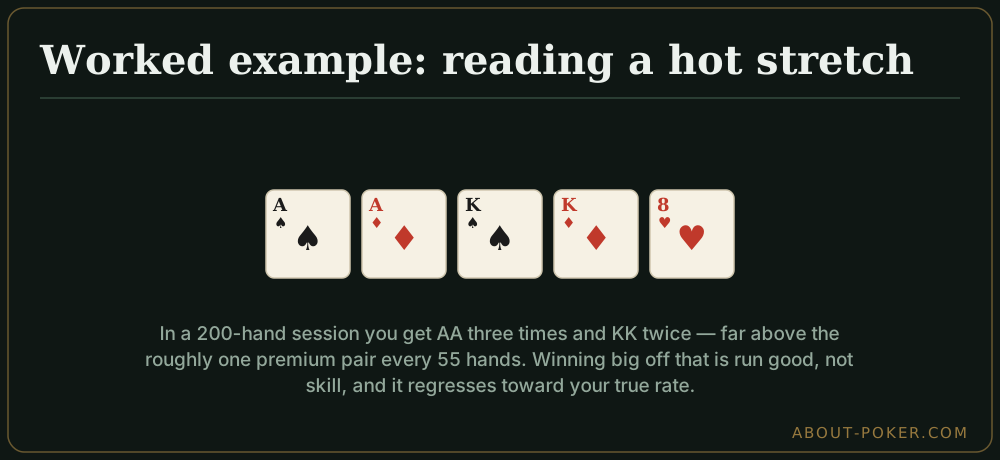
Say you play a 200-hand session and win 12 buy-ins. Feels amazing. But look closer at how it happened.
You got dealt AA three times and KK twice — well above the expected rate of roughly one premium pair every 55 hands. You flopped a set twice in five attempts, when the real odds are about 1 in 8.5 each time. You went all-in as a 55% favorite four times and won all four, when you would expect to lose almost two of them.
None of that is skill. Every one of those spots was decided by the deck. That session was run good, and a smart player banks the money, resists raising their stakes on the strength of it, and expects the numbers to normalize.
Why chasing run good is a trap
Because run good feels like control, it fuels bad habits. Players who confuse it with skill will move up in stakes too fast, play longer sessions convinced they cannot lose, or loosen up and start paying off strong hands. When variance turns — and it always does — they give it all back and more.
The professional mindset separates the two completely. You judge your play by the quality of your decisions, not by the results of a small sample. When you run good, you stay humble. When you run bad, you stay disciplined. This closely relates to the idea of a heater, which is a shorter, hotter burst of the same positive variance.
A quick checklist for staying grounded
- Track a large sample. Judge your win rate over tens of thousands of hands, not one night.
- Do not move up on a heater. Stake decisions should follow bankroll rules, not recent results.
- Review decisions, not outcomes. Ask whether a play was correct, not whether it won.
- Expect regression. However good you are running, plan for the numbers to drift back toward your true rate.
Keep going
Run good is one of the most misunderstood ideas at the table because it feels earned when it is really just variance smiling on you. Enjoy it, bank the profit, and never let it inflate your read of your own game. For more of poker’s essential vocabulary, browse the full poker glossary, and learn how the same randomness produces losses in the bad beat guide.
Frequently asked
What is run good in poker?
Run good means running better than expected over a stretch of hands — your strong holdings hold up, your draws hit, and you win more than your long-run skill edge alone would predict. It is short-term positive variance.
Is run good the same as being good at poker?
No. Run good is luck, not skill. A player can run good and still be a losing player, while a strong player can run bad for months. Over a large enough sample, variance evens out and skill decides your results.
How long does run good last?
There is no fixed length. Positive variance can last a session, a week, or several months in a high-variance format like tournaments. The larger your sample of hands, the closer your results drift toward your true win rate.
What is the opposite of run good?
Running bad, sometimes called a downswing. That is a stretch where strong hands lose, draws miss, and results fall below what your skill would predict. Both are just variance pulling in different directions.