What Is Lojack in Poker?
The lojack (LJ) is the seat three to the right of the button — the first seat many players call middle-to-late position. Here's where it sits and how to play it.
On this page · 6 sections
The lojack (LJ) is the seat three to the right of the button, directly to the right of the hijack. It is the bridge between true middle position and the late-position seats, and it demands a careful, disciplined opening range.
The lojack got its name as a joke on the hijack: if the hijack “hijacks” the pot from the better seats, the lojack does the same thing one seat earlier and from deeper in the table. In a nine-handed game it is often the first seat many coaches will call “late-ish,” but three players with position still sit behind you, and that keeps it honest.
Where the lojack sits
Count backward from the button at a full nine-handed table: button, cutoff, hijack, lojack. So the lojack is the fourth-to-last seat to act preflop. After you it goes to the hijack, the cutoff, the button, and then the two blinds.
In some rooms and older strategy material this seat is simply lumped into “middle position.” The modern label lojack exists because the range and strategy here are meaningfully different from the seats around it — wide enough to steal occasionally, tight enough to respect the three strong seats behind.
Why the lojack is a careful seat
Position is your biggest edge, and at the lojack you have only a little of it. Three opponents with position remain, plus the two blinds — five players who can still enter the pot. That is a lot of hands that can wake up behind you, which is why the lojack range leans toward hands that flop well and can withstand a 3-bet.
You still have a real edge over early position. When the action folds to you at the lojack, you have already dodged the tightest, first-to-act seats. So you can add some hands that would be losers from under the gun — but you should not stretch toward the loose steals that the cutoff and button enjoy.
How wide to open from the lojack
A solid default is the top 15 to 18 percent of hands. That includes every pocket pair, suited aces down to about A5s, suited broadways, suited connectors down to roughly 87s and 76s, and the strong offsuit broadways like AJo, KQo, and AQo. Weak offsuit aces, offsuit gappers, and thin suited hands are folds you save for later seats.
Picture your opening ranges as a staircase: under the gun around 12 percent, lojack around 16 percent, hijack around 20 percent, cutoff around 28 percent, button around 45 percent. Each step widens because one fewer player can act behind you.
A worked example
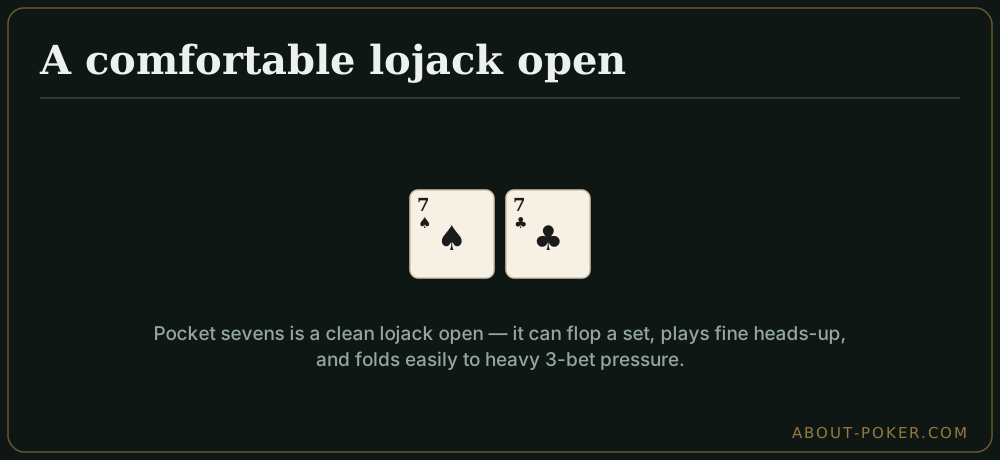
It folds to you in the lojack with 7s 7c. You open to 2.5 big blinds. A middling pocket pair like this is a comfortable lojack open: it can flop a set, has decent equity heads-up, and folds cleanly to heavy 3-bet pressure. The hijack and cutoff fold, the button calls, and the big blind calls.
The flop comes 7h Kd 4c. You have flopped a set of sevens — a monster. You continuation-bet for value, both opponents call, and you now have a huge hand you can bet on every street. Sets are exactly the payoff a hand like 77 is opened for, and the lojack is late enough that opening it is clearly profitable rather than a stretch.
Common mistakes in the lojack
- Over-widening. New players hear “late position” and open trash from the lojack. Three players still have position — keep it disciplined.
- Over-folding. The opposite mistake: playing the lojack like early position and folding hands like AJo or 98s that are clear opens here.
- Cold-calling out of position. If someone raises ahead of you, prefer a 3-bet with your strong hands and a fold with the rest rather than a loose flat call.
- Forgetting the button and cutoff. Aggressive players in the seats behind you should tighten your opens; passive ones let you loosen up.
Quick lojack checklist
When the action reaches you in the lojack, run through three questions: Is it folded to me so I can open my full 16 percent range? Does my hand flop well enough to play a multiway or 3-bet pot? And are the strong seats behind me likely to fight back? Answer those each orbit and the lojack becomes a quiet, steady contributor to your winrate.
Frequently asked
Where is the lojack at a poker table?
The lojack sits three seats to the right of the button, directly to the right of the hijack. In order, the final positions before the blinds are the lojack, the hijack, the cutoff, and the button.
Why is it called the lojack?
The name is a play on 'hijack.' Since the lojack acts one seat earlier than the hijack, it 'lojacks' the pot — grabbing it even earlier and from slightly deeper in the table, before the three better late positions can open.
How wide should you open from the lojack?
Roughly the top 15 to 18 percent of hands in a full-ring game. Three players with position on you still act behind you, so the lojack range is tighter than the hijack and much tighter than the cutoff.