What Is Overbluff in Poker?
To overbluff in poker means to bet with too many bluffs relative to value, so calling becomes profitable for your opponent. Learn to spot and fix it.
On this page · 6 sections
To overbluff in poker means to bet with too many bluffs relative to your value hands, leaving your betting range too weak. When you overbluff, your opponent can simply call more often and profit, because you are bluffing more frequently than the pot odds justify. It is the opposite of underbluffing, and while it is less common than folding-based leaks, it can be just as expensive — especially for aggressive players who fall in love with barreling and turn every missed draw into a bet. Knowing the correct bluff ratio, and when to break it, keeps your aggression profitable instead of self-destructive.
The Ratio That Defines It
Every balanced betting range carries a specific proportion of bluffs to value hands, set by your bet size. The larger the bet, the more bluffs you are allowed, because a big bet lays your opponent worse pot odds. On the river, the standard guidelines are:
- Half-pot bet: about 1 bluff per 3 value hands (25% bluffs).
- Pot-sized bet: about 1 bluff per 2 value hands (33% bluffs).
- 2x-pot overbet: roughly 1 bluff per 1.5 value hands (about 40% bluffs).
You are overbluffing whenever your actual proportion of bluffs sits above the number your size allows. Fire a pot-sized bet with more than one bluff per two value hands, and calling becomes a money-printing machine for a savvy opponent. This is the flip side of the bluff-to-value ratio.
A Worked Example
The pot is 100 and you bet 100 on the river. Getting 2-to-1, your opponent’s bluff-catchers only need to win 33% of the time to make calling break even. The correct value-heavy ratio for that size is about 2 value hands per 1 bluff, which means you have value roughly 67% of the time — exactly balancing their call.
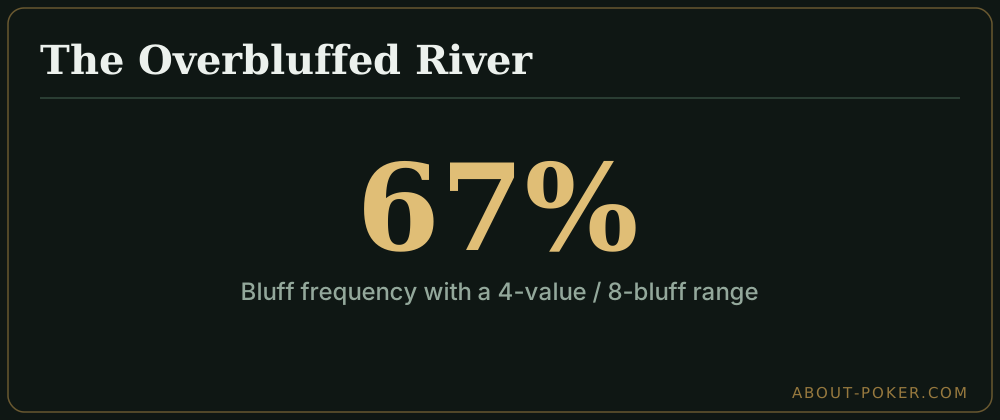
Now suppose you overbluff: your river betting range is 4 value combos and 8 bluff combos. You have value only 33% of the time and are bluffing 67% of the time. Your opponent’s bluff-catcher now wins two-thirds of the time it calls — massively profitable. Every time they call 100, they win 200 two-thirds of the time and lose 100 one-third of the time, a large positive expectation. You have handed them a printing press. Worse, once they notice, they never fold again, and your rare value hands become the only thing keeping you afloat.
How to Spot Overbluffing in Your Game
The tell-tale sign is that your bluffs get called and lose far too often. If you feel like opponents “always seem to have it” when you bluff, the honest read is often that you are bluffing too frequently and they are correctly calling. Other markers: barreling every street with air; treating every busted draw as an automatic bet; and a poor showdown win rate on hands where you were the aggressor. Our deeper dive on the over-bluffing leak walks through the tracker stats that expose it.
The Fix: Choose Bluffs, Do Not Force Them
The cure is discipline in selecting bluffs rather than defaulting to them. Good bluffs have low showdown value and hold blockers to the hands that would call. But even with perfect candidates, you must respect the quantity — not every missed draw should fire. On a given river, if you have more bluff candidates than your ratio allows, you have to give some up and check them back, keeping only the ones with the best blockers and the least showdown value. Turning down a marginal bluff is not weakness; it is the correction that keeps your value bets respected.
When Overbluffing Is Correct
As with every balancing concept, the exploit runs opposite to the theory. Against opponents who overfold — who release too many bluff-catchers against big bets — extra bluffs are pure profit, and you should overbluff relative to the balanced baseline. Many tight, cautious regulars fold far more than the minimum defense frequency requires, and against them cranking up your bluffing prints money. Overbluffing is only a leak against players who call enough; against nitty folders, it is the correct plan.
Quick Checklist
- Know the maximum bluffs your bet size allows.
- If bluffs get called and lose often, dial the frequency down.
- Give up marginal bluffs; keep only the best blocker hands.
- Overbluff on purpose against players who overfold.
- Stay balanced against players who defend correctly.
Master the line between enough bluffs and too many, and your aggression becomes a weapon instead of a leak — feared when it should be, and paid off when it counts.
Frequently asked
What does overbluff mean in poker?
To overbluff means to bet with too many bluffs relative to your value hands, so your betting range is too weak. When you overbluff, calling becomes automatically profitable for your opponent because you are bluffing more often than the pot odds justify.
Why is overbluffing a leak?
Overbluffing is a leak because it lets opponents call you down with weak hands and win. Your bluffs run into calls too often, your losses pile up, and observant players simply stop folding, turning your aggression into a steady chip drain.
How do you know if you are overbluffing?
If your bluffs get called far more than they succeed, and your bluff-to-value ratio is higher than the bet size justifies, you are overbluffing. On a pot-sized river bet, more than about one bluff per two value hands is too many.
When is overbluffing correct?
Overbluffing is correct against opponents who fold too much. If a player overfolds, extra bluffs profit because they surrender the pot more often than they should, so ramping up your bluffing exploits their tightness.