What Is Overcall in Poker?
An overcall is calling a bet after one or more players have already called it. Learn what overcalls mean about ranges and how to play for and against them.
On this page · 7 sections
An overcall is when you call a bet after one or more other players have already called it. Instead of being the first person to call, you are calling behind other callers, adding your chips to a pot that is already building into a multiway battle. Overcalling is a distinct decision from being the first caller, and understanding it will sharpen both your preflop hand selection and your postflop planning, because pots you overcall into play very differently.
What an overcall is
Picture a raise, then a call, and now the action reaches you. If you call, you are overcalling, calling “over” the top of the existing caller. The key feature is that the pot is already multiway before you act, and it will stay multiway or grow after you.
This differs from a cold call, where you call a raise with no callers ahead of you, and from a flat call, which is just calling instead of raising. An overcall is specifically about position in the calling order: you are not the first to commit chips to this bet, and that changes the math and the ranges involved.
Why overcalls change the pot
Every extra player in the pot changes three things at once:
- Your price improves. The more callers before you, the better your immediate pot odds, because more money is already in the middle relative to what you must call.
- Your realization gets harder. Multiway pots are harder to win with marginal hands. You need to make a real hand more often, since one opponent will frequently have connected with the board.
- Speculative hands go up in value; thin hands go down. Hands that flop huge or fold, like suited connectors, small pairs, and suited aces, love multiway pots. Hands that make one weak pair, like offsuit broadways, hate them.
The practical takeaway is that overcalling shifts you toward hands with big implied odds and away from hands that only make marginal top pairs.
When to overcall
Good overcalling hands share a profile: they are cheap to see the flop with, they can make the nuts, and they play well against multiple opponents. Small and medium pocket pairs overcall well because they can flop a set and stack someone. Suited connectors and suited aces overcall well because they can make flushes and straights that win big pots.
Position still matters enormously. Overcalling in position is far better than out of position, because you get to act last and control the pot. From the blinds, overcalling looks tempting due to the price, but you are out of position for the whole hand, which drags down how much of your equity you actually realize.
When to raise instead
Sometimes the best response to a raise-plus-call is not to overcall but to raise, turning the spot into a squeeze. With premium hands you often prefer to build the pot and thin the field rather than invite a crowd. And when the callers look weak and the dead money in the pot is large, a squeeze can win it outright. Choosing between overcalling and raising is one of the core preflop skills: overcall your speculative hands, squeeze your strongest and your best bluffs.
A worked example
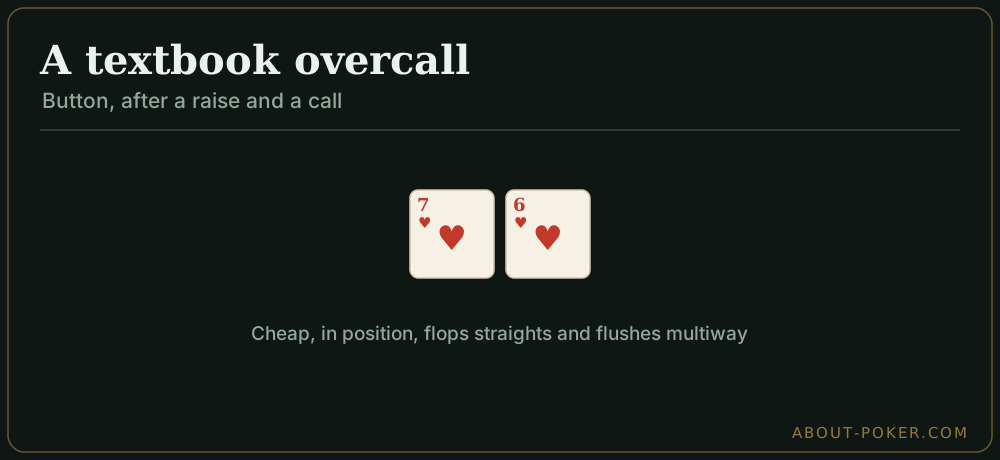
You are on the button with 7h 6h. A middle-position player raises to 3 big blinds, and the cutoff calls. The action is on you. Raising here bloats the pot with a hand that wants to see cheap flops, and it risks folding out the exact opponents whose stacks you want to win. Overcalling is ideal: you close the action, you are in position, and you get a great price on a hand that can flop straights, flushes, and combo draws.
The flop comes 8h 5s 2h, and you have flopped an open-ended straight draw plus a flush draw, a huge combo draw. Because you overcalled a suited connector in position, you now hold a monster in a pot that already has plenty of money in it. This is the payoff of disciplined overcalling: cheap entry with a hand that can make the nuts and win a big multiway pot.
Common mistakes with overcalls
- Overcalling offsuit broadways. Hands like KJo and QTo make dominated top pairs and play badly multiway. These are common overcalling leaks.
- Overcalling out of position for the “price.” A good price does not fix being out of position for three streets. Tighten up from the blinds.
- Never squeezing. If you only ever overcall, strong players will call behind you freely. Mix in raises with your best hands and bluffs.
- Chasing without odds after the flop. Multiway pots invite loose calls. Make sure your draws have the outs and implied odds to continue.
Quick checklist
Before you overcall, ask: Does my hand flop the nuts or fold well? Am I in position? Is the price good enough to justify calling into a crowd? Speculative, suited, connected hands in position are ideal overcalls. Marginal offsuit hands and out-of-position spots usually are not. Master the difference and your multiway pots will start turning into profit instead of confusion.
Frequently asked
What is an overcall in poker?
An overcall is when you call a bet or raise after one or more players have already called it. Instead of being the first caller, you are calling behind other callers. The extra callers change your pot odds, your range, and the way your hand plays after the flop.
What is the difference between an overcall and a cold call?
A cold call is calling a raise when you have not yet put money in the pot and no one else has called. An overcall is calling after at least one other player has already called the same bet. Overcalls happen in already-multiway pots.
Should I overcall or raise?
It depends on your hand and the situation. Strong hands often prefer to raise or squeeze to isolate and build the pot, while hands that flop well multiway, like suited connectors and small pairs, can profitably overcall for a good price when the pot is already large.