What Is Overfold in Poker?
To overfold in poker means to fold more often than game theory allows, letting bluffs profit. Learn how to spot overfolding and fix it with MDF.
On this page · 6 sections
To overfold in poker means to fold more often than game theory allows against a bet, releasing hands you should have kept in the pot. When you overfold, you leave a gap that your opponent can attack: their bluffs start winning the pot too easily, without ever having to show down. Overfolding is one of the most common and costly leaks among cautious and beginner players, because folding feels safe even when it is quietly bleeding chips. Understanding when you are overfolding — and when it is actually the right exploit — is a core piece of solid defense.
The Math: Minimum Defense Frequency
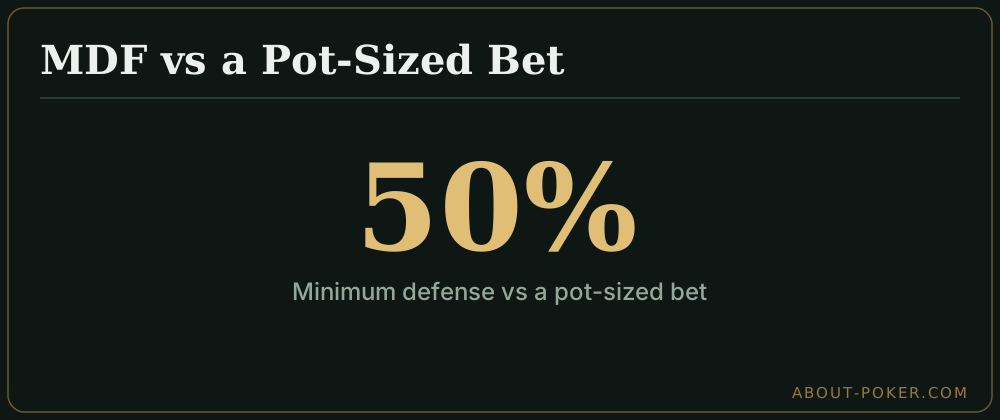
The reason overfolding is a leak comes from a concept called minimum defense frequency (MDF). MDF is the smallest share of your range you must continue with so that your opponent cannot profit by bluffing any two cards. The formula is:
MDF = pot ÷ (pot + bet)
Against a pot-sized bet, MDF = pot ÷ (pot + pot) = 1 ÷ 2 = 50%. So you must defend at least half your range; if you fold more than 50%, you are overfolding. Against a half-pot bet, MDF = 1 ÷ 1.5 ≈ 67%, so you must defend two-thirds of your range. The bigger the bet, the more you are allowed to fold. Overfolding simply means dropping below the threshold that keeps bluffs unprofitable.
A Worked Example
The pot is 100 chips on the river. Your opponent bets 100 (a pot-sized bet), so the pot is now 200 and you must call 100 to win 200 — you are getting 2-to-1 and need to be right 33% of the time. MDF says defend 50% of your range.
Suppose your range on this river is 20 combinations. To defend correctly you should call with 10 of them — your best bluff-catchers. If instead you only call with 6 and fold 14, you are defending just 30% and overfolding by 20%. Now your opponent can bet 100 into 100 with pure air and profit: 70% of the time you fold and they win 100; 30% of the time you call and they lose 100. Their bluff nets +40 chips on average, purely because you handed it to them. Defend the correct 10 combos and that automatic profit disappears.
How to Spot Overfolding in Your Game
Signs you are overfolding include: folding almost every time you face a big river bet; releasing top pair on scary boards without a real read; and giving up in the big blind far more than a solver range would. A useful self-check is to look at how often you continue against turn and river bets in your tracker. If your fold-to-bet numbers sit well above the MDF for the sizes you face, you are overfolding. Players with a capped range are especially prone to it, because they lack the strong hands needed to keep defending confidently.
When Overfolding Is Correct
Here is the key nuance: overfolding is only a leak against balanced opponents. MDF assumes the bettor has the theoretically correct number of bluffs. Most live and low-stakes players do not — they bet far too much for value and rarely bluff. Against those players, folding more than MDF is not a leak at all; it is a profitable exploit. If a tight opponent only ever fires the river with the nuts, you should overfold aggressively and save your chips. The mistake is overfolding on autopilot against everyone, including aggressive players who bluff plenty and will happily print money off your surrenders. Our guide on how often to bluff shows the other side of this equation.
Common Mistakes
- Folding to sizing without adjusting. Big bets earn more folds, but a small bet demands wide defense — do not treat every bet the same.
- Ignoring the bettor’s tendencies. Defend more against bluff-heavy players, fold more against value-heavy ones.
- Folding the top of your range. If you must fold, release your weakest continues, not your best bluff-catchers.
Quick Checklist
- Know the MDF for the size you face (pot bet → defend 50%).
- Continue with your strongest bluff-catchers first.
- Overfold only against players who under-bluff.
- Defend wide against aggressive, balanced opponents.
- Track your fold-to-bet stats and compare them to MDF.
Fix your overfolding and you plug one of the fastest, most reliable leaks in the game — and you stop being the player everyone loves to bluff.
Frequently asked
What does overfold mean in poker?
To overfold means to fold more often than game theory recommends against a bet, releasing hands you should have defended. When you overfold, your opponent's bluffs become automatically profitable because they win the pot too often without a fight.
How do you know if you are overfolding?
Compare your defense to the minimum defense frequency (MDF) for the bet size you face. If you are folding more than MDF suggests — for example folding over 50% against a pot-sized bet — you are overfolding and inviting bluffs.
Why is overfolding a leak?
Overfolding is a leak because it lets opponents bluff you profitably with any two cards. Every extra fold beyond your defense threshold hands them free equity, and observant players will ramp up their bluffing to punish you.
When is overfolding actually correct?
Overfolding is correct as an exploit against opponents who rarely bluff. If a player only bets for value, folding more than game theory allows saves you money because their betting range is not balanced with bluffs.