What Is Overlimp in Poker?
An overlimp is calling the big blind after one or more players have already limped in. Learn when overlimping is smart, when it's a leak, and why.
On this page · 6 sections
An overlimp is when you call the price of the big blind after one or more players have already limped in ahead of you. You are not opening the pot and you are not raising — you are adding your chips to an already-limped pot, “over the top” of the earlier limpers. It is a close cousin of the limp, but the presence of players already in the pot changes both the math and the reasoning behind the play.
What Separates an Overlimp From Other Limps
There are a few limping situations, and the names matter. An open limp is limping in as the first player to enter the pot. A limp behind usually refers to the same idea as an overlimp — calling after someone else has limped — with “behind” stressing your later position. An overlimp specifically emphasizes that limpers are already in, so you are choosing to join a family pot rather than to isolate anyone.
That distinction drives strategy. When you overlimp, you are all but guaranteeing a multiway flop, and you are giving the big blind a cheap look too. So you want hands that thrive multiway: hands that can flop something huge and get paid, not hands that flop mediocre pairs and face awkward decisions against several opponents.
A Worked Example
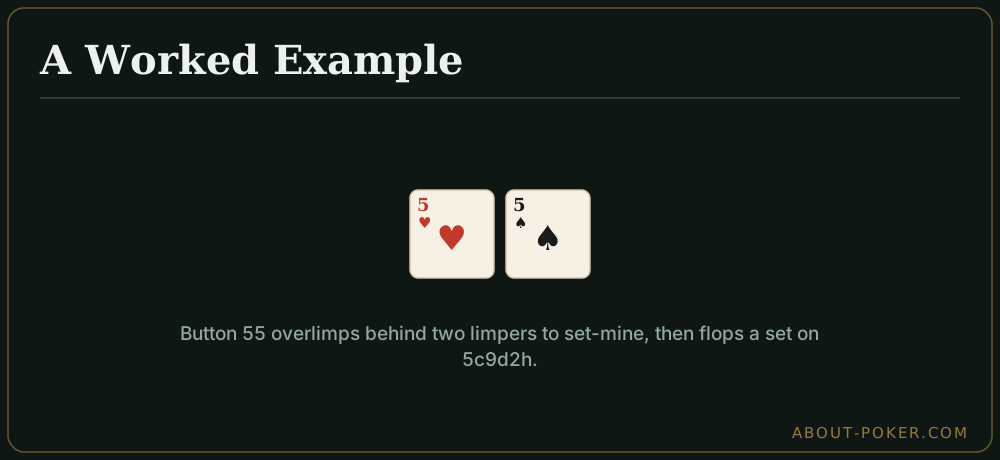
You are on the button with 5h 5s. Two players limp in front of you. You could raise to isolate, but with a small pair against two loose limpers, you are mostly hoping to flop a set. Set-mining wants a cheap price and a big potential payoff, so you overlimp for one big blind. The small blind completes and the big blind checks. Five players see a flop for one big blind each.
The flop comes 5c 9d 2h — you hit your set. A limp-heavy field means one of your opponents likely has a nine or a pair they will pay you off with, and because the pot is multiway you can bet for value with a monster. Your overlimp cost almost nothing preflop and set up a big pot when you flopped a set. That payoff-to-cost ratio is the entire reason overlimping small pairs can work.
Compare that with overlimping something like Kh 7c. On many flops you make a weak top pair against several players, have no idea where you stand, and lose money. That is the trap overlimping sets for weak hands.
When Overlimping Is Reasonable
Overlimping earns its keep when:
- You hold a speculative hand — small or medium pairs, suited connectors, suited aces — that flops big or folds cheaply.
- The pot is already multiway and likely to stay that way.
- You are in position, so you can control the pot after the flop.
- Stacks are deep enough that hitting a set or strong draw pays you off well.
In those spots, seeing a cheap flop with good implied odds beats both raising (which can blow the pot up out of position with a speculative hand) and folding (which throws away a profitable set-mine).
When It Is a Leak
Overlimping becomes a leak when it replaces a more profitable action. Against weak limpers, raising to isolate often wins the pot outright or gets you heads-up with initiative and a range advantage — far better than passively joining a family pot. And overlimping weak offsuit hands just to “see a cheap flop” bleeds chips, because those hands flop marginal holdings that lose money multiway.
Overlimping out of position with hands that need to make tough decisions post-flop is especially costly. Without position you cannot control the pot size, and multiway pots punish uncertainty. If your plan after overlimping is “I’ll figure it out on the flop,” that is usually a sign to raise or fold instead.
Common Mistakes
The first mistake is overlimping too wide, treating it as a license to play any two cards cheaply. The second is overlimping when raising is clearly better — isolating weak limpers with strong hands and taking the initiative is one of the easiest edges in live low-stakes games. The third is overlimping big hands like a strong ace or a premium pair; those want to build the pot and thin the field with a raise, not invite five opponents to a family pot.
Quick Checklist Before You Overlimp
- Is your hand a set-miner or a strong draw candidate? (Ideal overlimp hands.)
- Are you in position? (Strongly preferred.)
- Will the pot stay multiway and unraised? (The payoff structure overlimping wants.)
- Would raising to isolate win more against these limpers? (If yes, raise instead.)
Overlimp with discipline and it is a cheap ticket to big flops; overlimp on autopilot and it quietly drains your stack one big blind at a time.
Frequently asked
What is an overlimp in poker?
An overlimp is calling the amount of the big blind after one or more players have already limped in ahead of you. Instead of raising or folding, you match the limp to see a cheap flop, usually with a hand that plays well in a multiway pot.
Is overlimping a good play?
It can be, in the right spots — with speculative hands like small pairs or suited connectors in position when the pot is likely to stay multiway and unraised. But as a default it is often a leak, because raising to isolate weak limpers or folding trash usually earns more.
What hands should you overlimp with?
Overlimp mostly with hands that flop big when they connect: small and medium pocket pairs hoping to set-mine, and suited connectors or suited aces that make strong draws. Avoid overlimping weak offsuit hands that flop marginal top pairs with bad kickers.