What Is Population Read in Poker?
A population read is an assumption about how the average player in a pool plays a spot. Learn how to use pool tendencies when you have no reads on a villain.
On this page · 7 sections
A population read is an assumption about how the typical player in a given pool plays a spot, used when you have no personal history with the specific opponent in front of you. Instead of guessing blindly, you default to what the average villain in this game, at this stake, on this site tends to do. Population reads are the backbone of real-world exploitation, because most of the time — especially online — you are facing someone you have never seen before and will never see again.
The Core Idea: The Pool Has Habits
Individual players feel unpredictable, but a whole pool of players behaves with remarkable consistency. Across thousands of hands, the average low-stakes player under-bluffs the river, over-folds to big bets, and slow-plays their monsters too often. You may not know this villain, but you know the crowd he came from — and that crowd has stable, exploitable habits.
A population read is simply your best default for an unknown opponent. It is what you assume before the first read arrives, and it is grounded in how the pool actually plays rather than in what a balanced strategy expects.
Population Read Versus Individual Read
The distinction is about the unit of observation:
- An individual read comes from hands you have personally watched one identified player take. It is specific and high-value but slow to gather.
- A population read applies to everyone in the pool by default. It is available instantly, before you have seen a single hand from the villain.
The relationship is a hierarchy: lean on the population read until an individual read overrides it. If the pool folds too much to river bets but this player has shown you three light calls, trust the individual read — it is newer and more specific.
A Worked Example
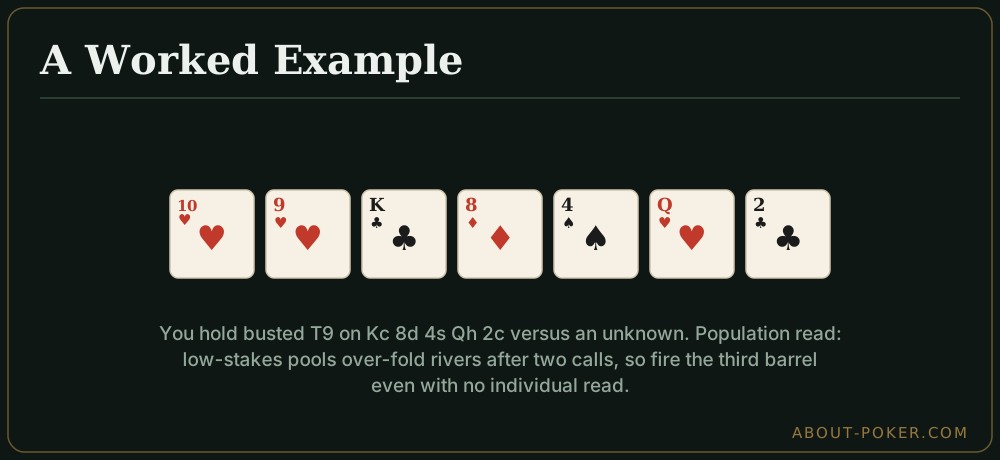
You raise, an unknown player calls, and you fire the flop and turn on a board where you have plenty of overcards and draws in your range. The river bricks, and you hold a busted flush draw with no showdown value. Do you fire the third barrel?
Balanced play might triple-barrel here a fair share of the time. But your population read for low-stakes pools says the average villain over-folds rivers to big bets after calling two streets — they were peeling with second pair hoping to get there and now they give up. So you deviate: you bluff the river far more than balance suggests, because the pool folds too much. You have no read on this exact person, but you do not need one — the crowd’s tendency carries the play.
Why Population Reads Are So Valuable Online
Online, tables form and break constantly, and you rarely accumulate a deep sample on anyone. If you waited for individual reads, you would be playing balanced against everyone and leaving the field’s biggest leaks untouched. Population reads let you deviate profitably from hand one. This makes them the practical engine behind exploitative play and a ready-made source of GTO deviations against unknown villains.
Where Population Reads Break Down
The danger is treating an average as a certainty. A pool that folds 65% to river bets still has plenty of members who never fold, and if you bluff into one of them you lose. Population reads are probabilistic edges, not guarantees — they win over volume, not on any single hand. They also drift: pools get tougher over time, so a read that was gold three years ago may be worthless today. And they should always yield to a fresh individual read the moment one appears.
Common Mistakes
- Ignoring the pool entirely. Playing pure balance against a leaky field wastes free money.
- Treating averages as absolutes. Some villains buck every tendency; size your confidence accordingly.
- Refusing to update. A strong individual read beats the population default every time.
- Using stale reads. Pool tendencies shift as games evolve; keep them current.
Quick Checklist
For any spot against an unknown, ask: what does the average player in this pool do here, and how can I move against that tendency? Then watch for individual reads that override the default — and remember the edge is real only across many hands, not any single one.
Frequently asked
What is a population read in poker?
A population read is an assumption about how the average, typical player in a given pool plays a specific spot — not a read on one identified opponent. When you have no personal history with a villain, you fall back on how the population as a whole tends to behave.
How are population reads different from individual reads?
An individual read is based on hands you have seen a specific player take. A population read applies to everyone in the pool by default, based on aggregate tendencies. You lean on population reads until an individual read overrides them.
What are common population tendencies in low-stakes poker?
Most low-stakes pools under-bluff rivers, over-fold to large bets, do not triple-barrel enough, and slow-play strong hands too often. These reliable, pool-wide leaks let you deviate profitably even against players you have never seen.
Are population reads reliable?
They are reliable as a starting point because they describe large, consistent tendencies across many players. But they are averages — the moment you gather a specific read on an individual, that read should override the population assumption.