What Is Rock in Poker?
A rock is an ultra-tight, predictable player who only plays premium hands. Here's what the poker term means, how a rock differs from a nit, and how to exploit one.
On this page · 6 sections
A rock is an extremely tight, conservative player who only enters pots with premium hands and almost never takes a risk. The nickname is perfect: a rock is solid, immovable, and utterly predictable. They sit for hours folding, wait for a monster, and then bet it straightforwardly. You always know roughly what a rock has — and in poker, an opponent you can read is an opponent you can beat.
Why the term fits
The image does all the work. A rock doesn’t move. It doesn’t get pushed around, but it also doesn’t do anything surprising. Apply the same idea to a player and you get someone who:
- Plays a tiny fraction of hands, folding almost everything preflop.
- Only continues with strength, so any pot they’re in is a warning sign.
- Almost never bluffs, meaning a big bet from a rock is a big hand, period.
- Avoids marginal spots, passing up thin-value opportunities to stay safe.
In stats terms, a rock shows a very low VPIP — the share of hands they voluntarily play. See our note on what VPIP means for the full picture, but a rock might sit under 12% in a full-ring game where a balanced player is around 20%.
Rock versus nit
“Rock” and “nit” are close cousins and often used interchangeably. If you want to split hairs:
- A rock emphasizes solidity and predictability — they won’t be moved off a hand they like, and they won’t play trash.
- A nit emphasizes fussy, fearful folding — they’re more likely to lay down even a good hand to a scary bet.
The practical upshot is nearly identical: both play far too few hands, both are exploitable, and both leave money on the table. Don’t lose sleep over the distinction; the counter-strategy is the same.
A worked example
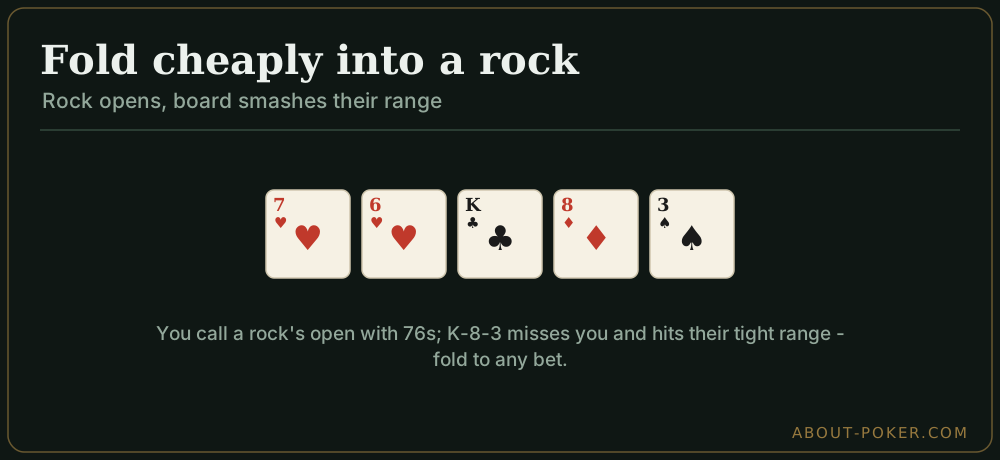
You’re on the button with 7♥ 6♥. It folds to a known rock in the cutoff, who raises. Two things are now true:
- A rock opening is a narrow, strong range — no junk, just real hands.
- You have position and a suited connector that plays well post-flop.
You call. The flop comes K♣ 8♦ 3♠. The rock bets. Here’s the read: this dry, king-high board smashes a rock’s range — big pairs, ace-king, the kind of hands they open. Your seven-six with no pair and no draw is far behind. Against a rock, you fold instantly; there is no reason to spew chips into a range that has you crushed and won’t fold anyway.
Now flip it. Same rock checks the flop after raising preflop. That check screams weakness — they missed. Against a rock, a check often means the pot is free: fire one bet and they fold everything but a real hand. Their predictability is your entire edge. You get out of the way when they’re strong and take the pot when they’re not.
Why a rock loses money
It feels safe to only play the best hands, and a rock rarely busts quickly. But poker rewards taking the right risks, and a rock refuses too many of them:
- They miss thin value, folding hands that would profit over time.
- They never bluff, so opponents lose nothing by folding whenever the rock bets.
- They get blinded down, especially in tournaments, where folding into oblivion lets the blinds and antes eat their stack.
A rock avoids the big, dramatic mistakes but commits a slow, quiet one every single orbit.
Rock versus a winning tight player
Tightness itself isn’t the problem — fearful, passive tightness is.
| Rock | Tight-aggressive winner | |
|---|---|---|
| Hands played | Very few | Few but well-chosen |
| Bluffs | Almost never | Balanced and credible |
| When they bet big | Always has it | Could have it or be repping |
| Long-run result | Slow leak | Steady winner |
The best tight players are aggressive once they’re in a pot, so opponents can’t just steal from them. A rock is tight and passive, which is the worst of both worlds — easy to steal from and easy to fold to. The far opposite end of the spectrum is the loose-aggressive LAG, who profits by doing everything the rock refuses to.
How to beat a rock
Once you’ve tagged someone as a rock, the plan is simple and ruthless:
- Steal their blinds relentlessly — they fold far too often.
- Believe them when they commit chips, and fold your marginal hands.
- Fire at scary boards where their tight range can’t continue.
- Use position so you always act with more information than they have.
Play a rock correctly and you win the small pots all day while dodging the big ones. For the rest of the table’s cast of characters, browse the full poker glossary.
Frequently asked
What does rock mean in poker?
A rock is an extremely tight, conservative player who only plays premium hands and rarely takes risks. The name captures how solid and immovable they are — they won't budge into a pot without a strong holding, and they almost never bluff.
What's the difference between a rock and a nit?
The terms overlap heavily and are often used interchangeably. If there's a shade of difference, a rock emphasizes solidity and predictability, while a nit emphasizes fussy, fearful over-folding. Both play very few hands, but a nit is more likely to fold even good hands to pressure.
How do you beat a rock?
Steal their blinds relentlessly, fold when they finally show aggression, and never pay them off. A rock's bets almost always mean a strong hand, so you profit by taking the small pots they surrender and avoiding the big ones they win.
Is playing like a rock a good strategy?
It's safe but not optimal. A rock avoids big mistakes and rarely goes broke, but by folding too many playable hands and never bluffing, they leave a lot of profit on the table. Solid opponents will simply steal from them all day.