What Is Snap Call in Poker?
A snap call is calling instantly, with no hesitation. Learn what a snap call means in poker, what it signals about a hand, and when snapping helps or hurts.
On this page · 6 sections
A snap call is calling a bet instantly — the moment the action reaches you, with no pause or deliberation. The word “snap” captures the speed, like snapping your fingers: the chips are in before your opponent has finished sliding theirs forward. A snap call is the timing tell’s most famous member, and it usually means one thing — the decision was easy.
Snapping off a bet is the opposite of tanking. A tank call comes after a long think; a snap call comes with no think at all. That difference in tempo is itself information, which is why understanding snap calls matters as much for what you give away as for what you read in others.
What a Snap Call Usually Means
An instant call almost always signals that the player never had a real decision. That happens in a few clear situations:
- A very strong hand. They flopped a monster and were always calling — often hoping you would bet so they could snap it off.
- A pot-committed spot. With most of their stack already in, the price is so good they will call any size instantly.
- A pre-decided bluff-catch. Some players decide on an earlier street, “if he bets the river, I call,” and then execute instantly when it happens.
What a snap call almost never means is a genuinely marginal hand. Close decisions require thought, so an instant response tells you the player was on autopilot — usually because the answer was obvious to them.
Snap Call vs. Flat Call vs. Tank Call
These get muddled, so separate them:
- A flat call describes the action — calling rather than raising — with no comment on speed.
- A snap call describes the timing — calling instantly, regardless of how strong the hand is.
- A tank call describes the opposite timing — calling only after a long deliberation.
You can flat call slowly or snap-flat instantly; the terms live on different axes. Snap and tank are about tempo; flat is about the choice between calling and raising.
A Worked Example
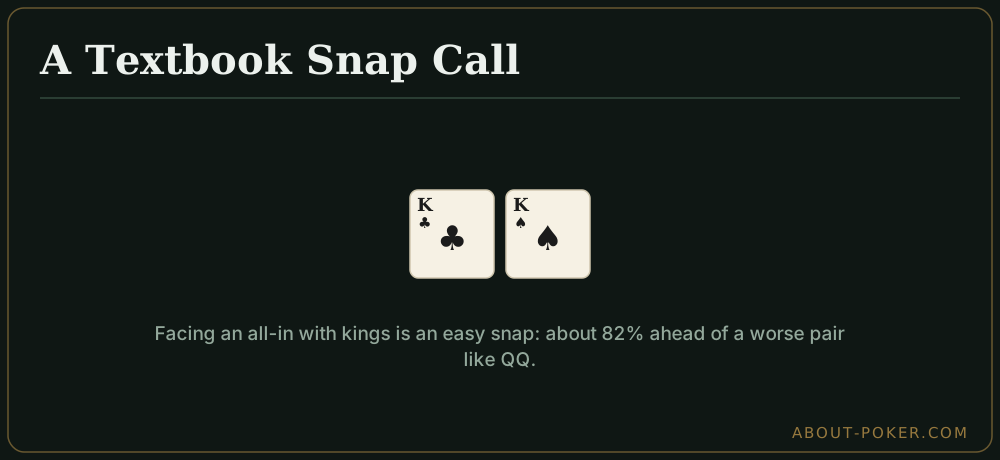
You hold K♣K♠ and open-raise; a loose opponent 3-bet shoves all-in preflop. Because all-in leaves nothing to decide postflop and your hand crushes their shoving range, you snap call. Kings are about an 82% favorite over a single worse pair like QQ and a big favorite over most shoving ranges — there is no reason to think, so you call instantly.
Now flip it. The same opponent snap calls your river shove on a 9♦8♦7♣2♣2♠ board. That instant call should worry you: they were never folding, which points at a made straight or a flush they had already decided to call down with. Their tempo just told you your bluff is beaten.
Common Mistakes and Timing Tells
Snapping can leak information, so watch these habits:
- Snap calling close spots. If a decision is genuinely marginal and you snap, either you skipped the thinking or you are performing. Both are mistakes. Give real spots real thought.
- Inconsistent tempo. Snapping your strong hands and tanking your weak ones hands observant opponents a free read. The fix is a consistent, unhurried tempo on every meaningful decision.
- Trusting a snap too much. Skilled players sometimes fake a snap call to represent strength or to look thoughtless. Treat timing tells as one weak input, not proof.
- Snapping to look strong. Some players snap-call to project confidence. Do not let a theatrical snap scare you off a value bet against a station.
How Opponents Change the Read
Timing tells are most reliable against inexperienced, honest players, whose speed genuinely mirrors their hand strength — fast means easy, slow means hard. Against them, a snap call is a trustworthy sign of an easy decision, usually strength or commitment.
Against experienced, deceptive players, tempo can be reversed on purpose, so lean far less on it. And in online poker, “snap” is measured by how fast a player clicks or by pre-selected action boxes — an instant call online often just means they used the “call any” button, which flattens the read considerably.
Quick Checklist for Snap Calls
- Was the decision truly automatic (nuts, pot committed, pre-planned call)? Then snapping is fine.
- Is the spot actually close? Slow down and think — do not snap.
- Am I keeping a consistent tempo so my timing does not leak my hand?
- When reading an opponent’s snap: are they honest and inexperienced (trust it) or tricky (discount it)?
A snap call is a small window into an easy decision. Use it to read straightforward opponents, guard your own tempo so you never give the window back, and remember that against thinking players a snap can be exactly the story they want you to believe.
Frequently asked
What is a snap call in poker?
A snap call is calling a bet instantly, the moment it is your turn, with no visible hesitation. The word snap conveys speed, like snapping your fingers. It usually means the decision was easy, either because the hand is very strong or because the player was already committed to calling regardless of the bet.
What does a snap call tell you about a hand?
A snap call signals an easy decision. It often means a strong hand that never considered folding, or a player who was pot committed and calling any amount. Occasionally it is a bluff-catcher a player has already decided to call down. It rarely means a marginal hand, because marginal hands require thought.
Is snap calling a good idea?
Snap calling is fine when the decision truly is automatic, such as calling a shove with the nuts or when pot committed. But snapping on close spots gives away information and skips important thinking. Good players take a consistent, unhurried tempo so their timing does not leak the strength of their hand.