What Is Squeeze Play in Poker?
A squeeze play is a big 3-bet after a raise and one or more callers, using the dead money and their weakness. Learn when and how big to squeeze.
On this page · 6 sections
A squeeze play is a large re-raise made after an opening raise and at least one caller. You are literally squeezing the caller — or callers — between the original raiser behind them and your aggression. It is a specialized, higher-pressure form of the 3-bet built to exploit a very specific situation: a raise that got flat-called by hands too weak to fight back.
The squeeze wins because of two forces working together. There is more money already in the middle to claim, and the players in the pot have advertised that they are probably not strong.
Why the Squeeze Works
Two ingredients make the squeeze one of the most profitable preflop plays.
First, dead money. When a raiser and a caller have both put chips in, the pot is inflated before you have committed anything. Winning it uncontested is now worth much more than stealing a single open. For the full concept, see what is dead money in poker.
Second, capped ranges. A player who merely calls a raise, rather than re-raising, is telling you something. Truly premium hands usually re-raise for value. So the caller most often holds a medium hand — small and middle pairs, suited connectors, weak broadways — that plays poorly against a big re-raise. They flatted to see a cheap flop, not to stack off preflop.
When you squeeze, the caller is trapped. They cannot continue comfortably because they are sandwiched: the original raiser is still to act behind them, and calling risks getting blown off the hand or facing a 4-bet. Most of the time, both players fold and you scoop the inflated pot.
A Worked Example
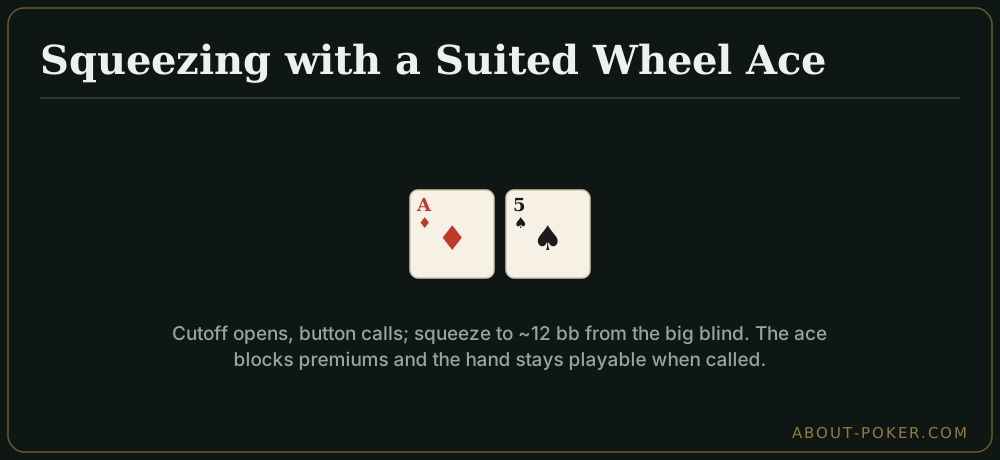
It folds to a loose player in the cutoff who opens to 3 big blinds. The button, a passive recreational player, calls. It is on you in the big blind with Ad 5s — a suited-ish ace with a blocker to the strongest hands.
The pot already holds the two blinds plus 6 big blinds of dead money. You raise to about 12 big blinds — a genuine squeeze size, not a standard 3-bet.
Why this works: the cutoff opens wide and folds most of that range to pressure. The button “called” with something like ten-nine suited or a small pair — hands that cannot call 12 blinds out of position. Your ace-five blocks some of the strongest hands they could wake up with. Even when you get called, you have a live hand. The math is favorable because you risk 12 to win the roughly 8 blinds already in the middle plus the fold equity against two capped ranges.
How Big to Squeeze
A squeeze must be larger than a plain 3-bet because you have more players and more money to move. A reliable guideline:
- In position: the original raise multiplied by about 3, then add one raise-sized amount for each caller. Against an open and one caller, that often lands around 4x the open.
- Out of position: size up further, roughly 4 to 5x the open plus extra per caller, because you will be first to act on later streets and want fewer callers.
Undersizing is the classic error. A tiny re-raise gives the callers a price to continue with exactly the medium hands you were trying to fold out, defeating the entire purpose.
When to Squeeze — and When Not To
Squeeze when the conditions line up:
- The opener is loose and the caller is passive or capped.
- There is real dead money to win.
- You have position or a tight image that makes folding correct for them.
Do not squeeze when:
- A strong, sticky caller flatted — they may have trapped with a big pair.
- Your image is already wild and opponents will look you up light.
- Stacks are so shallow that any raise commits you and removes fold equity.
Squeeze vs. Isolation Raise
Beginners sometimes confuse the squeeze with an iso-raise. The difference is the trigger. An isolation raise targets limpers who have shown weakness by just calling the blind, aiming to get heads-up against one weak player. A squeeze specifically follows a raise plus a call, so you are pressuring an opener and a flatter at once. Both use dead money and weakness, but the squeeze operates against a higher, already-aggressive baseline.
A Quick Checklist
- Was there a raise and at least one call? That is the squeeze trigger.
- Are their ranges capped and foldable? Loose opener, passive caller — ideal.
- Is my size big enough to price out the medium hands? Add per caller.
- Do I have a plan if called? Position, blockers, and a playable hand keep you out of trouble.
Frequently asked
What is a squeeze play in poker?
A squeeze play is a large re-raise made after one player has raised and at least one other has called. You are squeezing the callers between two aggressive actions. The extra dead money in the pot plus the callers' likely weakness makes it a profitable way to win the pot preflop.
How big should a squeeze be?
A squeeze needs to be bigger than a normal 3-bet because there is more money and more players to fold out. A common formula is the original raise plus one extra raise-sized amount for each caller. In practice that often means four to five times the open, larger out of position.
When should you squeeze?
Squeeze when a raiser and one or more callers show weakness, when there is meaningful dead money in the pot, and when the callers are likely to have flatted with medium hands they will fold to pressure. Position and a tight image make squeezes far more effective.