What Is Hero Call in Poker?
A hero call in poker is calling a big bet with a weak hand because you read your opponent as bluffing. Learn what it means, when it's right, and the math behind it.
On this page · 7 sections
A hero call in poker is calling a big bet, usually on the river, with a hand that can only beat a bluff, because you have read your opponent as bluffing. It takes its name from the boldness required: you are risking a large call with a mediocre hand, and if you are right, you look like a hero. Done well, hero calls are one of the most profitable and satisfying plays in poker. Done recklessly, they are a fast way to spew chips.
What a Hero Call Really Is
The essence of a hero call is that your hand beats only your opponent’s bluffs. You are not calling because your hand is strong; you are calling because you believe theirs is weak. The hand you use is a bluff catcher, a holding that beats missed draws and air but loses to any value bet.
That is what separates a hero call from a routine call with a strong hand, or a fast snap call with the nuts. A hero call is inherently uncomfortable: you expect to be behind a lot of the time, and you are relying on a read that your opponent is bluffing more often than the pot odds require.
The Math Behind It
Whether a hero call is correct comes down to pot odds versus your opponent’s bluffing frequency. If the pot is 100 and your opponent bets 100 on the river, you must call 100 to win 200, so you are getting 2-to-1. You need to be right at least one in three times, meaning your opponent must be bluffing about 33 percent of the time for the call to break even.
Against a larger bet the required frequency rises. If they overbet 200 into a 100 pot, you call 200 to win 300, needing to win 200 divided by 500, or about 40 percent of the time. So the bigger the bet, the more sure you must be that they are bluffing. Hero calls are easiest to justify against modest bets and hardest against big overbets, unless the opponent is a known over-bluffer.
A Worked Example
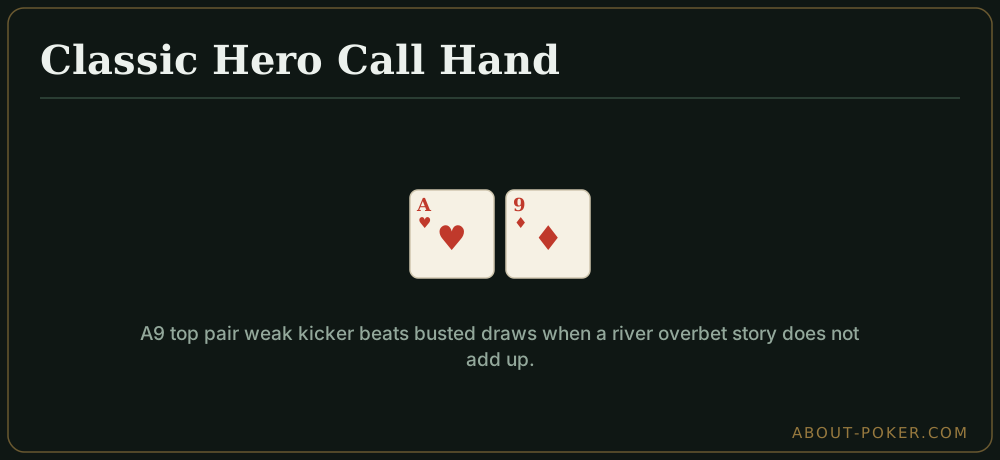
You hold A-9 offsuit in the big blind. You call a button open and the flop comes 9-6-2 rainbow, giving you top pair, weak kicker. You check-call a small flop bet and a medium turn bet on the 3 of clubs. The river is the K of spades. Now your opponent fires a large bet, about pot.
The obvious story is a king or a set, and a fearful player folds. But think it through: an aggressive button would often raise the flop or bet bigger earlier with sets, and the river king does not obviously improve their calling range. Their line looks more like busted straight draws (78, 54) and missed floats that gave up and now blast the river hoping to fold out one pair. Your A-9 beats every one of those bluffs. Because the story of a genuine king is thin and the player is known to over-fire rivers, you make the hero call and beat their busted draw. That is a textbook hero call: a bluff catcher, a suspicious line, and a read that weakness is more likely than strength.
When to Hero Call
Hero calls work best when several signals line up:
- The opponent bluffs too much, especially on the river.
- Their story does not make sense: draws missed, or their earlier line does not match a strong hand.
- Sizing or timing feels off; sudden huge bets or long tank-then-jams often mask weakness.
- Blockers help you. Holding a card that reduces their value combos (for instance, an ace that blocks their strongest hands) makes a bluff more likely.
When to Fold Instead
Just as important is knowing when a hero call is a trap. Against tight, straightforward players who rarely bluff, a big river bet almost always means a big hand; fold your bluff catchers and move on. Beware of turning every marginal spot into a hero call because it feels exciting. Most of your chips come from clear value bets and disciplined folds, not from spectacular calls.
Common Mistakes
The number one error is hero calling out of frustration or ego after being bluffed earlier, rather than from a genuine read. The second is ignoring the price: a hero call that needs you to be right 40 percent of the time against a rare bluffer is just donating chips. The third is failing to update: if a player has shown down big hands every time they made this bet, stop paying them off.
Quick Checklist
Before you make a hero call, ask:
- Does my hand beat only bluffs? (If it beats value too, it is just a normal call.)
- What pot odds am I getting, and how often must I be right?
- Does the opponent’s story make sense for a value hand?
- Is this player a known over-bluffer, or a rock?
- Am I calling from a read, or from tilt and ego?
Answer honestly, and the hero call becomes a calculated weapon rather than a costly gamble.
Frequently asked
What is a hero call in poker?
A hero call is calling a large bet, usually on the river, with a relatively weak hand because you believe your opponent is bluffing. It is a read-based call that beats only bluffs and loses to most value hands, so it relies on correctly sensing weakness.
When should you make a hero call?
Make a hero call when the story your opponent tells does not add up, when their line, timing, or sizing suggests weakness, and when the pot odds mean you only need to be right a fraction of the time. It is strongest against players who bluff too much or who overbet with polarized ranges.
What's the difference between a hero call and a bluff catch?
They overlap heavily. A bluff catcher is a hand that beats bluffs but loses to value; a hero call is the act of calling with such a hand based on a read. Every hero call is a bluff catch, but the term hero call emphasizes the courage and read-dependence of the decision.