What Is Paint in Poker?
Paint in poker is slang for face cards — jacks, queens, and kings. Learn what paint means, where the term comes from, and how paint-heavy boards play.
On this page · 6 sections
Paint is poker slang for the face cards: jacks, queens, and kings. The name comes from the painted royal figures printed on those cards, in contrast to the plain numbered pip cards. When someone says the flop came all paint, they mean it is full of high cards like a king, a queen, and a jack. It is casual table talk, not a technical rule, but it comes up constantly.
Knowing the term is useful mostly because paint-heavy boards behave in a predictable way. High-card flops tend to favor whoever raised before the flop, and that has real consequences for how you should bet and defend. So while paint is just slang, the situations it describes carry genuine strategic weight.
What paint actually means
Paint refers specifically to the three court cards: the jack, the queen, and the king. Those are the cards showing a painted human figure. The ace, despite being a big card, has no figure on it, so purists leave it out of the definition, though some players stretch paint to cover all broadway cards loosely.
You will hear paint in phrases like “I flopped a pair of paint” or “the board is all paint.” In each case the speaker is pointing at high, figure-bearing cards. It is the same family of slang that produced “picture cards” and “court cards” in other card games.
Why paint boards matter
A flop full of paint connects heavily with the range of the player who raised before the flop. Preflop raisers open lots of big cards, so hands like king-queen, king-jack, ace-king, and queen-jack all smash a king-queen-jack flop. The caller, who tends to hold more middling and suited hands, hits such boards far less often.
That imbalance is why the raiser usually gets to bet often on paint-heavy flops. Their range is loaded with top pairs and strong overcard combos, so a continuation bet applies real pressure. Understanding which range a board favors is the core skill behind reading any runout.
A worked example
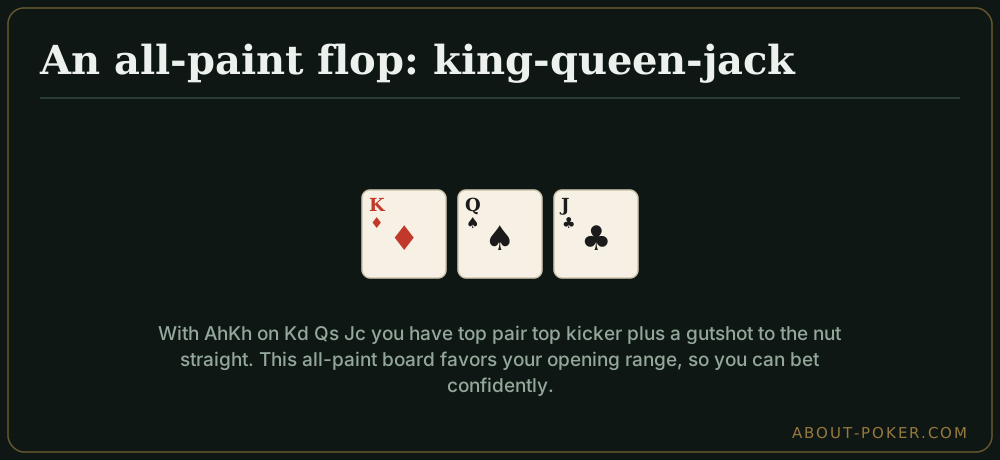
You open Ah Kh from the button and the big blind calls. The flop comes Kd Qs Jc, three pieces of paint. This board hammers your range. You have flopped top pair top kicker plus a gutshot to the nut straight, and your overall opening range contains far more strong broadway hands than the big blind’s calling range does.
On this flop you can bet with confidence, and even a smaller sizing gets the job done because your range advantage is so large. Contrast that with a flop of 6h 5d 3c, where your big cards missed entirely and the caller’s suited connectors did well. Same two hands preflop, but the paint flop lets you attack while the low flop asks you to slow down. When a high card later arrives on a low board, that card behaves like an action card precisely because it suddenly favors the raiser.
How to play paint-heavy boards
As the preflop raiser, lean into your range advantage. Bet frequently on all-paint flops, often with a smaller size, because you can credibly represent the many strong hands you actually hold. You do not need a monster to bet; the board does much of the work by favoring your range.
As the preflop caller, tread carefully. Your range is at a disadvantage, so avoid bloating the pot without a real hand. Defend selectively with your genuine top pairs, strong draws, and the occasional well-chosen bluff, and be willing to fold the many hands that missed a big-card flop. Fighting hard on boards that favor your opponent is a fast way to lose chips.
Common mistakes with paint
The biggest error is treating paint boards like any other flop and betting or calling on autopilot. High-card boards are lopsided, and ignoring that leads callers to defend too wide and raisers to under-bet a huge edge. Respect which range the paint favors.
Another mistake is overvaluing a middling pair of paint against heavy action. Flopping a pair of queens on a king-queen-jack board feels strong, but the board is so connected that raises often mean top pair, two pair, or a made straight. A pair of paint is not automatically the nuts just because it is a high card.
A quick checklist
When the board comes paint-heavy, ask:
- Whose range does this high-card flop favor, mine or my opponent’s?
- If I raised preflop, am I using my range advantage to bet often enough?
- If I called preflop, is my hand strong enough to fight, or should I fold?
- Am I overvaluing a single pair of paint on a very connected board?
Answer those and paint stops being just colorful slang. It becomes a signal that tells you which way the board leans and how hard you should push.
Frequently asked
What cards count as paint in poker?
Paint refers to the face cards: jacks, queens, and kings. These are the cards with painted royal figures on them. Some players loosely include the ace as well since it is a broadway card, but strictly speaking the ace has no painted figure, so classic usage means J, Q, and K.
Where does the term paint come from?
It comes from the painted illustrations of the royal figures on face cards. Jacks, queens, and kings all show a person, unlike the pip cards two through ten. Calling them paint is a piece of old card-room slang that stuck across many card games, not just poker.
Does a paint-heavy flop favor the preflop raiser?
Usually yes. Boards full of high cards like king-queen-jack connect strongly with the raising range, which is loaded with big broadway cards. The preflop raiser typically holds more top pairs and strong combos on paint-heavy flops, giving them a range advantage and license to bet often.