What Is Polarisation in Poker?
Polarisation in poker means betting a range of only strong value hands and bluffs. Learn what it is, when to use it, and how bet sizing follows.
On this page · 6 sections
Polarisation is one of the most important concepts in modern poker strategy, and it sounds more intimidating than it is. When your range is polarised, it is split into two groups sitting at opposite ends of the strength spectrum: very strong hands (value) and very weak hands (bluffs). Crucially, it contains very few medium-strength hands. Picture a bar magnet with strong hands at one pole and bluffs at the other, and nothing in the middle.
What a polarised range actually looks like
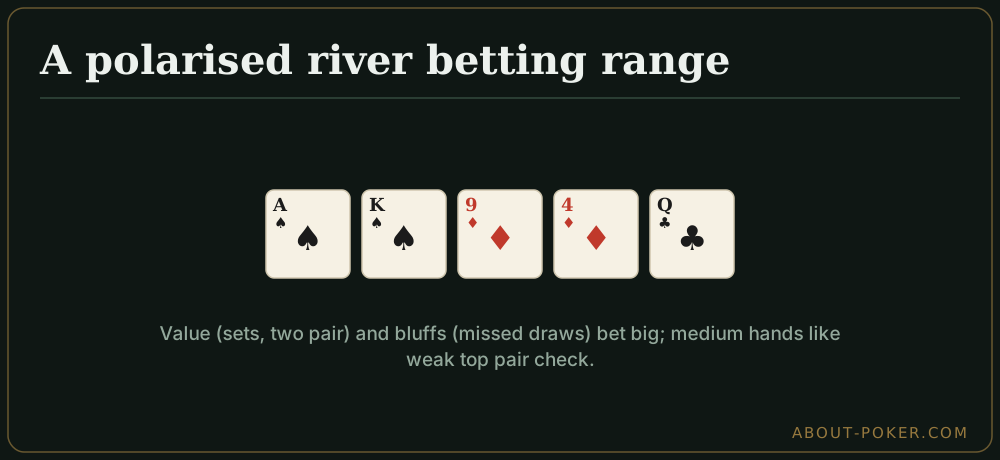
Imagine you raise on the river. A polarised range there might be your sets, straights, and flushes on the value side, plus busted flush draws and missed straight draws as bluffs. What is missing is the middle: hands like top pair with a weak kicker or second pair. Those medium hands go into a checking range instead. So your betting range is “nuts or nothing,” which is the textbook shape of a polarised range.
The reason this matters is that the shape of your range determines how you should bet. Polarised ranges want big sizing. If your hand is either the nuts or air, a large bet or overbet extracts maximum value from the strong end and puts maximum pressure on your opponent with the weak end. There is no downside to betting big, because you never hold a medium hand that would prefer a small bet.
Why polarisation works
The power of polarisation comes from balance. If you only ever bet big with the nuts, a good opponent folds every time and you win nothing extra. If you only ever bet big as a bluff, they call every time and you lose. By combining both into one range, you force your opponent into a guess. They cannot fold too much (or your bluffs print money) and they cannot call too much (or your value hands print money).
The correct bluff-to-value ratio depends on your bet size. Roughly, for a pot-sized bet your opponent needs to defend so that you are indifferent to bluffing, which corresponds to about one bluff for every two value hands. For an overbet, you can bluff more often because the bigger price makes your opponent’s calls more costly. This is where polarisation and bet sizing lock together.
A worked example
You hold Ac Kc on a final board of Kc 9d 4s 2h 7c. You raised preflop and bet the flop and turn. On the river you have top pair, top kicker. Is this a polarising spot?
Not with this exact hand. Top pair here is a medium-strength hand relative to the strong hands you could hold, such as sets or two pair. If you fire a big river bet, you are betting a medium hand into a polarised sizing, which invites trouble. The polarised river bet belongs to your K9 (two pair), 44 or 99 (sets) on the value side, and your missed draws like Qc Jc on the bluff side. Your Ac Kc is a classic bet-small-or-check-back hand, a candidate for depolarisation instead.
When to polarise
Polarisation shines in spots where you have a range advantage and can credibly hold the nuts. Good triggers include:
- The river, where hands are made and the medium region loses reason to bet small
- Boards where you hold the top of the range more often than your opponent
- Situations where you want to charge draws or fold out better medium hands with pressure
By contrast, when the board is dry and your opponent holds few strong hands, a smaller, wider (depolarised) bet often earns more. Reading the texture correctly is the skill.
Common mistakes
The biggest error is betting big with medium hands because “the pot is worth fighting for.” Medium hands rarely benefit from large sizing; they get called by better and fold out worse. Put them in your checking or small-betting range instead.
The second mistake is polarising with too few bluffs. Many players bet big with the nuts but never balance it out, so observant opponents simply fold. If you want your big bets to earn value, you must include enough believable bluffs so that calling remains tempting.
A third mistake is forgetting blockers. When you choose bluffs, prefer hands that block your opponent’s calling range. On the earlier board, a missed spade-less Qc Jc that blocks strong kings is a cleaner bluff than a random low card.
Quick checklist
- Is my range naturally split into strong and weak? Then polarise.
- Do I hold medium hands that would rather bet small? Then do not polarise them.
- Have I chosen a bet size big enough to reward the shape? Big or overbet.
- Have I included enough bluffs to keep my opponent from folding? Balance it.
Master polarisation and you unlock large bets and overbets as weapons, because you finally understand the range shape that justifies them.
Frequently asked
What does polarisation mean in poker?
Polarisation means your betting range is split into two extremes: strong value hands you expect to win with, and bluffs that have little showdown value. It contains almost no medium-strength hands.
What bet size goes with a polarised range?
Polarised ranges pair naturally with large bets and overbets. Because your range is either very strong or very weak, big sizing maximises value from strong hands and applies maximum pressure with bluffs.
Is polarisation the same as being unpredictable?
No. A polarised range is a deliberate, balanced construction of nuts and air. Being unpredictable is random. Polarisation is a structured strategy that makes you hard to exploit, not just erratic.